*Young Black Christians aren’t necessarily losing their faith in God. Some are questioning whether the institutions entrusted with nurturing that faith understand the world they’re growing up in.
They want churches to address mental health, demonstrate financial accountability, embrace people who feel excluded and give younger generations meaningful leadership opportunities.
And despite their generation’s reputation for embracing technology, some don’t even want artificial intelligence anywhere near the pulpit.
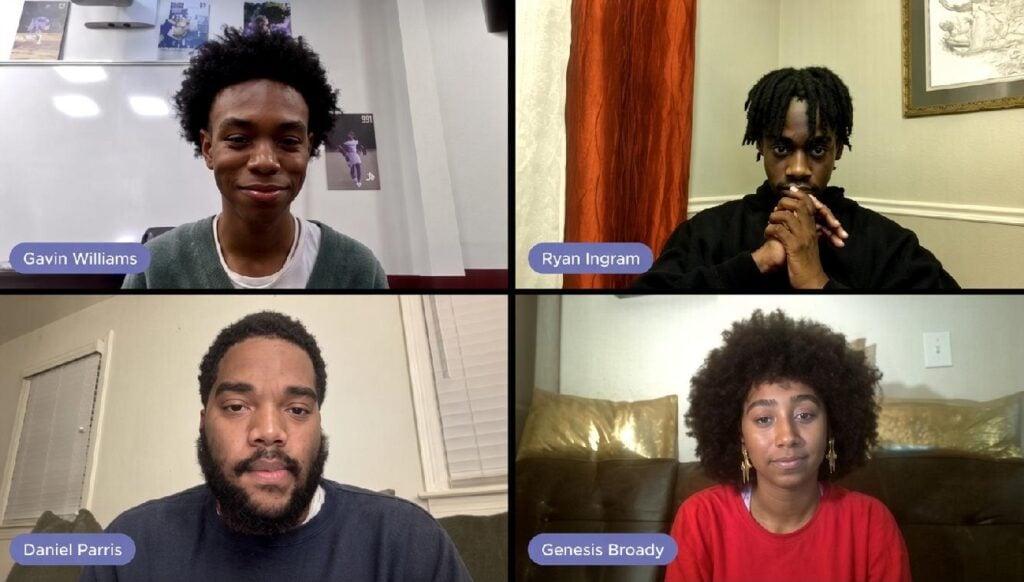
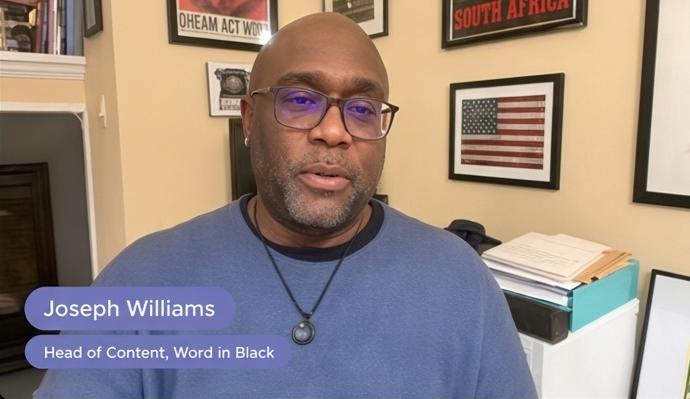
Those perspectives emerged during a November 11 Word in Black roundtable moderated by Joseph Williams, the publication’s head of content. Participants included Daniel Parris, Gavin Williams, Genesis Broady and Ryan Ingram of New Macedonia Baptist Church in Washington, D.C.
While their experiences reflect one congregation rather than an entire generation, their conversation offered something frequently missing from discussions about the future of the Black church: the voices of young people who actually attend.
Scroll to continue reading








Investing in Young Black Christians
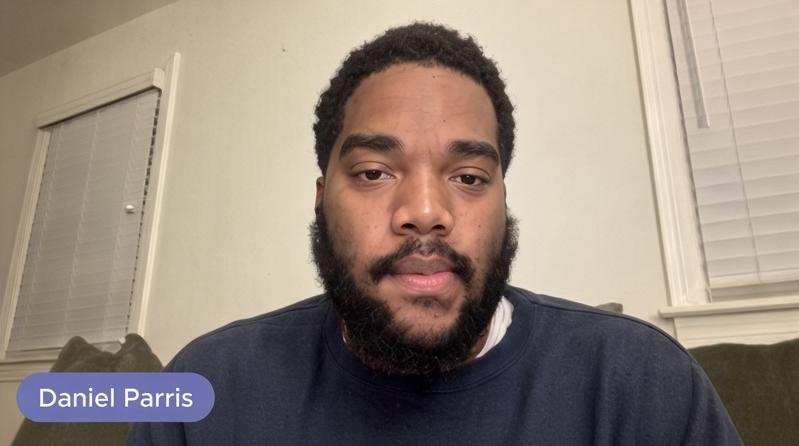
At just 21, Parris serves as New Macedonia’s director of teens, overseeing approximately 25 to 30 middle and high school students during Wednesday Bible study.
The Coppin State University graduate explained that the church deliberately expanded leadership opportunities beyond older congregants while committing financial resources to youth ministry.
He recalled attending another church as a child where Sunday school wasn’t available every week and lengthy services struggled to hold his attention. New Macedonia offered something different: Friday night activities, choir participation, Bible study and opportunities to develop friendships.
“We have to pour into them at an early age,” Parris said, emphasizing that young people have plenty of other options for spending their time.
When Getting to Church Is the Problem
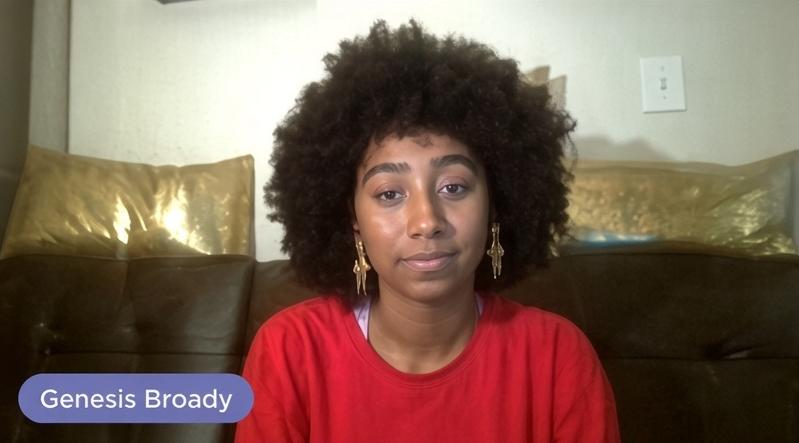
Broady raised an often-overlooked issue: some young people who don’t attend church actually want to.
“Many of my friends, on the other hand, their grandparents may have gone to church and brought their kids to church, but their actual parents no longer go to church anymore,” she explained.
Broady described a friend who wants to attend but lacks transportation because her parents don’t attend.
The broader religious landscape is changing, too. According to a December 2025 Pew Research Center analysis, 73% of Black adults identify as Christian, down from 85% in 2007.
While 22% are religiously unaffiliated, 83% of those unaffiliated Black adults still believe in God.
Religious affiliation isn’t the same as church attendance, but those findings underscore an important distinction: disengagement from organized religion doesn’t necessarily mean an abandonment of spiritual belief.
Druski’s Church Comedy Hits a Nerve
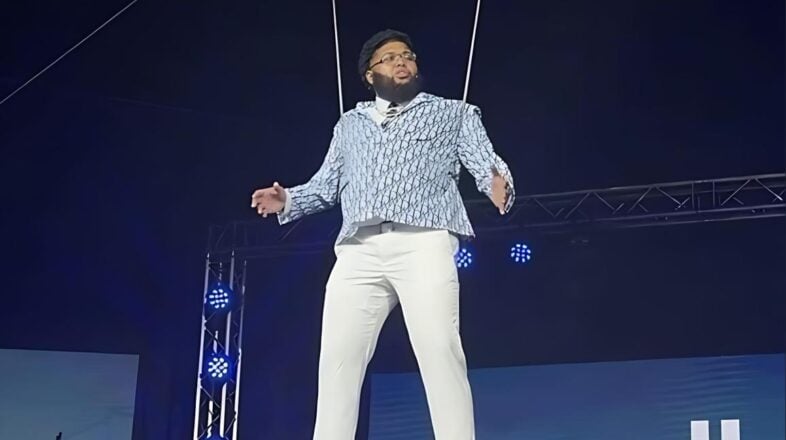
The discussion also turned to Druski, whose viral megachurch parody has generated widespread attention.
As EURweb previously reported, the comedian’s new Netflix series, “Collect & Praise,” premieres December 1.
Williams explained how extravagant displays of wealth by religious leaders can raise uncomfortable questions among young believers about where their donations are going.
“Is this really being used for the house of God and the church or is this being used for your personal benefit?”
Broady countered that churches legitimately need financial support and that negative headlines can overshadow congregations doing meaningful work.
Parris found the comedy entertaining but cautioned against allowing viral caricatures to define an entire religious institution.
Artificial Intelligence in the Pulpit? No Thanks
Williams also expressed opposition to using artificial intelligence to develop sermons, emphasizing that he wasn’t accusing his church of using the technology.
He believes religious teaching should come from the heart and personal experience rather than a computer.
“I feel like it takes away from religion,” he said.
Kirk Franklin and GloRilla: Faith or Marketing?
The panelists also questioned the motivations behind collaborations between secular and gospel artists.
As EURweb previously reported, Franklin’s collaboration with GloRilla, “This Time,” earned him a record-setting tenth No. 1 on Billboard’s Hot Gospel Songs chart.
Williams questioned whether such partnerships are sometimes driven more by commercial considerations than spiritual conviction, without accusing Franklin of doing so.
Broady expressed similar skepticism but acknowledged that introducing young listeners to Christianity through popular music could nevertheless accomplish something positive.
Mental Health, Sexuality and Acceptance
Broady urged churches to better understand social media’s impact on young people’s mental health.
Williams encouraged congregations to address suicidal thoughts and make young people feel welcome regardless of their sexuality.
“I don’t feel like we should shun or exclude anybody,” he said.
Parris explained that older pastors may know about Instagram without fully understanding the emotional consequences of cyberbullying, reinforcing the importance of younger leaders.
Ingram, meanwhile, advocated for more social gatherings where young people could build relationships. These young Christians aren’t asking churches to abandon their spiritual foundations. They’re asking them to understand the generation expected to carry those foundations forward.
The question is whether church leadership is prepared to listen.
(If You Like/Appreciate This EURweb Story, Please SHARE it!)
MORE NEWS ON EURWEB.COM: NewsBits: Porsha Williams Says Yes to Girlfriend, GloRilla Goes Hollywood, Teyana Taylor Tackles Dating Drama | VIDEO
We Publish Breaking News 24/7. Don’t Miss Out! Sign up for our Free daily newsletter HERE.