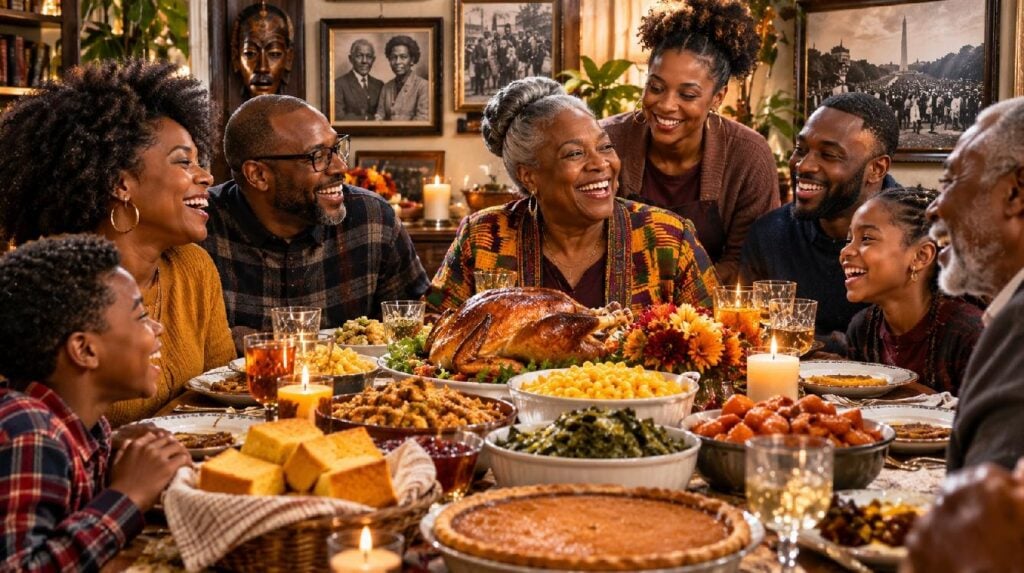
*In Black America, Thanksgiving has never been just about the turkey. It’s about who made the dressing, who brought the macaroni and cheese, who showed up two hours late, and which relative everybody hopes won’t start talking politics before dessert.
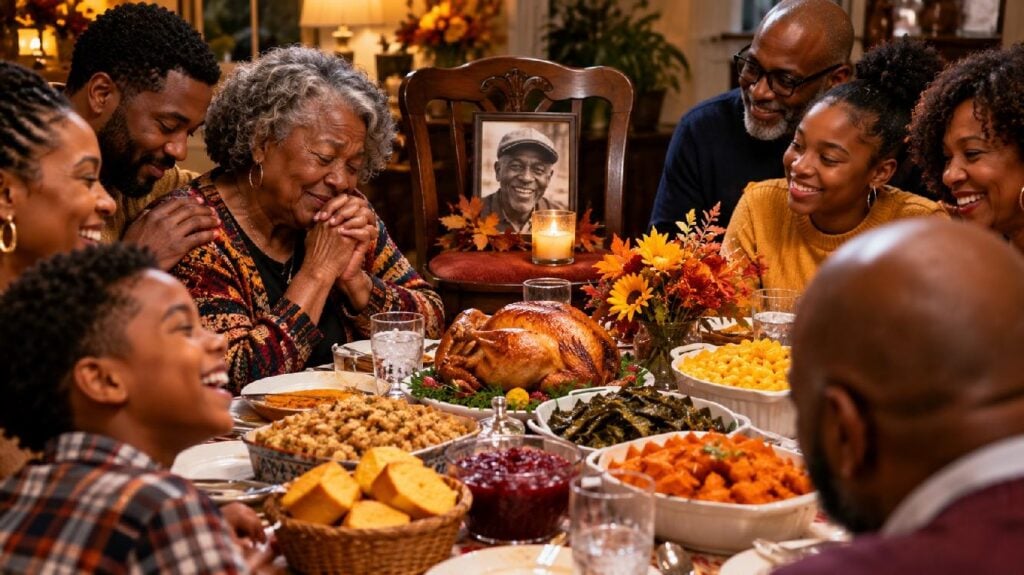
It’s about the auntie who insists nobody can make sweet potato pie like she can. The cousin who arrives hungry and leaves with three plates. And the grandmother whose empty chair reminds everyone that some of the most important people at the table are no longer with us.
It’s about laughter, memories, prayer, second helpings and, occasionally, arguments that should have ended sometime around 1998.
But underneath the food and family photographs lies something deeper: a people who have learned to practice gratitude without confusing it with surrender.
Because being thankful for what we have doesn’t mean we’ve forgotten what we’ve been denied.
Scroll to continue reading








A Holiday We Made Our Own
The traditional American Thanksgiving story has always been incomplete.
Generations of schoolchildren learned a comforting tale about Pilgrims and Native Americans sharing a peaceful meal. The reality involved political alliances, European colonization, dispossession and devastating consequences for Indigenous peoples.
The Smithsonian’s National Museum of the American Indian explains how that familiar story overlooks the Wampanoag people, the Native Americans who participated in the 1621 harvest gathering with English colonists, while minimizing the consequences of colonization.
Black Americans have our own reasons for questioning sanitized versions of American history.
Our ancestors endured slavery, segregation and systematic exclusion from opportunities others regarded as birthrights.
Yet we embraced Thanksgiving and made it distinctly our own.
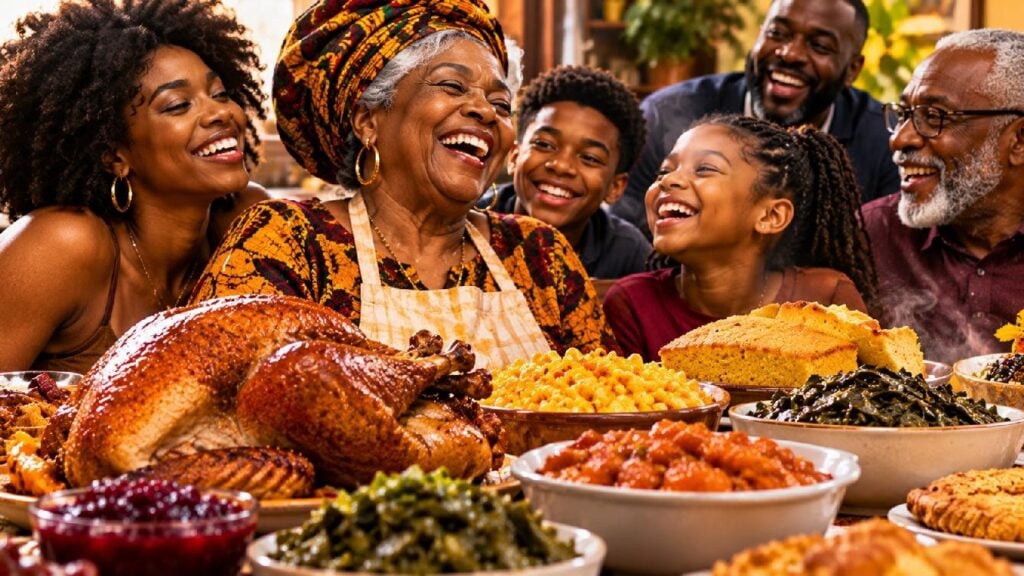
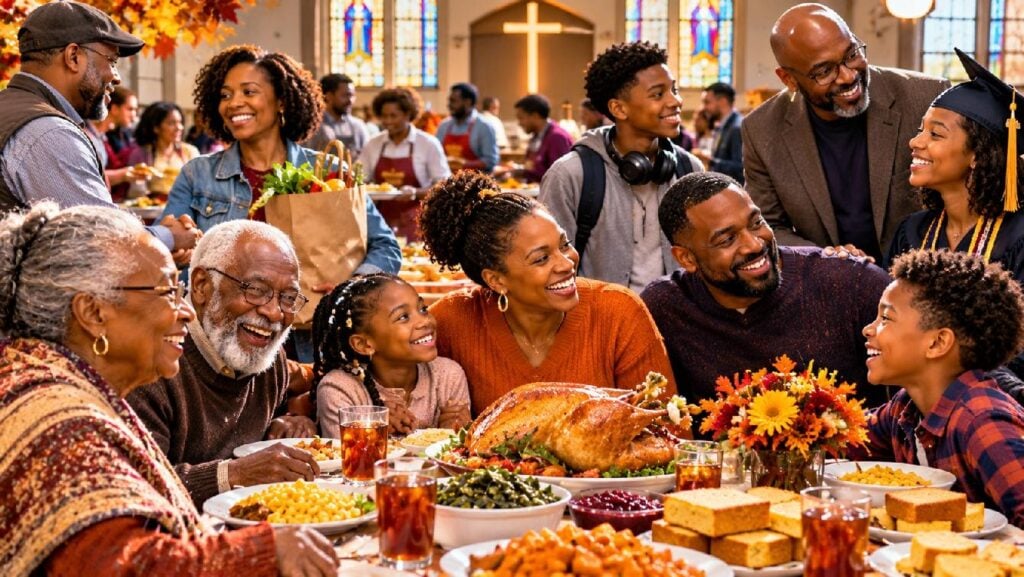
We brought cornbread dressing, collard greens, candied yams, gospel music, family stories and an understanding of what it means to gather around a table.
And no, macaroni and cheese isn’t merely a side dish in every Black household. In some families, bringing a questionable version is grounds for a lifetime ban from kitchen duty.
The humor matters. So does the history.
The National Museum of African American History and Culture reminds us that family gatherings carry special significance in a community whose ancestors were routinely separated through slavery.
After emancipation, formerly enslaved people searched for missing relatives and rebuilt families torn apart by slavery.
Seen through that history, getting everybody together is more than a holiday convenience. It’s a continuation of something earlier generations fought to preserve.
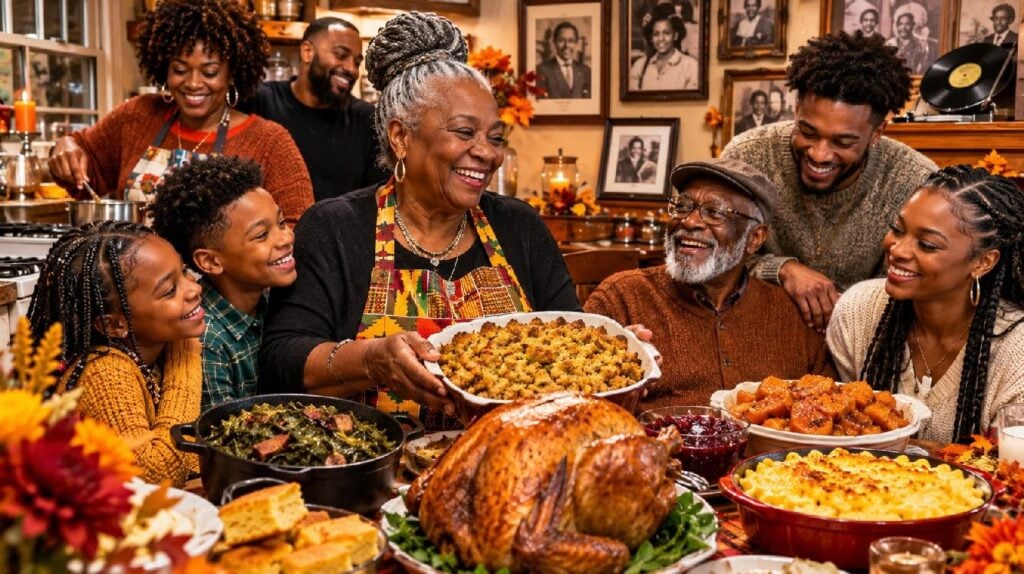
Gratitude Doesn’t Mean Everything Is Fine
Black Americans can appreciate progress without pretending the work is finished.
We can celebrate educational achievement while recognizing unequal opportunities. We can support Black entrepreneurship while questioning persistent barriers to capital. And we can honor earlier generations without telling young people they should settle for whatever circumstances they’ve inherited.
We can also love this country without agreeing with everything it does.
That’s not ingratitude. It’s the difference between appreciation and complacency.
Too often, gratitude is presented as though it requires silence: Be thankful. Don’t complain. Remember how much worse things used to be.
But the generations that fought for freedom, civil rights and economic opportunity understood that appreciating life and demanding something better could exist in the same sentence.
Some of the greatest expressions of gratitude are found in what people do for those who follow.
A parent working overtime to send a child to college. A neighbor checking on an elderly resident. A church distributing groceries. A mentor helping a teenager imagine a brighter future.
Those actions rarely make headlines, but they help hold communities together.
The Empty Chairs and the Full Plates
Not every Black family is gathering around an overflowing table this Thanksgiving.
Some are grieving or struggling financially. Some are working holiday shifts. Others are spending the day alone or navigating relationships too complicated for a cheerful family photograph.
Thanksgiving can magnify absence as much as togetherness.
That’s why the holiday shouldn’t become another occasion to pressure people into performing happiness.
Sometimes gratitude looks like a crowded dining room. Sometimes it’s a quiet phone call, a meal delivered to somebody in need, or simply making it through a difficult year.
And sometimes it means remembering the person who taught you to make the dressing, even though yours still doesn’t taste quite right.
There is room at Thanksgiving for joy and sorrow, faith and uncertainty, celebration and reflection.
There should also be room for forgiveness, although nobody is obligated to settle a decades-old family dispute between the turkey and the peach cobbler.
What Are We Really Thankful For?
America hasn’t fulfilled every promise it has made. Yet Black Americans have experienced extraordinary progress.
Both realities deserve acknowledgment.
The more meaningful question is what we intend to do with the blessings, opportunities and responsibilities we’ve inherited.
We can strengthen the relationships that sustain us, support institutions serving our communities and create opportunities for the next generation.
And we can celebrate our lives without measuring their worth solely against the obstacles we’ve overcome.
Black American life is more than a history of struggle. It is also a history of invention, beauty, brilliance, laughter, love and remarkable cultural influence.
We deserve to celebrate those things without apology.
So this Thanksgiving, enjoy the food. Tell the stories. Remember the ancestors. Check on somebody who might otherwise spend the day alone.
Be grateful for what is good, honest about what needs changing, and generous enough to help somebody else find a reason to be thankful.
And when the conversation gets too heated, remember that not every disagreement needs to become a family summit.
Sometimes the wisest thing anybody can say is:
“Would somebody please pass the sweet ‘tata pie?!”
(If You Like/Appreciate This EURweb Story, Please SHARE it!)
MORE NEWS ON EURWEB.COM: Macy’s Thanksgiving Parade Postponed for First Time Ever — Here’s When to Watch
We Publish Breaking News 24/7. Don’t Miss Out! Sign up for our Free daily newsletter HERE.