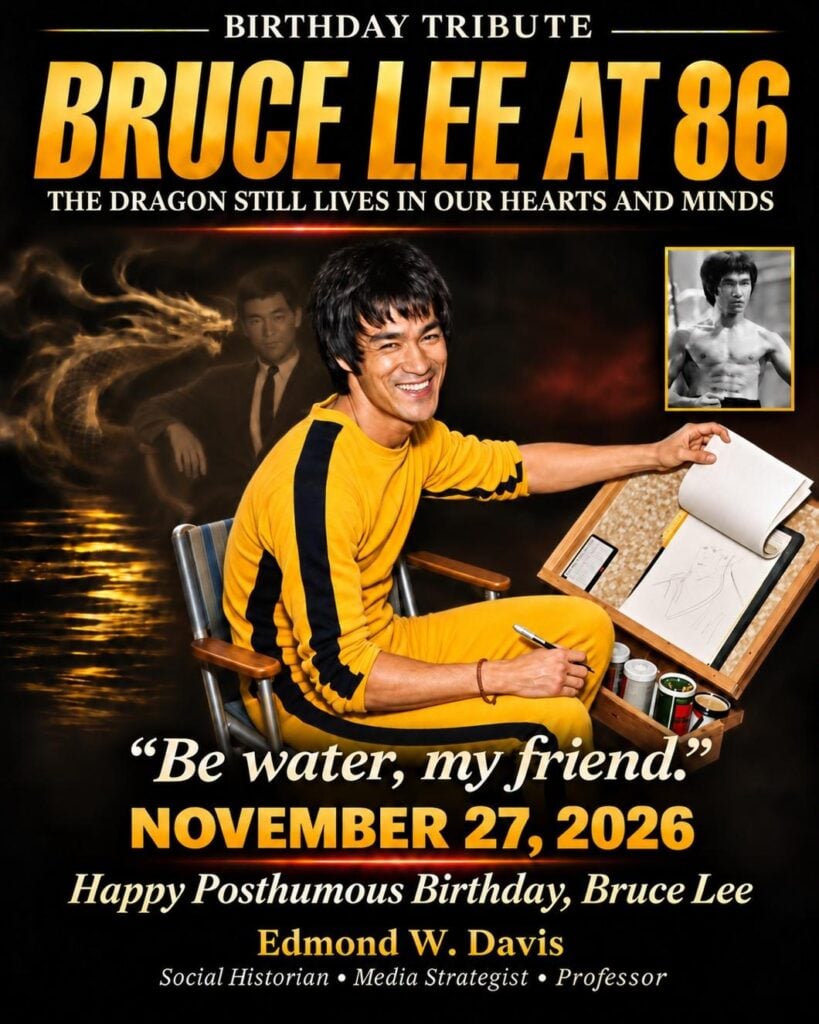
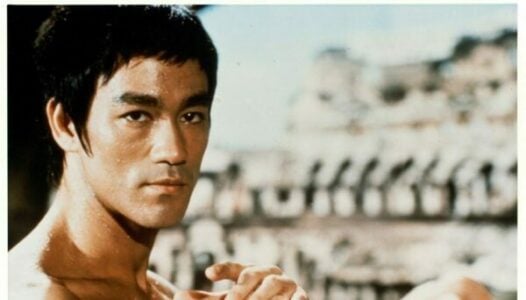
*I grew up watching Bruce Lee in the early and mid-1980s and kept watching into the early ’90s. By the time I found him, he had been gone about a decade. Nobody had to tell a Philadelphia kid he was watching somebody important.
You could tell by how quiet the room got before he moved. On November 27, 2026, Lee would have turned 86. And 53 years after his death, he still lives rent-free in the imagination of the martial arts world, the fashion community, the hall of action movie reels, and the hearts of minds of billions.
In my book, he’s the greatest martial artist ever because of how many people he made rethink what mastery could look like.
Bruce Jun Fan Lee was born in San Francisco’s Chinatown on November 27, 1940, while his father, Chinese opera performer Lee Hoi Chuen, was touring the United States. He grew up in Hong Kong, where his mother, Grace Ho, raised him in a family already familiar with show business. Lee appeared in about 20 films as a child. The face we remember from the hall of mirrors had spent years learning how much a glance could say before a punch ever landed.
As a teenager, Lee studied Wing Chun under Ip Man, also known as Yip Man, and won a Hong Kong cha-cha competition. He also won a 1958 interschool boxing championship against Gary Elms. The dancer and the boxer belonged in the same body. Both had to read another person’s movement and know when to shift their weight. Lee returned to the United States at 18 in 1959, made his way to Seattle, and studied at the University of Washington.
Scroll to continue reading



In Seattle, Jesse Glover, a Black martial artist, became Lee’s first American student. In Oakland, Linda Lee Cadwell’s account tied her husband’s private 1964 fight with Wong Jack Man to opposition to his teaching non-Chinese students. Wong disputed that motive. The classroom tells a clearer story. Lee shared knowledge across racial lines, and he kept learning across them, too. Biographer Matthew Polly describes his fascination with Muhammad Ali. Hollywood clients included Steve McQueen and James Coburn. Kareem Abdul-Jabbar has explained how training with Lee helped his NBA career.
Hollywood gave Lee Kato in The Green Hornet. David Carradine got the lead in Kung Fu while Lee was developing his own martial-arts Western. The projects’ relationship remains disputed. I wrote that true leadership doesn’t need MAGA approval. Lee’s career brings me back to two questions from that column. Who gets presumed qualified to lead? And who gets called divisive for asking to be seen?
Lee went back to Hong Kong, where he could build movies around an Asian protagonist with the authority Hollywood so often reserved for somebody else.
Watch his 1965 screen test, then his 1971 interview with Pierre Berton. The young demonstrator became a philosopher who could make a whole audience understand adaptability with a teapot. “Be water, my friend.” The advice ran through everything he did. “Research your own experience” applied to his experiments with weights, cardio, nutrition and supplements. “Express yourself” applied to the work of becoming somebody in your own right. His five water images still do the teaching. Water takes the shape of a cup, a bottle or a teapot. It can flow. It can crash.
Actor and martial artist Michael Jai White argued that his size advantage would matter in a hypothetical fight and questioned comparisons between Lee and professional fighters. He later expressed regret about the controversy. Lee’s Hong Kong street-fighting reputation, boxing title and Oakland encounter belong in the discussion. So do the people who trained with him. Judo champion Hayward Nishioka remembered that Lee was “too fast for them.” Karate champion Bob Wall said, “He was that good.” Student Bob Bremer recalled, “He had such power in his fingers.” To me, Lee earned the title “Father of Mixed Martial Arts” by making it harder for any one discipline to pretend it had all the answers.
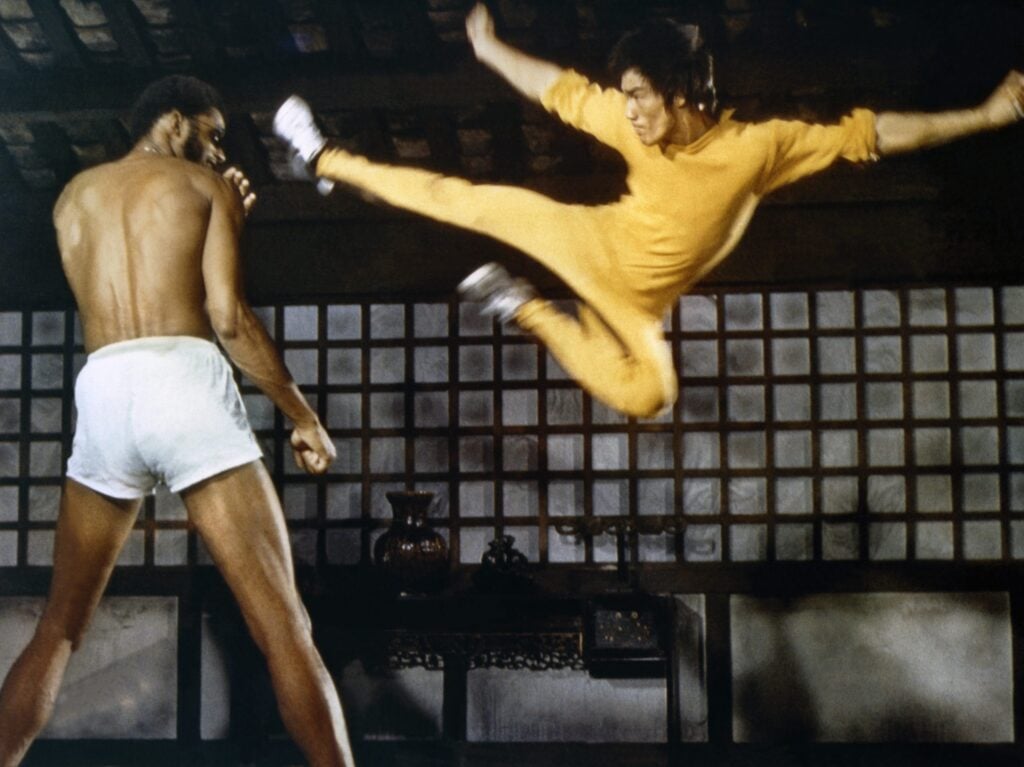
The Colosseum duel with karate champion Chuck Norris in The Way of the Dragon (1972) gets my vote for cinema’s greatest fight scene. Then came Enter the Dragon (1973), a landmark Hollywood–Hong Kong collaboration released about a month after Lee died on July 20, 1973, at 32. The 1978 Game of Death used doubles to finish the picture. The footage of Lee facing Kareem was real. So was their friendship, as Kareem himself has written.
I call LeBron James the Bruce Lee of basketball for this generation. LeBron’s 50,000 combined regular-season and playoff points record what happened on the court. Lee’s reach requires several yardsticks. Hong Kong’s Heritage Museum assembled more than 600 items for an exhibition. In 2005, Hong Kong and Mostar, Bosnia, unveiled statues. A sneaker run inspired by the yellow-and-black look Lee helped popularize numbered 3,400 pairs worldwide. His likeness still sells apparel, and Governor Gavin Newsom signed the law making May 17 Bruce Lee Day, California’s first annual namesake day for a Chinese American.
Lee attended a Catholic school, drew on Taoist and Buddhist thought, and reported no religious affiliation. As a Christian, I think of the disciplined athlete in 1 Corinthians 9:25, the friends sharpening each other in Proverbs 27:17, and the plea to number our days in Psalm 90:12.
That last verse lands hard. Like Karen Carpenter, who died at 32, Lee left us wondering what another decade might have brought. Linda lived through Bruce’s death and then the loss of their son Brandon, killed at 28 in a shooting on the set of The Crow on March 31, 1993. Their daughter Shannon carries the family’s work forward.
I started out watching Bruce Lee to see how fast a man could move. I go back now to watch how often he is willing to reconsider what he knows. That’s what I hope the next kid sees when the room goes quiet. Master Lee was, in many ways, a hybrid anomaly of reality between Paul Robeson, Godzilla, the Incredible Hulk (world-breaker), and Master Yoda combined in my 50-year-old mind.
Happy heavenly birthday, Bruce Lee, founder of Jeet Kune Do {Way of the intercepting fist}, father of mixed martial arts, Master of the art of fighting without fighting, dad to Brandon and Shannon, husband to Linda, and master throughout generations. Thank you, Master Lee, thank you.
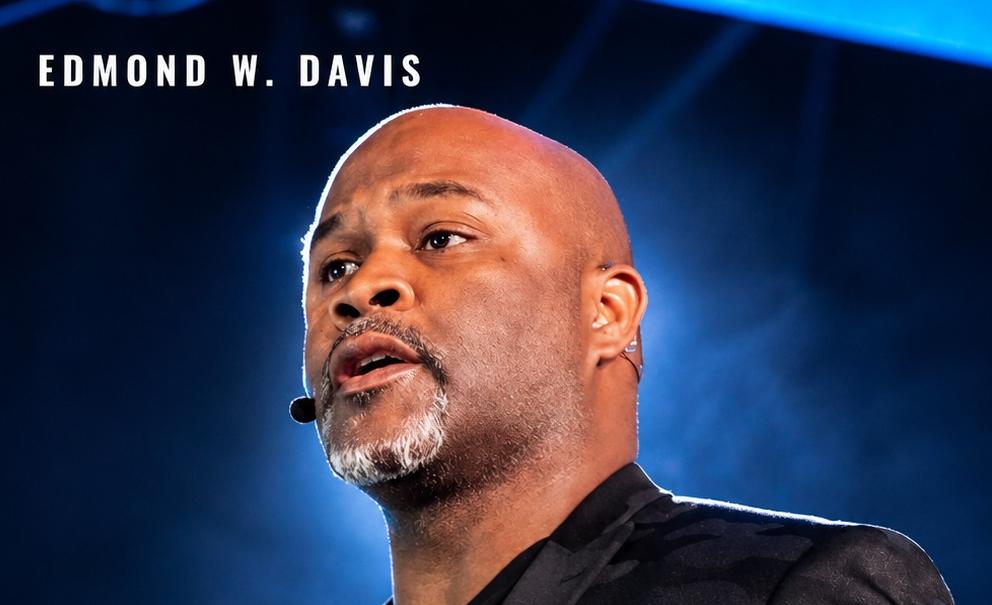
ABOUT THE AUTHOR:
Edmond W. Davis is an American social historian, international journalist, media strategist, and professor of U.S. government and history based in Little Rock, Arkansas. His commentary explores the intersections of history, culture, politics, faith, government, ethnicity, sports, justice, and social responsibility.
(If You Like/Appreciate This EURweb Story, Please SHARE it!)
MORE NEWS ON EURWEB.COM: Macy’s Thanksgiving Parade Postponed for First Time Ever — Here’s When to Watch
We Publish Breaking News 24/7. Don’t Miss Out! Sign up for our Free daily newsletter HERE.