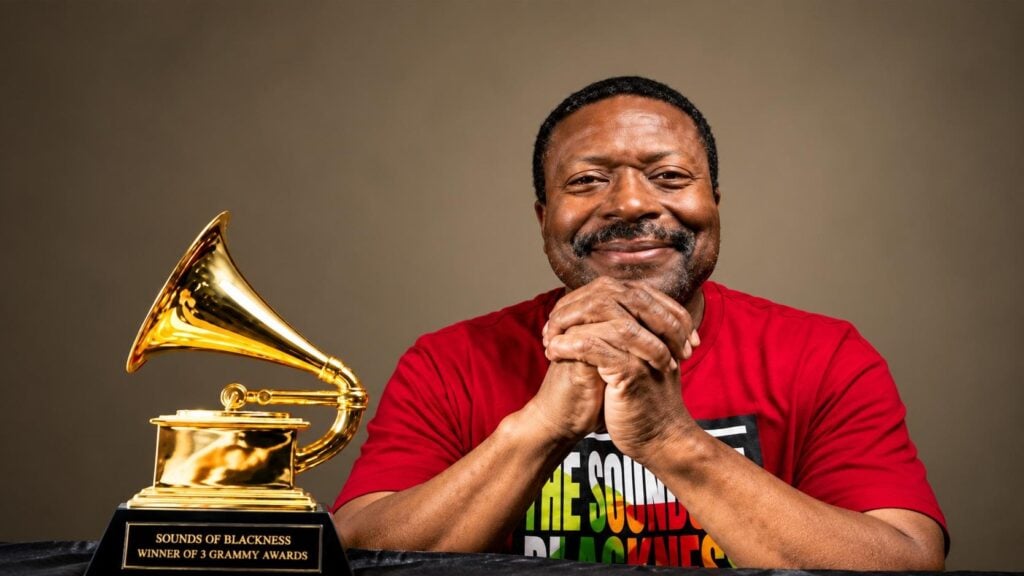
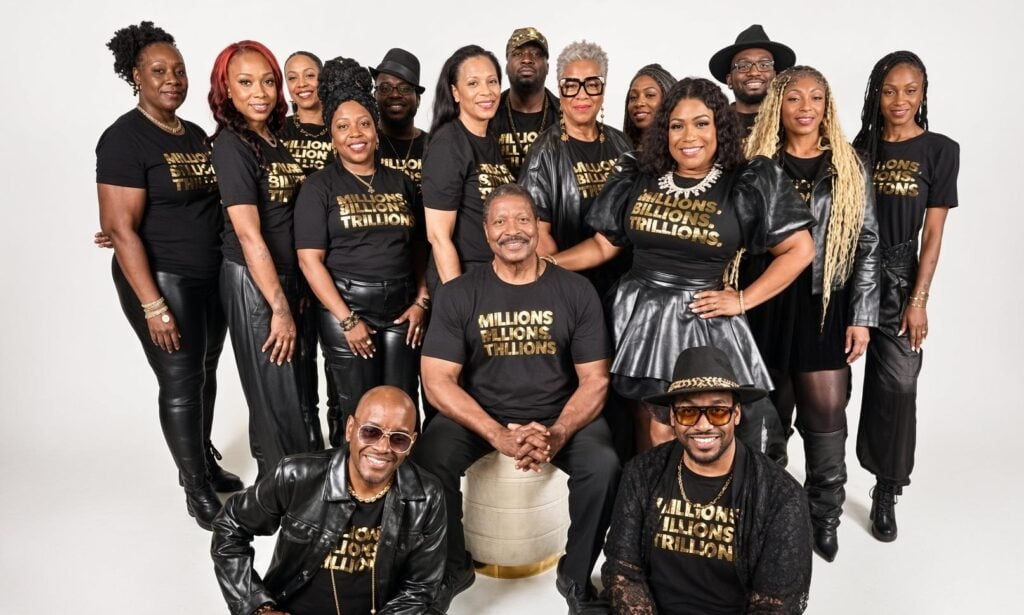
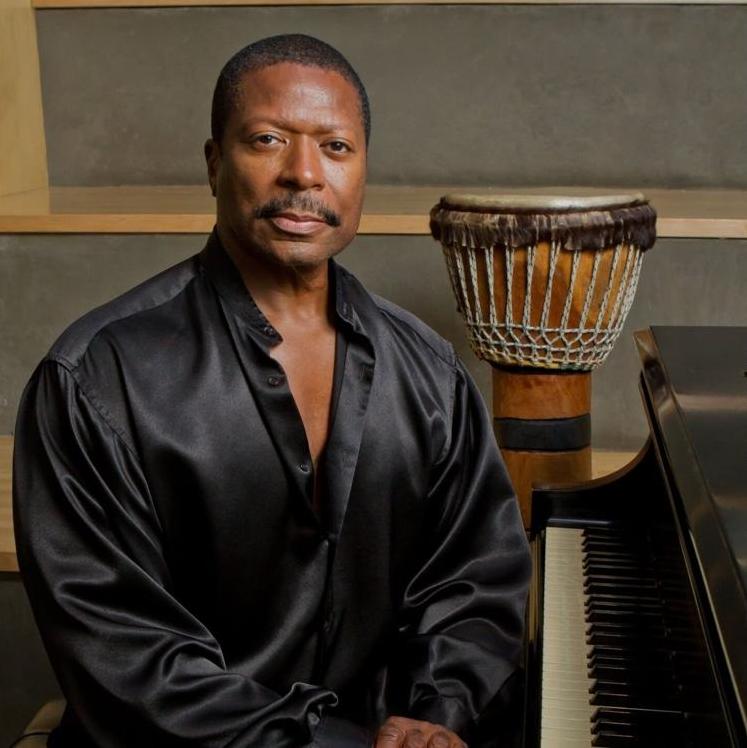
*Three-time Grammy-winning group Sounds of Blackness has spent decades using music to address social justice, racial pride and community empowerment. But according to longtime director Gary D. Hines, the music industry isn’t always eager to embrace that message.
In an exclusive interview with EURweb founder Lee Bailey, Hines discussed the group’s new voting anthem, “Get Off Ya Hands & Vote,” and the resistance he says socially conscious recordings have encountered at corporate-owned Black radio stations.
“We’re not the only one, but we’re one of too few,” Hines said when asked whether contemporary artists are doing enough to address social issues.
The conversation went well beyond the group’s latest release. Hines spoke passionately about voter apathy, the legacy of James Brown and Aretha Franklin, and a personal lesson from the late Harry Belafonte that continues to shape his understanding of an artist’s responsibility.
Released October 9, “Get Off Ya Hands & Vote” was written, produced and arranged by Hines and features vocalists Artisha Knight-Milon and Quan Howell. The recording continues the group’s tradition of blending music with social commentary, as detailed in EURweb’s earlier coverage. What follows are edited excerpts from Bailey’s conversation with Hines.
Scroll to continue reading






Why Voting Needed Its Own Anthem
EURweb/Lee Bailey: Sounds of Blackness has been making socially conscious music for decades, but what happened in America that made you say, “We need to record ‘Get Off Ya Hands & Vote’ right now”?
Gary Hines: “It really astounded me when I thought about it and looked at it, the fact that so many facets of the movement have theme songs.”
Hines pointed to “We Shall Overcome,” James Brown’s “Say It Loud – I’m Black and I’m Proud” and other recordings associated with the civil rights and Black Power movements.
“But it’s like we’ve been trying to vote now for a century and a half, get the rights to vote, but there’s no song, no anthem to go with that. Well, there needs to be one, and we can’t call ourselves Sounds of Blackness without making one.”
He said the political developments of 2025 and 2026 gave the project particular urgency, citing attacks on diversity programs, restrictions on teaching Black history and concerns about voting rights.
Can Music Really Change People’s Behavior?
EURweb: Can music actually change folks’ behavior? Are you expecting people to listen and go out and vote because they heard the song?
Hines: “Yes, sir. You know what? Music can actually impact and make a difference and a change when nothing else can.”
He cited James Brown’s “Say It Loud – I’m Black and I’m Proud” as an example of music helping transform attitudes toward Black identity.
Hines also recalled listeners contacting Sounds of Blackness about the group’s inspirational recording “Optimistic.”
Some, he said, described overcoming personal crises after hearing the music, including struggles involving relationships, education and addiction.
“So I absolutely believe that, as Stevie Wonder says, music is the universal language and that universal language can and will positively impact behavior.”
Why Hines Believes Black Radio Holds Back
EURweb: Do you think today’s artists are doing enough to address what’s happening in America? Are you the only ones out there doing this?
Hines: “We’re not the only one, but we’re one of too few. I can point to Common and a few others, but it’s a handful.”
EURweb: Why do you think there isn’t the same consciousness among artists today that we saw in previous decades?
Hines: “I think that goes to part two of your question, my brother, in terms of what the industry encourages and what they try to inhibit.”
He said earlier Sounds of Blackness recordings, including “Black Lives Matter,” “Time for Reparations” and “WOKE,” received some support from Black radio but also encountered resistance.
“We had some support at Black radio but a lot of resistance, and we know that a lot of what we call Black radio now is now corporate owned.”
Hines said some program directors privately expressed appreciation for the music while worrying about advertisers.
“I talked with PDs who said, you know, we love the track, we know what it’s about, but, you know, we’re afraid of offending our sponsors.”
For Hines, that reluctance represents a departure from a musical tradition in which artists addressed social conditions alongside romance and entertainment.
“Our artists’ legacy was always, always to be a part of the movement.”

Harry Belafonte’s Lasting Lesson
EURweb: You are fired up. I can feel the passion all the way from Minneapolis.
Hines: “That’s what I like to call ancestor energy. I like to think that their spirits are speaking through me and I’m just a vessel.”
Hines recalled being invited to participate in plans for a musical event associated with Harry Belafonte. The experience included several visits to Belafonte’s Manhattan home.
He said the legendary entertainer shared a philosophy that has remained with him.
“Despite all of that, he told me repeatedly, Brother Lee, he said, Gary, I’m an activist first and an artist second. I’ll never forget that.”
EURweb: So is that how you see yourself?
Hines: “Yes, I do.”
Hines went on to praise Belafonte and Sidney Poitier for their contributions to the civil rights movement.
“So activists first and artists second. And, you know, that’s in the African tradition that music is not just about art, it’s about life.”
What About People Who Believe Voting Changes Nothing?
EURweb: Suppose someone hears “Get Off Ya Hands & Vote” and says, “Why should I bother? Politicians make promises, but nothing changes for people like me.” What would you say to that person?
Hines: “I would say to them that the trials that they’re experiencing today, whether everything from food and gas prices to housing to education, everyday aspects are being enacted by people, many of whom were successful only by a handful of votes.”
He emphasized that even closely contested elections can have consequences far beyond the candidates themselves.
“So literally every vote counts, and there’s empirical proof of that. And so, get up off your hands and vote.”
Could the Voting Anthem Become Something Bigger?
EURweb: Is this part of a larger project?
Hines: “I’m glad you asked. At this point it is not, but I answer in that wording, that phrasing, because it’s starting to morph into we’re getting inquiries from other artists, from politicians.”
Hines said he had also heard from former CNN anchor Don Lemon about potentially using the recording.
“It looks like this could proliferate into more than just the single and PSA that it is now, and we would be elated if it does.”
The song is available on major digital music platforms, with a lyric video on YouTube.
For Hines, the goal extends beyond a single recording or election cycle. It is about carrying forward a musical tradition that links artistic expression with social responsibility—and persuading people who have lost faith in politics that their participation still matters.
(If You Like/Appreciate This EURweb Story, Please SHARE it!)
RELATED NEWS ON EURWEB.COM: Sounds Of Blackness ‘Reparations’ Song Receives NAACP Image Award Nomination
We Publish Breaking News 24/7. Don’t Miss Out! Sign up for our Free daily newsletter HERE.