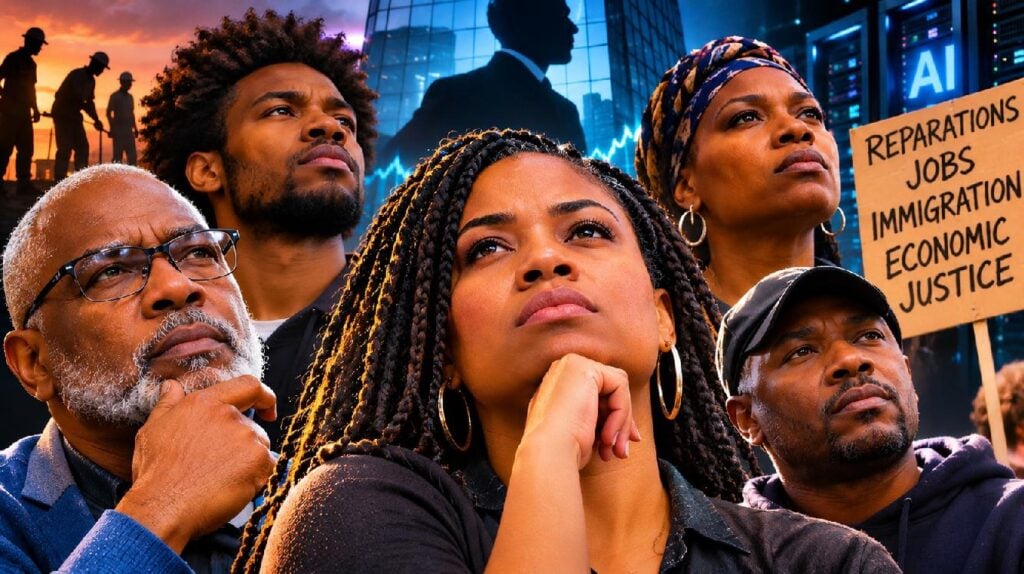
*Who deserves the blame when American workers lose jobs, struggle with wages or watch corporations invest billions in artificial intelligence? Immigrants trying to make a living, or the wealthy executives making the decisions?
That question sparked a heated November 24 discussion on Lipstick Alley, where an argument about economic inequality quickly became a larger debate over Black American identity, immigration and reparations.
The thread’s provocative title offered one answer: “Your adversary is not the immigrant. Your adversary is the oligarchy.”
But not everyone agreed that economic solidarity should take precedence over the distinct political interests of Black Americans.
The resulting exchange exposed competing views about corporate power, immigration policy and whether shared economic struggles necessarily translate into shared political priorities.
Scroll to continue reading








Billionaires, AI and the Immigration Blame Game
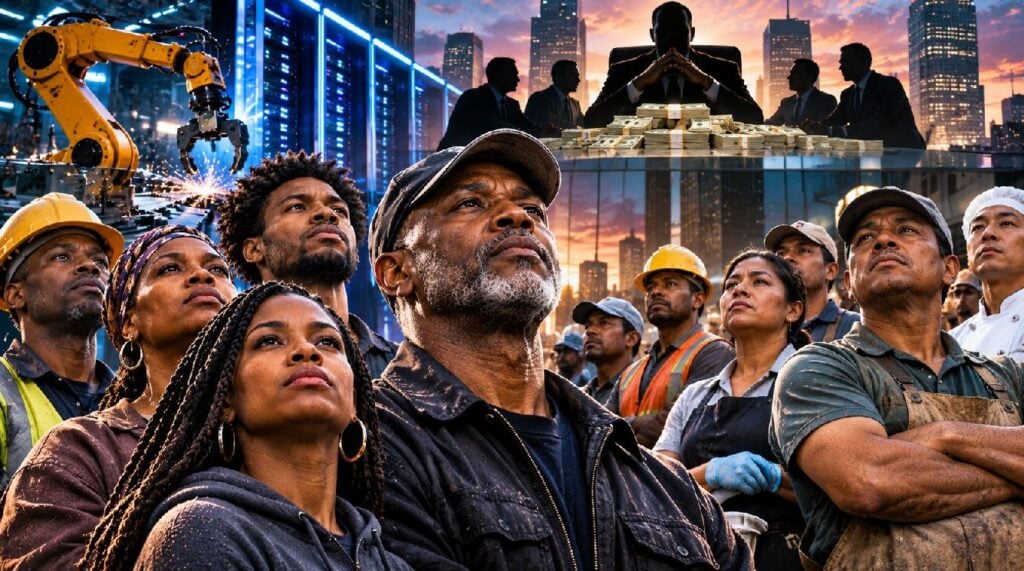
The discussion began when user TONYC suggested that billionaires investing in AI could benefit from workers blaming immigrants for job losses rather than questioning corporate automation.
The poster compared that possibility to historical efforts to exploit racial resentment among working-class Americans.
“Immigrants are not responsible for corporate decisions to automate jobs, suppress wages or prioritize shareholder profits over workers’ livelihoods,” TONYC argued.
Another commenter, KeeCee1982, agreed, writing, “It’s easier to punch down than up.”
However, the economic evidence is more complicated than either blaming immigrants for widespread job losses or assuming AI has already eliminated jobs across the economy.
A National Academies assessment found that immigration’s long-term impact on native-born workers’ overall wages is very small, although certain groups may experience negative effects.
Meanwhile, the International Labour Organization cautioned in 2026 that exposure to AI does not automatically translate into job losses.
Black American Identity Complicates Calls for Solidarity
The discussion took a sharper turn when commenters challenged the suggestion that opposition to immigration policies necessarily reflects hostility toward immigrants.
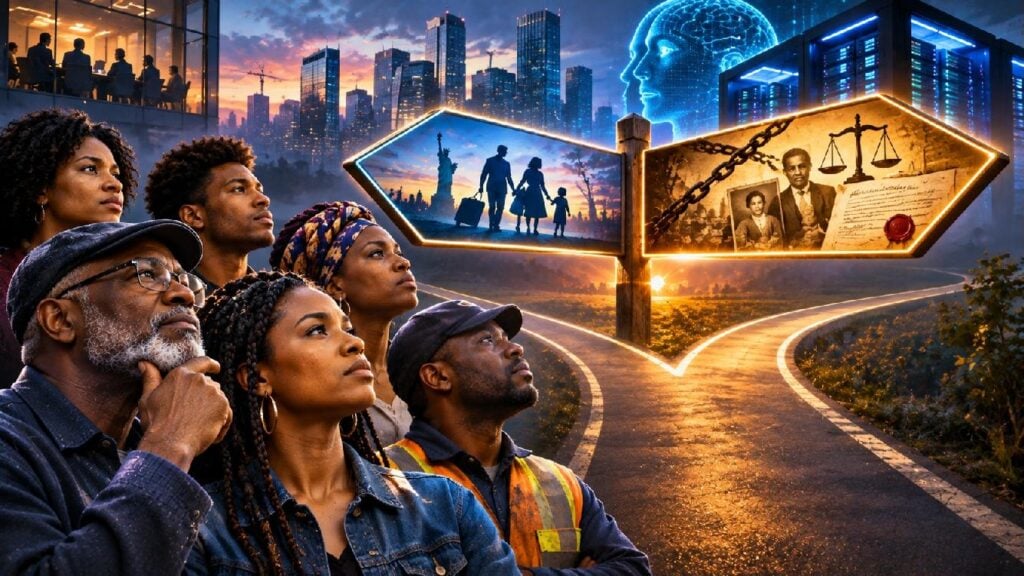
User PointOfOrder argued that the conversation could not be separated from debates surrounding American Descendants of Slavery (ADOS), Foundational Black Americans (FBA) and lineage-based reparations.
“Solidarity shouldn’t require us to sacrifice our identity or political demands,” the commenter wrote.
PointOfOrder maintained that Black Americans could demand corporate accountability, support reparations and question immigration policy without treating those positions as mutually exclusive.
Another participant, RiriStan, argued that wealthy employers benefit from access to cheaper labor, raising questions about who makes hiring decisions and who bears their economic consequences.
Other commenters rejected appeals to broad class solidarity, arguing that such appeals can overlook historical grievances specific to descendants of American slavery.
Those positions reflect a disagreement over political priorities, not proof that either immigration or corporate automation explains every economic hardship.
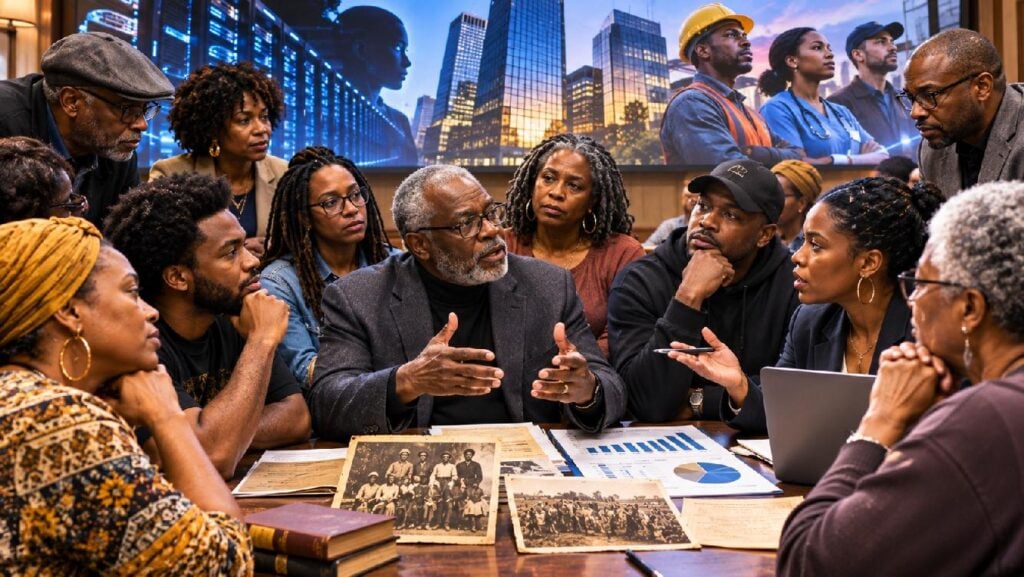
Can Economic Solidarity Coexist With Reparations?
The central question extends beyond one online discussion: Can workers share economic interests while maintaining different historical identities and policy demands?
Lineage-based reparations advocates generally emphasize the specific history of slavery and legally enforced discrimination in the United States. That argument is distinct from broader debates over immigrant labor and economic inequality.
Research also complicates sweeping predictions about technology. A 2026 international AI safety assessment found mixed employment effects, with some evidence of pressure on early-career workers in AI-exposed occupations but considerable uncertainty about broader outcomes.
Neither the immigration research nor the AI findings establish that billionaires are deliberately encouraging hostility toward immigrants. That remains the original poster’s interpretation.
The Lipstick Alley exchange nevertheless illustrates why arguments about class, race and immigration can become especially contentious when Black Americans believe their specific historical claims are being overlooked.
And it leaves an unresolved question: Can a coalition pursue common economic goals without requiring its members to set aside distinct demands for recognition, accountability and reparations?
(If You Like/Appreciate This EURweb Story, Please SHARE it!)
MORE NEWS ON EURWEB.COM: Idris Elba and King Charles III Mark 50 Years of The King’s Trust in Netflix Documentary ‘The Trust’ | TRAILER
We Publish Breaking News 24/7. Don’t Miss Out! Sign up for our Free daily newsletter HERE.