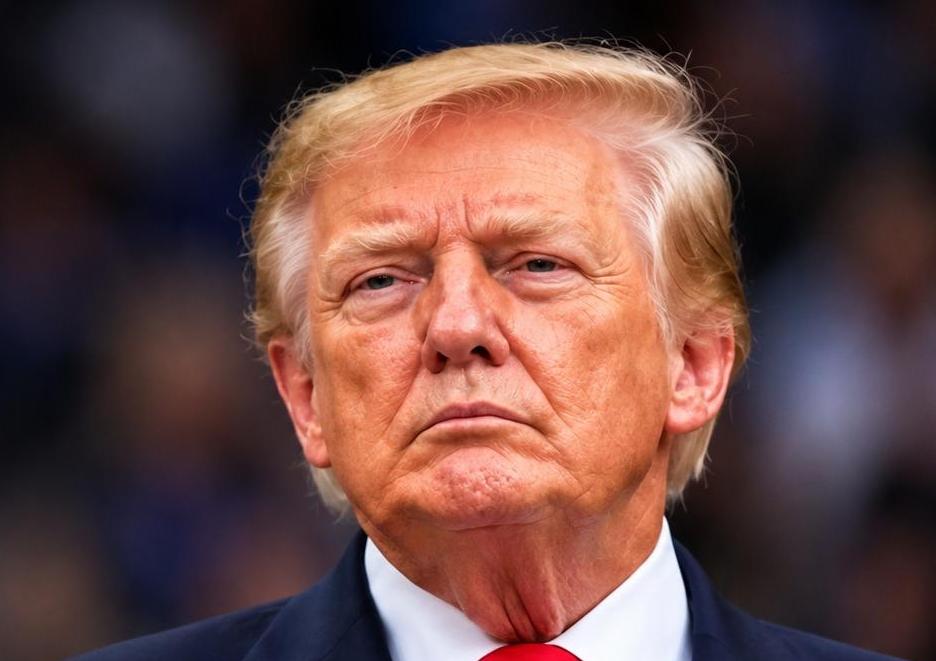
*”I’m going to be impeached.” Trump minced no words in expressing his worry that if the GOP lost control of the House in the November 2026 midterms that he would be impeached—again. The warning was intended as a rallying cry to the supporters at a rally in Myrtle Beach, South Carolina, in August 2026 to redouble their efforts to keep GOP control of Congress.
There was good cause for his worry and the admonition. Every one of the four hundred thirty-five congressional seats were up for grabs. In addition, there were thirty-six gubernatorial seats being contested as well as thousands of state and local offices. Many of them were very much in play for Democratic candidates.
Trump and the GOP well understood that if there was anything that even remotely resembled a Blue Wave in the midterms, it would blow to smithereens the notion of a unified government and more critically governance of the country. Trump would have to spend the final two years of his administration warding off Democratic challenges at every level of government to his policies.
The start to understand Trump’s possible dilemma is the numbers. The number of Democrat and GOP House members up for reelection are almost dead even. A handful of retirements, defections, election changes, court challenges, or even deaths or serious illness can easily tilt a keenly contested GOP filled House seat to a Democrat.
That possibility alone eliminates the need for a massive Democratic Blue Wave. A gain of two or three seats might well be enough to provide Democrats with the all-important majority in the House, and thus control.
Scroll to continue reading









Meanwhile, there is some talk and even nervousness among GOP strategists about retaining control of the Senate. That is a far steeper uphill climb for Democrats. They will need to capture four seats while not losing one Democratic seat to regain Senate control. It is possible. But again, it will be a much harder hurdle to leap than the House.
Here’s the major summary of what is at stake in the 2026 midterms. At the federal level, whichever party controls one or both houses, that party will set the template for legislative initiatives in the House, and the all-important Senate confirmations. And for both houses crucial funding and committee control is at stake. With the nation in a seeming iron clad political polarization split almost evenly down the middle, there is little hope of either side giving ground in either chamber.
Trump continually blusters about how supposedly good the economy was under his stewardship. Yet he can’t get around the blunt fact that the cost of virtually every consumer good, from gas to food, has soared. The greatest jump that affects millions and is literally a life and death concern for legions is the cost and accessibility of quality medical care. That combined with a visible slowing down of economic growth and creeping up joblessness cannot be blustered away by Trump.
The prospect of a divided government with the House and possibly the Senate again in Democratic hands will hurt Trump the most. There are two other Trump concerns about a congressional loss in the midterms.
The first is one that he constantly alludes to in talks to GOP boosters in the months before the elections. That is the threat of having his legislative agenda picked to pieces and stymied. It is the threat of impeachment –again.
The other is the effect a strong Democratic midterm showing will have on the 2028 presidential election. He will not be on the ballot again. But a GOP candidate will. If the Democrats continue to gain momentum from the 2026 midterm, that will not bode well for the party’s bid to keep the White House.
The key to victory for Democrats and Republicans in a sharply polarized nation and an even more sharply divided electorate between are the independents.Both parties expend much time, effort, and resources to message their stance on the issues in the most appealing way to independents. Both understand that even a small uptick in the independent vote in key swing states can play a huge role in the outcome of congressional and state races.
A divided government, though, will complicate matters for both parties. That’s what looms if the predictions hold true and the Democrats win the House and the Republicans hold the Senate. The House Democrats can conduct endless investigations, and committee hearings and shape the first version of spending bills. The GOP controlling the Senate can say who gets confirmed and blow off any Democratic boosted House legislation it doesn’t like.
In the run-up to the 2026 midterms, the Democrats spent a great deal of time and effort into constructing a winning game plan. The party mounted a deft fundraising campaign, picked a core of credible, electable candidates for state and House offices, eliminated much of the factional in-fighting within the party, and laser focused on the issues that voters soured on the most. They are Trump’s Iran war folly, and the soaring cost of living. That is more than enough to make Trump, and the GOP sweat the 2026 midterms.

Earl Ofari Hutchinson is an author and political analyst. His forthcoming book is Undoing the Trump Legacy (Amazon ebook and Middle Passage Press)
(If You Like/Appreciate This EURweb Story, Please SHARE it!)
RELATED NEWS ON EURWEB.COM: A Must See: The Viral AI Satire Born When Donald Trump (of All People) Told CNN’s Kaitlan Collins to Smile | WATCH
We Publish Breaking News 24/7. Don’t Miss Out! Sign up for our Free daily newsletter HERE.