*Tina Turner is at the center of a new online debate after a decades-old interview resurfaced showing the late music icon speaking candidly — and, for some viewers, surprisingly — about racism and her identity as a Black woman.
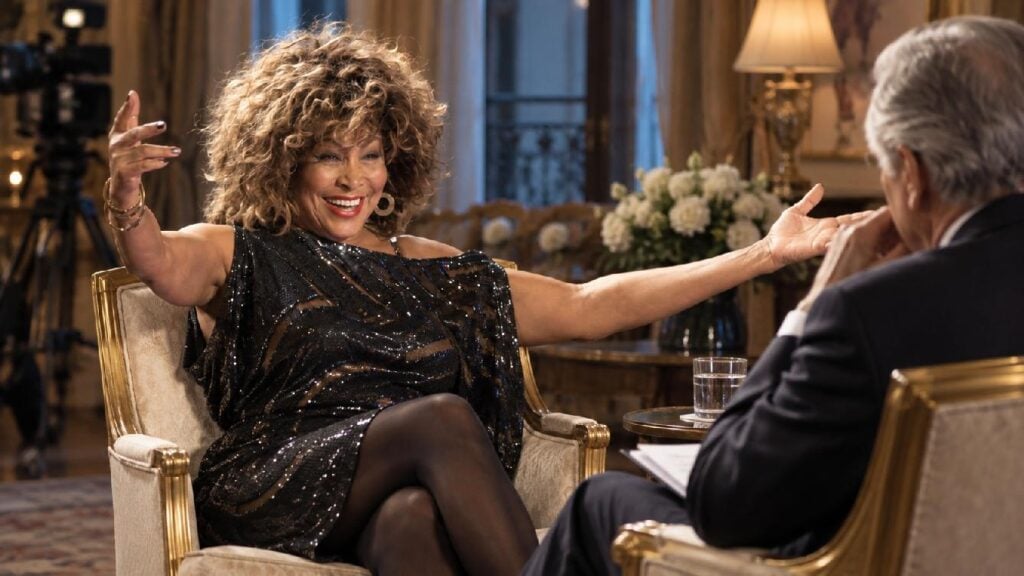
The 41-second clip, shared on X, comes from Turner’s September 2000 interview with Mike Wallace for CBS’ “60 Minutes II.” The user who posted it said they still considered Turner a legend but questioned whether her comments reflected an anti-Black attitude.
The footage is real. The interpretation is considerably more complicated.
In the exchange, Wallace observes that Turner’s music was primarily in the style of white rock bands. Turner responds that she doesn’t think much about color or race.
“Going to a back door never bothered me,” Turner tells Wallace while recalling growing up in segregated Nutbush, Tennessee. When the conversation turns to being called racial slurs, Turner says she essentially thought, “Well yeah, I’m Black,” and wasn’t bothered by her color.
Scroll to continue reading



Contemporary reporting published immediately after the Sept. 12, 2000 broadcast confirms those remarks. Turner went even further, saying, “If the whole world was like that, maybe there would be more harmony and love.”
The comments sound startling more than a quarter-century later, particularly when viewed through today’s conversations about racism, identity and the psychological effects of segregation. But labeling Turner “anti-Black” based solely on the clip risks turning her personal way of processing racism into something she didn’t actually say.
I love her down and she IS/WAS a legend but after seeing some old footage and reading on Lipstick Alley that she was anti-black just breaks my heart.😩😩😩😩😭😭😭😭 pic.twitter.com/VKNnURx9p9
— Tdspec0923 (@tdspec0923) September 3, 2026
Turner Had a Complicated View of Race
CBS’ own account of the interview provides additional context.
Turner, who did in 2023, told Wallace she believed it was more comfortable for people of color to live in Europe than in the United States, although she said she didn’t spend much time thinking about race.
“I never had that thing about being black,” Turner said. “I don’t have a problem with being black in a white country or being with my people. I’m OK where I am. I don’t even think about it.”
That distinction matters. Turner wasn’t denying that she was Black or claiming racial discrimination didn’t exist. She was describing how she personally responded to it.
Her career, meanwhile, offers plenty of evidence that racism existed around her whether she chose to internalize it or not.
As EURweb previously reported, the 2021 documentary “Tina” included audio of late Capitol Records A&R executive John Carter recalling resistance after he signed Turner to the label in the early 1980s.
According to Carter, a senior executive reacted to the signing by referring to Turner with the N-word and another vulgar insult. Carter fought to keep her on Capitol, although he said he was told the label would do virtually nothing to support the record.
That record became “Private Dancer,” Turner’s spectacular 1984 comeback that transformed her into a global superstar.
Capitol Music Group later condemned the decades-old remark as “reprehensible and appalling.”
Resurfaced Clip Doesn’t Tell the Whole Story
Turner’s relationship with race also included uncomfortable chapters.
EURweb’s 2023 remembrance noted that she performed in apartheid-era South Africa during the 1970s, a decision she later regretted. She subsequently declined additional offers to perform there before returning to post-apartheid South Africa during her 1996 “Wildest Dreams” tour.
Her enormous success in Europe became another part of that complicated history. Turner, who lived in Europe for decades, told Wallace that American audiences did not always understand how much bigger her career had become overseas.
None of that automatically settles the question being argued online now.
What the resurfaced video does reveal is a Black woman born in Tennessee in 1939 describing racism in a way that can sound jarring to a younger generation.
Turner appeared determined not to let racial insults dictate how she saw herself, even as the music industry she navigated sometimes viewed her through an unmistakably racist lens.
Whether viewers interpret that philosophy as resilience, detachment or something more troubling is likely to remain debatable.
Calling Tina Turner “anti-Black,” however, goes beyond what this 41-second clip establishes.
(If You Like/Appreciate This EURweb Story, Please SHARE it!)
MORE NEWS ON EURWEB.COM: How Tina Turner Set Records On This Day in 1984 | EUR Video Throwback – WATCH
We Publish Breaking News 24/7. Don’t Miss Out! Sign up for our Free daily newsletter HERE.