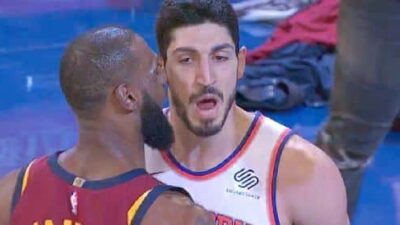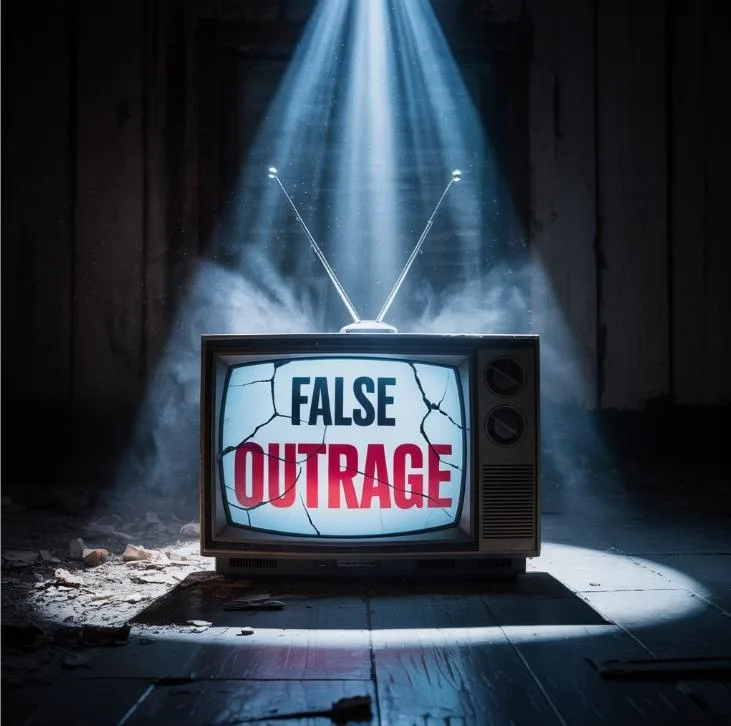
*Not long ago, specific lines in public life were harder to cross. Every society, regardless of its faith or philosophy, has spaces it designates as sacred, not always in a religious sense, but in the sense of being set apart. Politics, civic institutions, the press, even the pulpit carried a basic assumption: truth mattered, at least enough that outright lies were not the norm.
Something has shifted. Today, boundaries that once restrained us feel blurred or erased. Lies are not only tolerated, but they are also marketed. Outrage is not accidental; it is cultivated. What once belonged at the margins of discourse now sits at the center stage.
This isn’t a new human problem; deception and demagoguery have always had their moment. What is new is how fast and how far falsehood travels, and how the systems we live inside reward it. One large-scale study found that false news spreads online both faster and more extensively than the truth, and that we, not the algorithms alone, are the ones driving its dissemination.¹ Even repetition itself makes a false claim feel truer the more we hear it.²

We tell ourselves impulsiveness is authenticity, but often it is performance. And in digital spaces, performance pays. Social learning research indicates that the more outrage is rewarded with likes and shares, the more people tend to lean into it.³ In other words, we are training ourselves to get angrier, faster.
Cable news and talk radio have built industries on this very style. As one study put it, outrage has become its own economy, where heat is mistaken for light.⁵ It is no wonder that those who know how to perform anger rise to the top; they’ve learned the craft of capturing attention, even if at the cost of truth.
But I wonder: what is this doing to us? When everything is framed as an emergency, how do we discern what really matters? When spectacle outruns substance, how do we recover our ability to think clearly? These are not questions only for politicians or pundits. There are questions for all of us who live in the thick of this public square.
History reminds us that societies falter when truth becomes a tool rather than a shared trust. Communities fracture. Institutions weaken. Trust collapses. And yet, the same history shows that repair is possible. Boundaries can be rebuilt. Habits can change. It begins with the small choices: the stories we share, the corrections we own, the patience we practice before we speak.

The real question is this: do we want to be a people who perform outrage, or a people who practice truth? It is no accident that narcissism and self‐destruction dominate the cultural stage. Narcissism inflates the self into a spectacle, even a demand for attention, while self‐destruction erodes the foundations of our inner life and communal trust. Together, they build a volatile mood.
In psychological terms, narcissism is not merely self-esteem turned up loud. It is a heightened sense of self-importance, entitlement, and expectation that one must be treated as special.¹⁸ These traits do not stay private; they shape how institutions run. Studies of narcissistic leaders show they are less collaborative, less ethical, and tend to warp the culture of the organizations they lead.¹⁹ But narcissism also carries defensiveness: high narcissists tend to be hypervigilant for ego-threats, quickly scanning for slights that demand retaliation.²⁰
Self-destruction, another companion of this cultural posture, works more slowly. In clinical and behavioral studies, actions that harm one’s own body, social standing, or emotional stability often stem from misalignments: people mistaking their own story of suffering.²¹ When self-destructive choices arise, the connection between action and consequence blurs.
Now imagine adding the constant hypervigilance of our digital age, a world where people are perpetually on edge, scanning for threats or opportunities to pounce. Hypervigilance is well studied in clinical contexts; it’s a state of heightened alertness, internal scanning, and readiness for danger.²² Experiments manipulating hypervigilance show increases in anxiety, changes in visual scanning, and shifts in cognitive load.²³ In other words, the very act of watching all the time wears on us.
In that frame, narcissism and self-destruction do more than coexist; they feed each other. A hardened narcissistic posture demands a constant feed of approval and attention; when reality fails to deliver, self-destructive impulses step in to punish or remake the self. Meanwhile, digital hypervigilance keeps us locked in a loop: scanning, reacting, overshooting, retracting.
What do we gain from framing the moment this way? Two invitations:
-
Notice when public figures—and not even public figures—frame themselves as performance pieces rather than persons. Does their argument beg for applause more than clarity?
-
Watch your internal thermostat. When your mind is forever scanning—has someone wronged me, am I being appreciated, is something unfair—pause.
That does not mean passivity. It means being rooted in your life, your body, your story, not in the next flash of validation or the next fight.
In this environment, the raconteur has become a central figure. Once the word named a storyteller who carried meaning from memory to memory. Now it often points to a performer who thrives on endless chatter. Their craft is not understanding; it is attention. They sell the self, cultivate an audience, and call it truth.²⁷ ²⁸ ²⁶ ³⁴
They master sound bites, the shorter the better, and keep the camera moving.²⁴ ²⁵ They thrive on controversy because it generates clicks and bookings.²⁹ ³⁰ And people flock to it. Recklessness is often mistaken for courage; impulsiveness is sold as freedom. We keep coming back because intense feelings seem like clarity, and the platforms reward whatever stirs us most.³¹ ³⁰ Crossing a line gets you noticed. Breaking a norm makes you the one trending. Online mobs even mobilize to punish, perpetuating the cycle.³⁷
But what do we really receive from these voices? Mostly recycled talking points. Old slogans dressed as new insight. Coded appeals dressed as common sense. Tired caricatures of faith for easy applause.³² ³⁵ ³⁶ There is no creative horizon here, no steady vision of the good. It is performance. It is smoke without fire.³³
And smoke suffocates. It blinds us. It keeps us reactive rather than thoughtful. It poisons our ability to think clearly about the questions that matter most: What is true? What is just? What kind of society do we want to become? Stress degrades the very circuits we need for careful judgment. Constant multitasking dulls our ability to filter noise. When we are flooded, discernment gives way to impulse.³⁸ ³⁹ ⁴⁰ Repetition then greases the rails, and claims feel truer simply because we keep seeing them.⁴¹
The tragedy is not only that these figures exist. It is that we reward them with our attention. Our clicks, our shares, our subscriptions keep them on the stage. The largest platforms are built to privilege engagement. The more we interact, the more a post is ranked and recommended. That is not conspiracy. That is the business model of ad-funded feeds.⁴² ⁴³ ⁴⁴ We confuse provocation with wisdom. We mistake volume for substance. A few loud accounts can look like a crowd because of how networks are wired. Hot emotion carries content farther than quiet reason, and outrage gets reinforced the more it earns applause.⁴⁵ ⁴⁶ ⁴⁷
There is another path. Resist the seduction of spectacle. Turn toward voices that build, not only argue. Value insight over slogans, clarity over noise, creativity over cliché. We can strengthen our attention and our common life. Brief prebunking helps people spot manipulation before it lands. Structured forums for listening increase knowledge and trust. In living rooms and on doorsteps, honest conversation has moved hearts in durable ways. Journalism that includes real responses to problems leaves readers less cynical and better informed.⁴⁸ ⁴⁹ ⁵⁰ ⁵¹ ⁵²
Smoke can fill a room, but only fire gives light and warmth. The choice before us is whether we will keep chasing the haze or look for the flame.

Dr. Mark Chironna is a public scholar, executive and personal coach, and thought leader with five decades of experience in leadership development, cultural analysis, and future-focused strategies. With advanced degrees in Psychology, Applied Semiotics and Futures Studies, and Theology, he brings a unique interdisciplinary approach to helping individuals and organizations navigate complexity, unlock potential, and craft innovative solutions.

As a Board Certified Coach with over 30,000 hours of experience, he empowers leaders and teams to thrive through resilience, foresight, and actionable strategies. Passionate about human flourishing, he integrates psychological insight and cultural trends to inspire growth and transformation. Contact via his website: www.markchironna.com.
(If You Like This EURweb Story, Please SHARE it!)
MORE NEWS ON EURWEB.COM: Mark J. Chironna PhD/The Cult of Personality: The Erosion of Truth
Sign up for our Free daily newsletter HERE.
MORE NEWS ON EURWEB.COM: Mark J. Chironna PhD/The Cult of Personality: The Erosion of Truth
Sign up for our Free daily newsletter HERE.