*Some public figures are manufactured by publicity. Others are built by survival, service, scholarship and years of showing up when nobody is watching.
Edmond W. Davis belongs to the second category.
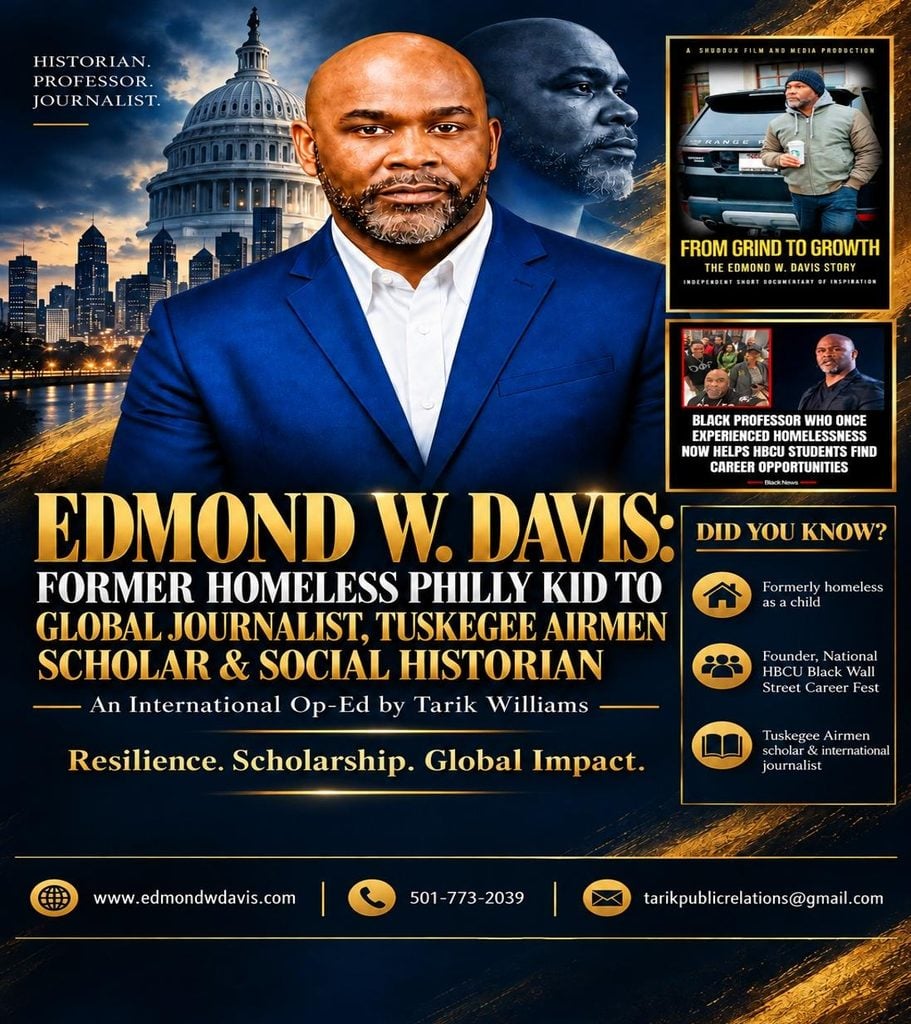
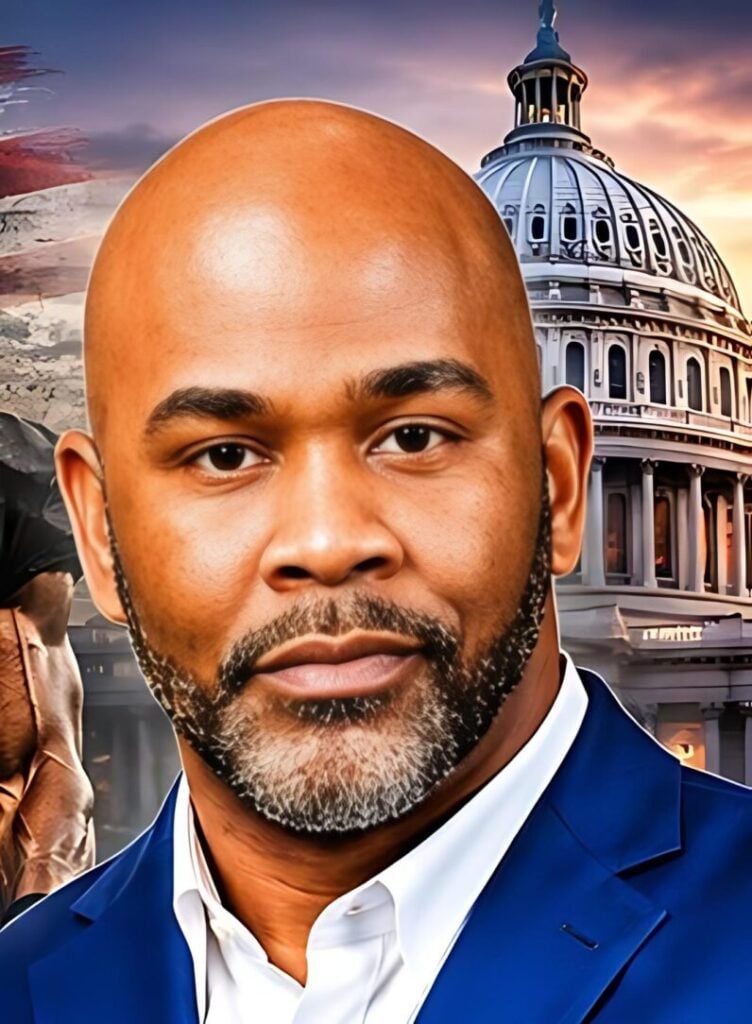
Today, Davis is known as a social historian, professor, media strategist, author, international journalist and speaker whose work connects history, education, media, entrepreneurship and community development. His official biography notes more than two decades in higher education and a body of work spanning speaking, consulting, media strategy, teaching and civic engagement. (edmondwdavis.com)
But the headline is not where his story began.
It began in Philadelphia, where Davis experienced homelessness as a child. His later journey from homelessness to the college classroom became the subject of the 2023 short documentary “From Grind to Growth: The Edmond W. Davis Story,” which IMDb describes as the story of a formerly homeless fourth-grader who ultimately became a history professor. (imdb.com)
Scroll to continue reading






That story, however, should never be mistaken for a one-man miracle.
Behind Davis’s public résumé was the sweat equity of family.
His mother, Charlette Thompson, and his father, James Edmond Davis Jr. (1942–2002), helped lay the foundation for his future regardless of the family’s living arrangements at different points in his childhood. Survival required sacrifice, discipline, encouragement and the kind of labor that rarely appears in professional biographies.
And Davis was never alone.
His siblings—Jeffrey, Lillian, Karen, Charles, Kim, Teresa, James, Jamice, Erica, Damica and Coco—all played roles in his development, some years ago and some continuing today. That contribution may have come through protection, example, accountability, encouragement, shared struggle or simply being present when family needed family.
Success stories are too often edited into myths of individual triumph.
Families know better.
Behind one person who eventually stands on a stage, teaches in a classroom, writes a book or launches an organization are often relatives who shared rooms, gave rides, carried groceries, watched children, prayed, argued, sacrificed and kept one another moving.
Davis climbed—but he did not climb alone.
That reality fits Ecclesiastes 4:9–10:
“Two are better than one… For if they fall, the one will lift up his fellow.”
That family foundation matters because Davis kept building.
He became a longtime college professor. He developed expertise in African American history and the Tuskegee Airmen. He became an author and public speaker. He entered media. He developed the RESPOND-I-BILITY framework. He became involved in film and television, with IMDb credits including NBC’s “Bluff City Law,” “Selma: The Untold Stories,” and his own documentary. (imdb.com)
And his journalism moved beyond Arkansas.
His commentary now appears internationally, including a substantial archive at Modern Ghana, where his columns address history, race, politics, education and contemporary social issues. His own media page identifies work and appearances tied to outlets and platforms including Modern Ghana, EURweb, MSN, Baptist News Global and others. (modernghana.com)
That is why the term global journalist is not simply promotional language.
His work is read across North America, Africa and Europe, and his bylines have increasingly placed a Little Rock-based HBCU professor into international conversations about Black history, public policy, education and human rights.
Davis is also widely associated with the history of the Tuskegee Airmen, one of the most important chapters in Black military and aviation history. He has built a public reputation around teaching and preserving that legacy while connecting it to contemporary questions of citizenship, service and opportunity. His official professional materials identify this scholarship as a core part of his public work. (edmondwdavis.com)
His professional résumé is unusually broad.
Professor. Historian. Author. Radio host and producer. Media strategist. Photojournalist. Career-services leader. Faculty leader. Actor. Documentary subject. Public speaker. Nonprofit executive.
For some people, that might look like a collection of disconnected careers.
For Davis, the pieces appear to revolve around one central idea:
turning history into access.

That philosophy is especially visible in the National HBCU Black Wall Street Career Fest, which Davis founded with Monica Davis. The initiative connects HBCU students, alumni and communities with employers, entrepreneurs, professional-development opportunities and economic resources. Its official program description emphasizes career exposure, entrepreneurship, networking, financial literacy and the legacy of Black Wall Street. (edmondwdavis.com)
The project represents an unusual merger of two powerful Black American traditions:
HBCUs and Black Wall Street.
One represents education and institution-building.
The other represents entrepreneurship and economic independence.
Put them together, and Davis has attempted to create what might best be described as an opportunity ecosystem—one in which students can encounter employers, internships, graduate programs, entrepreneurship pathways, military opportunities, mentors and community partners in the same environment.
The Career Fest is now moving beyond its earliest years, with Davis continuing to position it as more than a one-day event. His official site describes it as an expanding movement rooted in purpose, partnership and progress. (edmondwdavis.com)
And yet he remains an unusual kind of public figure.
There is no celebrity mansion narrative here.
No carefully manufactured Hollywood origin story.
No attempt to erase the train-station years.
Instead, Davis repeatedly returns to them.
Why?
Because adversity is not merely part of his biography.
It became part of his curriculum.
The message is simple:
your beginning does not have to dictate your destination.
That idea aligns closely with Romans 8:28:
“All things work together for good to them that love God.”
It echoes Philippians 4:13:
“I can do all things through Christ which strengtheneth me.”
And his public-service work reflects Proverbs 31:8–9:
“Speak up for those who cannot speak for themselves… defend the rights of the poor and needy.”
Those scriptures are not decorative additions to Davis’s story. Faith, family, education and service have remained central themes throughout his public life.
His wife, Monica Davis, has shared in the HBCU Black Wall Street work, and the couple has a son, Kalon. That family foundation matters because one of the most interesting things about Davis’s public profile is how frequently his work moves between the individual and the collective.
His story begins with survival.
But it does not end there.
The greater question becomes:
Who survives because you created a pathway after you survived?
That may be where Davis’s story becomes more significant than the résumé.
His career is not simply about accumulating titles.
It is about converting those titles into infrastructure.
Teaching becomes mentoring.
History becomes public scholarship.
Journalism becomes cultural interpretation.
Career services becomes workforce development.
A personal story becomes a documentary.
A conference becomes a pipeline.
A Tuskegee Airmen book becomes historical preservation.
A childhood struggle becomes a message to students who may currently believe their own circumstances are permanent.
Davis’s media reach continues to grow. Recent profiles identify him as a social historian, media strategist, professor and documentary host, while international outlets continue to publish his commentary. In 2026, published profiles also identified him as a grand marshal of the 38th Annual African American History Month Celebration Parade. (modernghana.com)
That is worth noting because Davis’s public work now occupies several worlds simultaneously:
academia, media, HBCU culture, Black history, workforce development and public commentary.
He may never fit neatly inside one occupational box.
Perhaps that is the point.
The American labor market likes titles.
History often remembers impact.
And somewhere between those two sits Edmond W. Davis—a former homeless Philadelphia kid who became a college professor, built an international journalism portfolio, preserved Tuskegee Airmen history, entered film and television, and created an HBCU career platform designed to help somebody else get through a door.
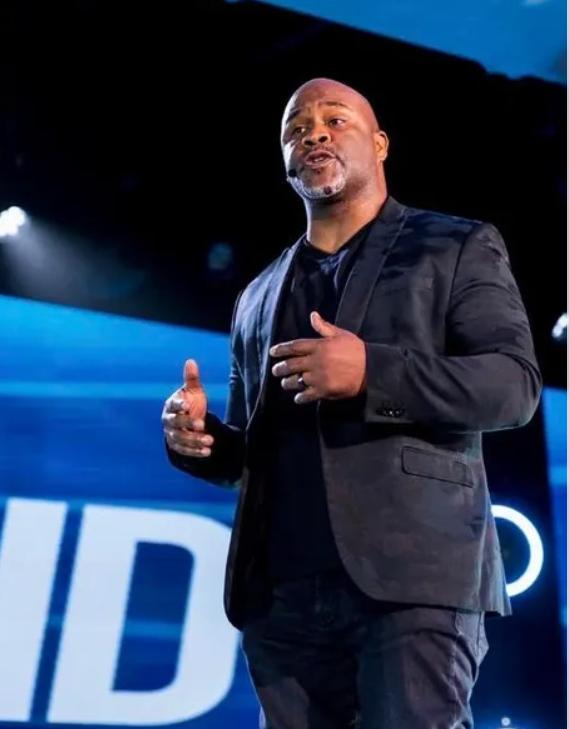
To Arkansans, here is the real “Did You Know?”
When Davis is not booked to speak, writing as a media strategist and international journalist, working contracts as a social historian, or building the next National HBCU Black Wall Street experience, he still teaches at a small HBCU in downtown Little Rock.
Quietly.
Consistently.
Still building.
Perhaps that is why From Grind to Growth remains such an appropriate title.
Because the grind explains where he came from.
The growth explains why the journey matters.
References
Edmond W. Davis — Official Website — biography, speaking, media and professional work. (edmondwdavis.com)
National HBCU Black Wall Street Career Fest — mission, programming, founding and workforce-development model. (edmondwdavis.com)
IMDb — Edmond W. Davis / From Grind to Growth — documentary biography and television/film credits. (imdb.com)
Modern Ghana / International Media Archive — Davis’s continuing international commentary and journalism. (modernghana.com)
Is this conversation helpful so far?
(If You Like/Appreciate This EURweb Story, Please SHARE it!)
RELATED NEWS ON EURWEB.COM: Meet Me in Aisle 10: Eighteen Years Later, Edmond and Monica Are Still Choosing Each Other
We Publish Breaking News 24/7. Don’t Miss Out! Sign up for our Free daily newsletter HERE.