

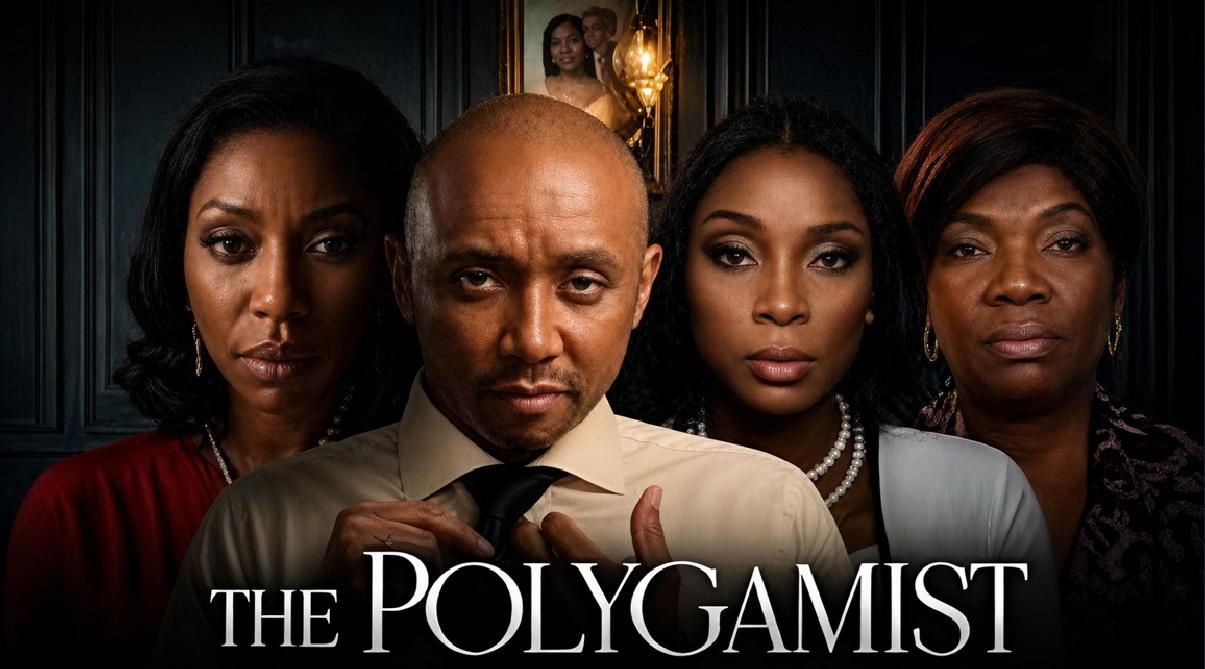
*Netflix’s Zulu-language drama “The Polygamist” has become one of the streaming giant’s biggest international surprises, but its success isn’t just about shocking plot twists or binge-worthy drama. The South African series is introducing global audiences to a side of African life they rarely see on screen.
According to an NPR report, the 22-episode series amassed more than 23 million views during its first month on Netflix, reaching the platform’s Top 10 in 62 countries, including the United States, while climbing to No. 1 in nearly two dozen markets. Set in Johannesburg, the drama follows the wealthy Gomora family as matriarch Joyce struggles to hold her family together after discovering her businessman husband, Jonasi, has secretly established a second household with another woman.
Packed with betrayal, explosive confrontations and unexpected twists, “The Polygamist” has become a social media obsession, drawing praise from viewers around the world—including television personality Sherri Shepherd, who shared on Instagram that she was “hooked” on the series after comparing its lavish lifestyle to “Crazy Rich Asians.”
But according to the people behind the story, the show’s international appeal goes much deeper than its cliffhangers.
Scroll to continue reading








Breaking Away from Familiar Stereotypes
Sue Nyathi, the Zimbabwean author whose novel inspired the series, believes audiences are responding to a version of Africa that international entertainment has largely overlooked.
“It also showcases a different kind of African lifestyle that viewers are not familiar with,” Nyathi said. “Because oftentimes in media, we have one lens in which Africans are viewed.”
That familiar lens, she argues, has long focused on struggle while overlooking another reality.
“It’s always the poor struggling Africans,” she said. “This is not to dismiss the poverty in Africa. No, but it’s also saying that there is also a society of Africans that are very affluent, well off.”
“The Polygamist” embraces that world unapologetically. The series unfolds inside luxurious Johannesburg estates complete with manicured gardens, designer wardrobes and high-end automobiles, offering a glimpse of Black wealth and success that remains underrepresented in global television.
For many international viewers, those images are as eye-opening as the show’s dramatic storylines.
A Story That Crosses Borders
While its setting is distinctly South African, Nyathi believes the emotions driving the story are universal.
“It’s a series that holds up a mirror to society and people see themselves in one form or the other,” she said. “Because it resonates deeply, that’s what makes it popular.”
At its center, “The Polygamist” explores infidelity, betrayal and family loyalty through the lens of a husband living a secret double life. Those themes, Nyathi said, transcend geography.
“As much as Jonasi is a polygamist, he’s also a cheating husband,” she said. “Infidelity permeates the story. And I think that’s a problem that is universal.”
The adaptation has also revived interest in Nyathi’s original novel, which struggled to find a wide audience when it was first published. Since the Netflix debut, readers have flocked to bookstores and book signings, introducing many people to her work for the first time.
Nyathi intentionally told the story from the women’s perspective.
“The man never speaks,” she explained. “We’ve heard men speak all our lives. Men will always justify why they want to have more than one wife.”
Instead, she wanted readers and viewers to understand why women remain in such relationships and how those choices shape their lives.
Entertainment That Sparks Conversation
The series has generated debate far beyond Netflix.
In South Africa, where traditional polygamous marriages are legally recognized while civil marriages are not, “The Polygamist” has reignited discussions about marriage, women’s rights, HIV awareness and gender-based violence.
The show’s relevance has extended into public health campaigns. UNAIDS launched messaging using the image of Jonasi with the slogan, “Don’t be a Jonasi. Keep yourself and your partners safe.” Meanwhile, South Africa’s Limpopo provincial government incorporated the series into an educational campaign against gender-based violence.
The production also carries a unique connection to South African history. Producers Gugu Zuma-Ncube and Thuli Zuma are daughters of former South African President Jacob Zuma, who has multiple wives. Zuma-Ncube has said her father’s family structure shaped her understanding of the complex emotions surrounding polygamy and informed the storytelling.
Although she admits she has no idea what her father will think of the show once he watches it, she hopes its international success creates opportunities for other African creators.
“We were completely surprised,” Zuma-Ncube said of the global response. “I think the attention that it’s gotten, the welcome and reception that it’s gotten, will help the entire industry and will benefit all African storytellers.”
As audiences around the world continue discovering “The Polygamist,” they’re finding more than another addictive Netflix drama. They’re seeing a broader, more nuanced portrait of African families, ambition and culture—one that challenges long-held assumptions while proving that powerful storytelling can resonate across borders.
(If You Like/Appreciate This EURweb Story, Please SHARE it!)
MORE NEWS ON EURWEB.COM: NewsBits: Beyoncé & Jay-Z’s Estate Gate Crash, Tia Mowry’s New Custody Rules & Baron Davis Sued by Sister
We Publish Breaking News 24/7. Don’t Miss Out! Sign up for our Free daily newsletter HERE.







Leave a Reply