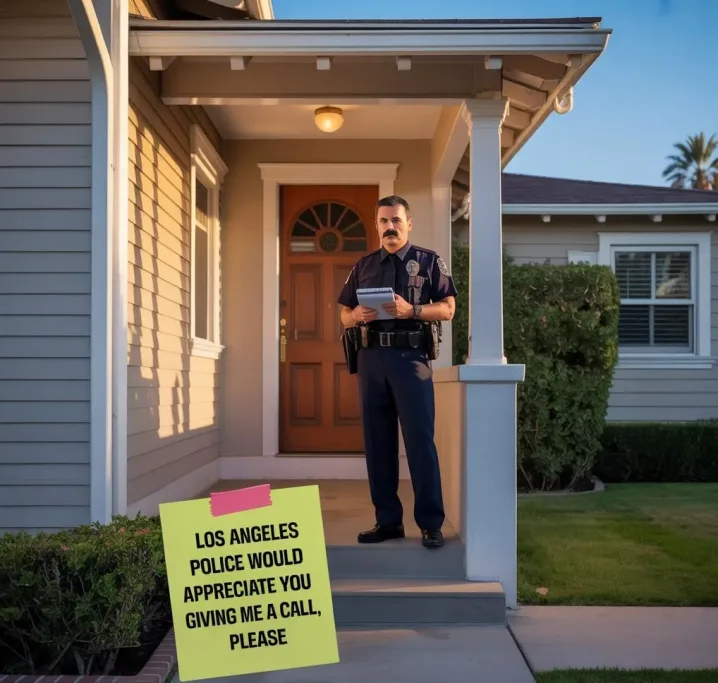
*One afternoon a year ago, I came home to find something that scared the hell out of me: wedged in the crack between my front door and its frame was a business card from a Los Angeles Police Department detective. On the card, under the LAPD logo, was scribbled, “Would appreciate you giving me a call, please.”
Even if you’re not guilty of anything, a message from law enforcement will have you racking your brain for something you might have done. It took me a day to call the detective.
When I did, the cop explained that a home in the neighborhood had been burglarized a few days earlier. Although he hadn’t seen one on the premises, he asked if I had cameras that might have captured images of the suspect’s car passing down my street. It’s common, he said, for cameras in a community to contribute useful leads in solving crimes.
I wasn’t able to help the detective. But my conversation with him back then recently came to mind during that whole mess with the married (now former) CEO, who was caught with his date—who happened to be his company’s Human Resources executive, not his wife—on the kiss-cam at that now-infamous Coldplay concert.
But you don’t have to visit a stadium or concert hall to realize you’re being watched. With the proliferation of cameras in today’s world, privacy, in the traditional sense, no longer exists. That’s not just a figure of speech.
Scroll to continue reading









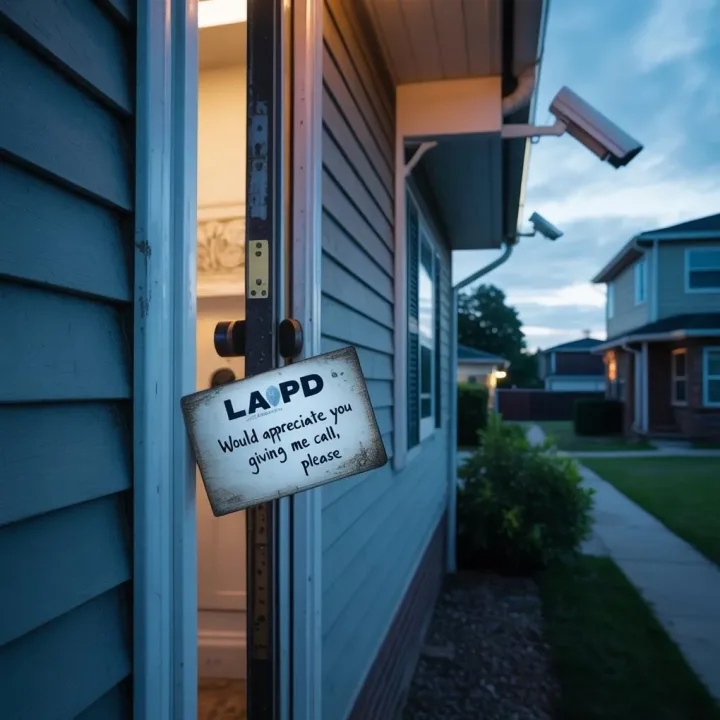
The moment you leave home, consider your privacy gone. As soon as you step outside your door, Ring or another home security camera system captures your image.
Cameras on commercial buildings record your vehicle as you pass by. Dash cams in other cars notice you behind the wheel. If you run a red light, smile for the law enforcement cameras that capture your picture in the middle of the intersection. In a supermarket aisle, you’re visible on the screen above you.
Wherever you go, understand that even if you’re not being watched live through a camera, a camera probably records your image for future viewing.
I remember a time when cameras weren’t everywhere. You could be in public day or night, and the act was self-contained; unless someone saw you with their own eyes, you weren’t there.
Back in the day, being caught on a hidden camera was so rare that TV producer Allen Funt created a successful show based on the idea. “Candid Camera” used covert cameras to record unsuspecting people as they responded to unusual situations and pranks. When the joke was finally revealed, victims were shown where the camera was hidden and told, “Smile, you’re on Candid Camera.”
The camera has always played a role in human life. It’s one way we immortalize our existence. Before everyone had a camera on their phone, it seemed like every family had a relative who was a camera enthusiast.
We took pictures and sent the film out for development. The brief wait for the snapshots only heightened our excitement to see them. The peak of personal images back then was home movies, shot on Kodak Super 8 film.
The Polaroid camera system, which produces instant physical photos, was a game-changer. And when the Polaroid camera entered the bedroom—well, ‘nuff said.
Today, the camera has created its own culture. In real time, it captures graduations, sex acts, weddings, broad daylight store robberies, a child’s first steps, and people being starved to death in Gaza. Through the camera’s lens, people are seen at their very best and their worst.
In the process, cameras have contributed to a society’s narcissism among those addicted to taking selfies and videos of themselves and sharing them online. Meanwhile, body cams worn by law enforcement have proven essential in holding both officers and suspects accountable.

And the camera reveals other things. Several years ago, at the start of the doorbell camera trend, an early 40-something friend of mine who didn’t have a security camera system—I’ll call him Jason—lived three doors down. A neighbor who lived directly across the street from him invited Jason over. The neighbor wanted to demonstrate the effectiveness of his surveillance camera system, which even covered Jason’s property.
The neighbor rapidly skipped through a week’s worth of footage from his security system, which recorded activities at Jason’s front door.
The video explained the mystery of the occasional dead bird or mouse at Jason’s doorstep, revealing that the neighborhood’s scruffy stray calico cat — whom Jason’s work-from-home wife occasionally fed — was leaving a gift of appreciation.
The neighbor’s camera recorded the early morning jogger who had no problem stealing the Sunday Los Angeles Times from Jason’s lawn. And in the video, Jason could see how beautiful the pink and white roses he had planted in his front yard looked from across the street.
When they finished viewing the video, Jason expressed fascination at seeing everything that happened at his house while he was asleep or at work all day–everything except something both he and the neighbor acted like wasn’t there: footage of a man he didn’t recognize, who came to his home at least twice in one week and stayed for several hours, leaving just before Jason arrived home.
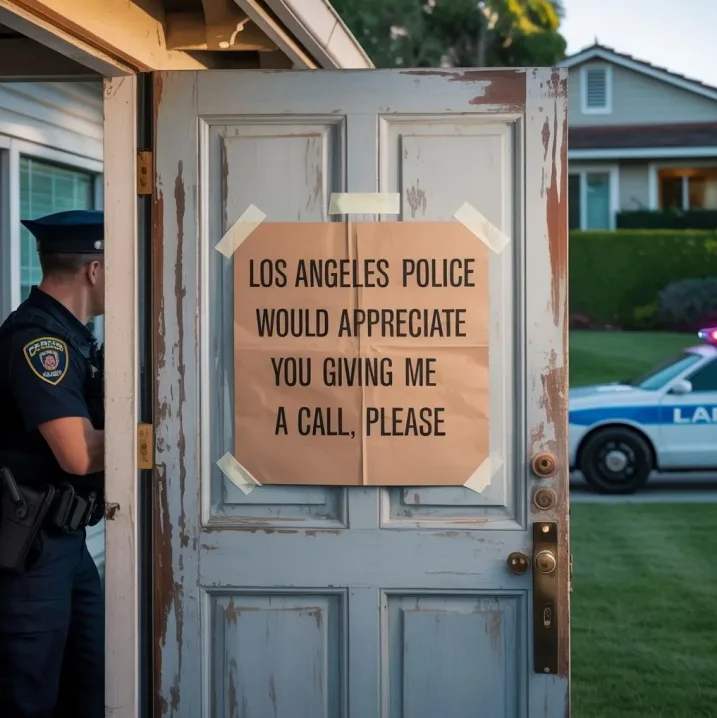
The stranger would enter so quickly—without pausing to be let in—that it seemed as if he had a key.
Word is, Jason went home and confronted his wife about the stranger, which she duly denied. But her rebuttal didn’t hold up. The neighbor’s camera saw it all.

Steven Ivory, veteran journalist, essayist, and author, writes and talks about popular culture across various platforms, including the Internet, TV, radio, documentaries, magazines, and newspapers. The Last Man on AOL is at [email protected]
MORE NEWS ON EURWEB.COM: Aisle Lice: The Annoying Air Travel Trend Disrupting Deplaning Etiquette
We Publish Breaking News 24/7. Don’t Miss Out! Sign up for our Free daily newsletter HERE.