*After years of working in television and weathering both a pandemic and an industry strike, Scott Foley found himself craving something different. When the script for “It’s Not Like That” landed in his inbox, he discovered exactly what he had been looking for: a character-driven drama that didn’t rely on aliens, guns, or other outlandish plot devices to tell a compelling story.
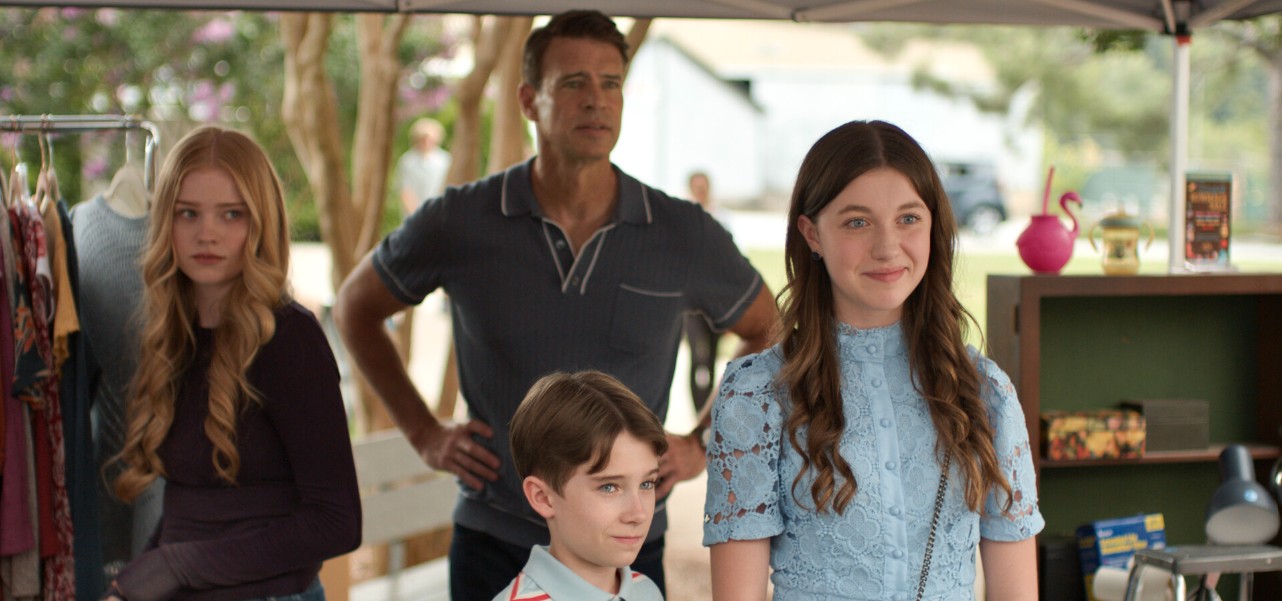
“It’s Not Like That” follows Malcolm, a pastor and recently widowed dad of three, played by Foley. Lori, portrayed by Erinn Hayes, is freshly divorced with two teens. Their families once did everything together, but now Malcolm and Lori must navigate their newly minted singledom, parenthood, and the complexities of Malcolm being a modern-day pastor. Is this the beginning of a love story? It’s not like that. Or is it?
For Foley, the appeal was immediate and deeply personal. He not only signed on to star but also came aboard as an executive producer, a role he takes seriously and one that allows him genuine creative input throughout the production process.
“When I was first presented with this script, I had been watching a lot of television,” Foley explained. “This came on the heels of not just the pandemic, but then the writers/actors strike. So I was excited to get the script in my inbox. I’d been watching a lot of television and loving the television I saw, but there was a similar thread through all of it. There’s a huge, sometimes unbelievable, inciting incident. There’s guns, or there’s aliens, or there’s a dome we’re all living under, whatever it was. I read this, and I was able to breathe, even though it was about divorce and the death of a spouse and managing after that.”
Scroll to continue reading





The family drama series comes from creators Ian Deitchman and Kristin Robinson, known for beloved projects like “Life As We Know It” and “Parenthood.” It blends modern family drama with themes of connection, second chances, and navigating life after major transitions. What drew Foley to the material was precisely what makes it challenging: the simplicity and authenticity of the storytelling. He referenced classic character dramas that shaped his career and viewing preferences.
“I love a simple story. I loved Felicity. I liked Parenthood. I liked Friday Night Lights. I love Thirtysomething. These great character dramas that we really don’t get a chance to see that much anymore,” Foley said. “And because I liked it that much, I wanted to make sure that it stayed that way. One of the ways that I could do that was to ask to sort of be a part of the creative process, and being an EP on this allows me to do that.”
His role as executive producer is far from ceremonial. Foley described being involved from the earliest stages of script development through post-production, offering notes on everything from character development to music choices.
“I see the scripts when they’re in first or second draft. I see the cuts of the shows after the first cut, after the director’s cut,” he explained. “So I can give my notes, my opinion.”
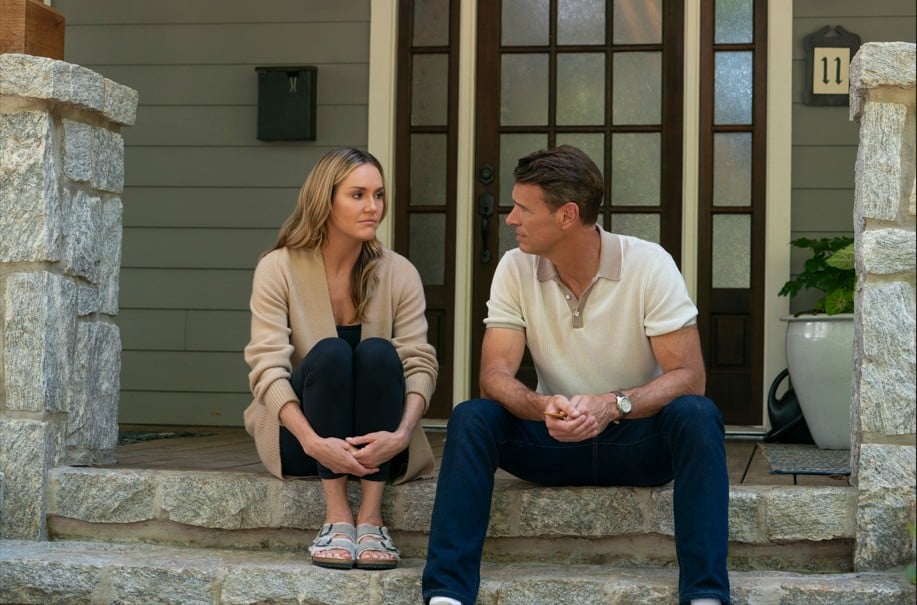
After decades in the industry with both successful multi-season runs and projects that didn’t make it past the pilot stage, Foley has reached a point in his career where having creative input matters deeply to him.
“I’ve been doing this a long time, and I’ve been really lucky. I’ve had a bunch of shows that have been successful and had multi-season runs. I’ve also had some that are one-and-done or done pilots that don’t go anywhere. Really good scripts,” Foley noted. “… to be able to have some creative input at this point in my career is really important.”
Playing Malcolm Jeffries presented Foley with a character unlike any he had tackled before. As a pastor and faith leader, Malcolm required Foley to explore territory that felt both daunting and meaningful. “I’d never played a pastor, a faith leader before, and it was daunting on a number of fronts. I think Malcolm is a believer, whether it’s in the Lord, whether it’s in the future of his children, the future of society, he believes… it allows his character to be open and accepting. And that is something that you don’t see very often on television,” Foley said.
The role also allowed Foley to examine the unique challenges faced by faith leaders when it comes to forming genuine personal connections. He described the subtle distance that naturally forms between pastors and their communities. “It’s hard for faith leaders, for pastors, to make real, honest connections with people, to have personal friends… That’s why he holds on so tight to what he and Laurie have, their connection,” the actor said.
Malcolm’s journey this season centers on navigating grief while supporting everyone around him who is also grieving. It’s a challenge that resonated with Foley on a deeply personal level. “The biggest challenge is dealing with the loss of his wife and dealing with all the feelings around that. It’s not just him dealing with his feelings. He’s got his kids he’s dealing with,” Foley explained.
During production, a conversation with co-star Erinn Hayes brought an unexpected revelation about his connection to the material. Hayes mentioned relating to her character Merritt, whose parents divorced when she was 14. “My mom died when I was 15. I watched my father sort of be the, he wasn’t a pastor, but he had to manage three children after the loss of his wife and manage their loss and his. It’s a lot to deal with. Maybe I’m serving some sort of penance by doing this role,” Foley reflected.
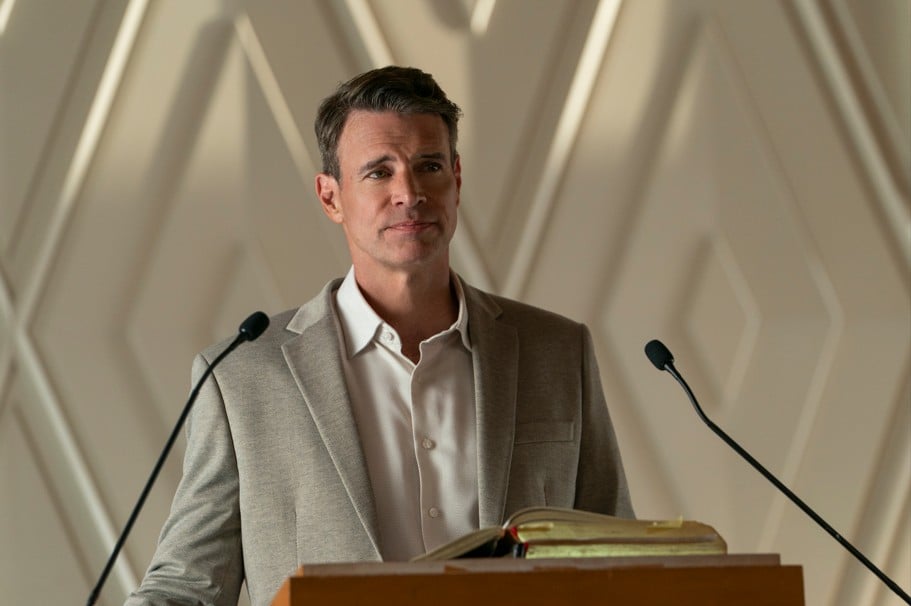
For Foley, one scene in the pilot episode captures everything essential about Malcolm’s character. It’s a moment of raw vulnerability that he believes defines not just Malcolm, but what makes the series special.
“It’s when he goes up onto the pulpit after not being able to, for weeks, trying to write a sermon and not being able to do it. His vulnerability in front of his congregation, asking for their patience and their support, is not something you see grown men do very often. I think that really sums up the character of Malcolm. He is a man as much as anybody else. He wants to try to do it himself. But he also understands ‘I have a community and I can lean on that community and I can be vulnerable with that community,'” Foley said.

When asked what he hopes viewers will take away from the first season, Foley expressed enthusiasm for the multiple storylines woven throughout the series. From the will-they-won’t-they dynamic between Malcolm and Lori to the complicated relationship between Malcolm and David, to Lori’s unexpected reunion with her ex-husband, the series offers entry points for viewers of all ages.
“The hope is that you can watch this show with your family, or if you got kids, you can watch it with little kids, and everybody’s going to have something that they dig their teeth into,” Foley said. “I think it’s appealing for different age ranges and demographics.”
And naturally, Foley has one more hope: “I hope they’re talking about when we can get more. That’s really exciting for me, and I’m so proud of the show.”
It’s Not Like That,” which also stars J.R. Ramirez, will premiere with its first two episodes on Wonder Project’s subscription on Prime Video on January 25. New episodes will premiere weekly on Wonder Project on Prime Video every Sunday.
Watch our full conversation with Scott Foley below.
*This interview has been edited for length and clarity.
MORE NEWS ON EURWEB.COM: Angela Bassett Shares Excitement Over Teyana Taylor’s SNL Homage to ‘Waiting to Exhale’
Sign up for our Free daily newsletter HERE.