
*A new report from the civil rights organization JULIAN is challenging the long-held belief that lynchings in the United States ended decades ago, documenting more than 70 such killings in the 21st century across seven Southern states.
The report, titled “A Crimson Record,” serves as a direct follow-up to Ida B. Wells’ pioneering 1895 work, “A Red Record,” which first cataloged the epidemic of lynching in America. Released Feb. 18, the new investigation examines modern-day lynchings, or MDLs, in Alabama, Florida, Georgia, Louisiana, Mississippi, Tennessee, and Texas since 2000. In total, it analyzes more than 150 fatal hate crimes and suspicious deaths during that period targeting Black, Brown, immigrant, Indigenous, and LGBTQIA+ communities.
“A Crimson Record exposes the long-buried truth about modern-day lynchings, calling these crimes exactly what they are despite systemic attempts to erase and deny them,” said JULIAN founder Jill Collen Jefferson. “Lynching has never disappeared — it has adapted, hidden behind silence and indifference.”

Redefining a Legacy of Terror
JULIAN defines a modern-day lynching as a discriminatory killing carried out by more than one person for an alleged offense, with or without legal trial or due process. Unlike a standard hate crime, the intention behind an MDL is to spread widespread terror to uphold systems of supremacy, and they often involve an element of spectacle.
Scroll to continue reading









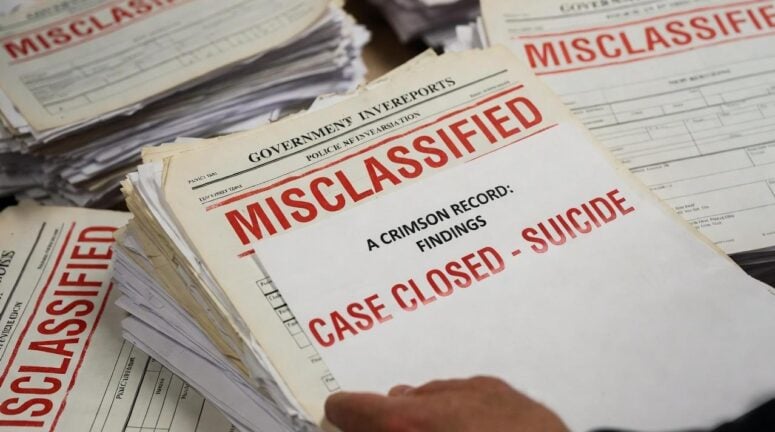
The report argues that the reason so few Americans are aware of the prevalence of these killings is a deliberate system of obfuscation. Investigators, the report alleges, routinely classify deaths as suicides immediately, shutting down public inquiry. This is followed by shoddy investigations, faulty autopsies and the exclusion of victims’ families. Even when independent autopsies contradict the official findings, the initial designation of suicide can be impossible to overcome.
New Evidence in Troubling Cases
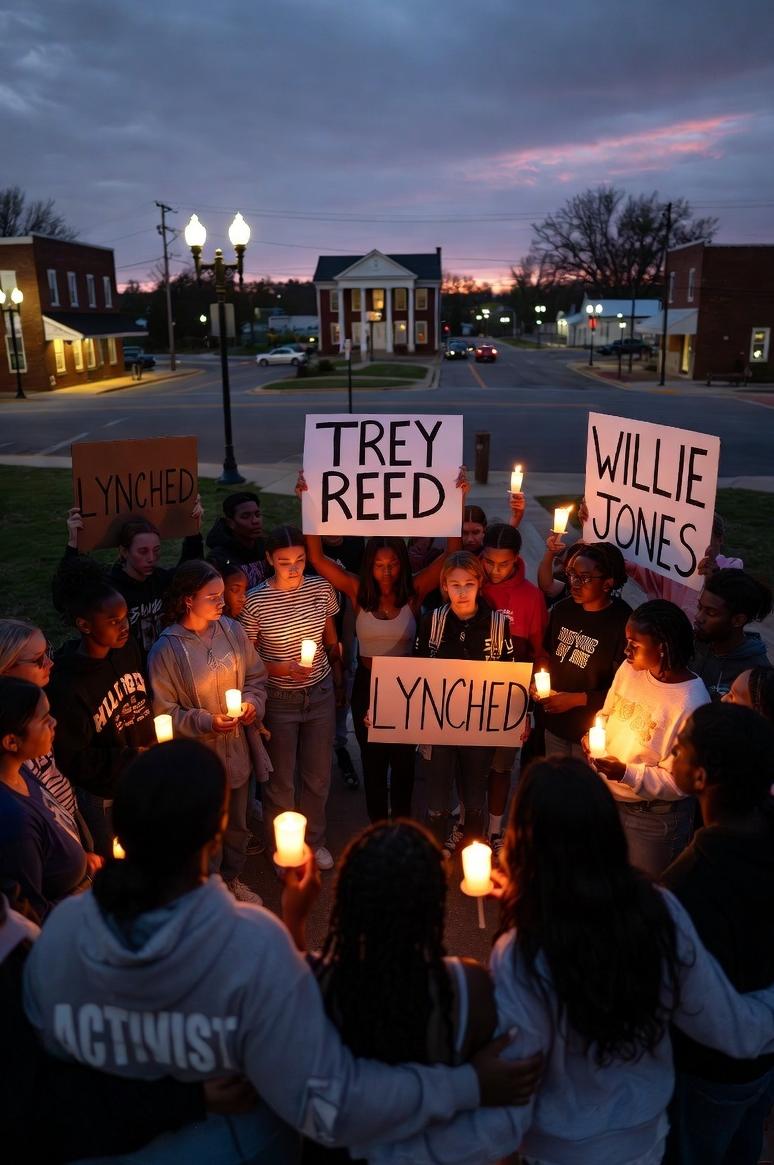
The report gained urgency last fall after the death of Trey Reed, a 25-year-old Black man found hanging from a tree on his campus at Delta State University in Mississippi. His death raised national questions about how many similar cases are wrongly classified.
“A Crimson Record” reveals new evidence in several such cases through JULIAN’s own investigations. Among them:
-
In 2021, Leon Hayes was found bloodless and decapitated in his yard. Authorities claimed his small dog had chewed off his head. However, an independent medical examiner found the cut separating his head was straight, consistent with a sharp object used in a swift motion.
-
In 2018, Willie Andrew Jones Jr., a 21-year-old Black man, was found hanging from a tree in Scott County, Mississippi. JULIAN reveals that an independent medical examiner formally determined that Jones had been lynched.
-
The report also highlights a pattern in Flowood, Mississippi, adjacent to two historic “sundown towns,” where Black men have disappeared around the same time every few years. It notes several victims, including Jones, Raynard Johnson and, most recently in 2024, 29-year-old Trevontae Shubert-Helton — who was found hanging from a tree in a 90% white town — were allegedly involved in relationships with white women.

A Call for Change
Nearly one-third of the deaths examined in the report are of Black transgender women, highlighting how these acts of terror target the most vulnerable. JULIAN warns that given the escalation in political division, online radicalization and racialized rhetoric; modern-day lynchings are only expected to increase.
“Many would rather confine this violence to history books, but that denial is exactly what allows it to continue,” Jefferson said. “The extraordinary effort to obscure modern-day lynchings — more than other acts of hate — reveals a deeper fear: that naming them would expose how deeply this violence is rooted in our present.”
The report proposes sweeping reforms, including new protocols for coroners to distinguish homicides from suicides and the use of psychological autopsies in suspected MDL cases. It also calls for strengthening the federal Emmett Till Anti-Lynching Act, which it describes as “toothless.”
In Mississippi, JULIAN has already supported the introduction of a statewide anti-lynching bill. State Rep. Kabir Karriem, who worked with the organization on the legislation, said the report should serve as a national call to action.
“This report sounds a critical alarm on the persistence of lynching in Mississippi and across the South but make no mistake: this should serve as a call to action for the nation at large,” Karriem said. “It is the responsibility of all states to prioritize meaningful legislation.”
The full “Crimson Record” report and JULIAN’s growing database of cases are available at julianfreedom.org.
(If You Like/Appreciate This EURweb Story, Please SHARE it!)
MORE NEWS ON EURWEB.COM: Jaden Smith Details Ambitious Plan to Open Daily Free Meal Center on Skid Row
We Publish Breaking News 24/7. Don’t Miss Out! Sign up for our Free daily newsletter HERE