
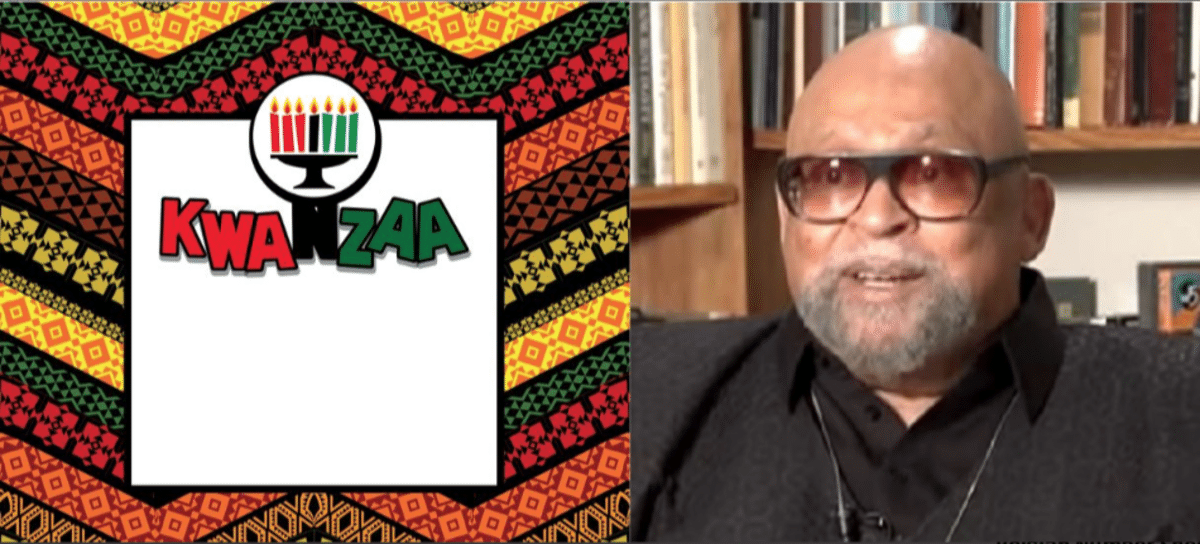
*Kwanzaa is a week-long holiday dedicated to celebrating African culture and traditions, observed annually from December 26 to January 1. Proposed by African-American leader Maulana Karenga, Kwanzaa was first celebrated between December 1966 and January 1967, creating a culturally significant moment aimed at fostering a sense of unity and pride among individuals of African descent.
While Kwanzaa is not a public holiday, its first day coincides with the Day After Christmas, which is a public holiday in several states including North Carolina, South Carolina, and Texas. As a result, many businesses and schools may close, allowing families and communities to observe the holiday more freely.
Observances and Traditions
The Kwanzaa celebration is rich in rituals and traditions. At its core, Kwanzaa honors the culture and heritage of African people and their descendants worldwide. The holiday unfolds over seven days, culminating in a feast and the exchange of gifts. Central to the festivities is the lighting of candles and pouring of libations—a ritual act of honoring ancestors and the divine by offering drinks from a wooden unity cup.
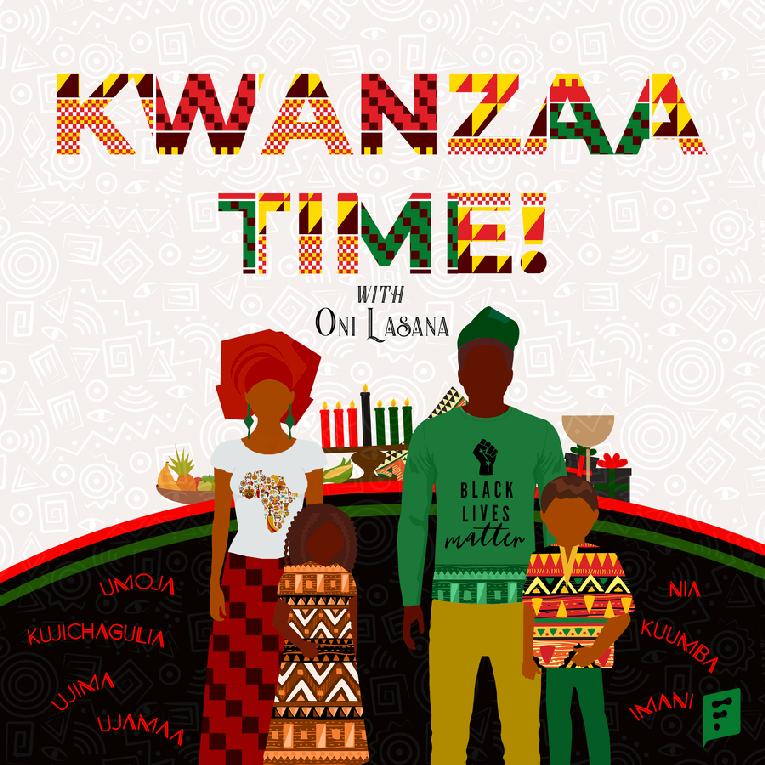
Each day of Kwanzaa is dedicated to one of the seven principles, known as the Nguzo Saba, including unity, self-determination, collective work, and responsibility, cooperative economics, purpose, creativity, and faith. This celebration blends music, drumming, discussions of African history, and the wearing of brightly colored traditional clothing, with the colors red, green, and black symbolizing different aspects of the African experience.
Though Kwanzaa was originally observed independently of other holidays, many families now integrate its customs with those of Christmas and New Year’s celebrations. This blending allows individuals to celebrate both Christian and African traditions, leading to displays that might include both a Christmas tree and a Kwanzaa candleholder in homes.
Scroll to continue reading









Symbols of Kwanzaa
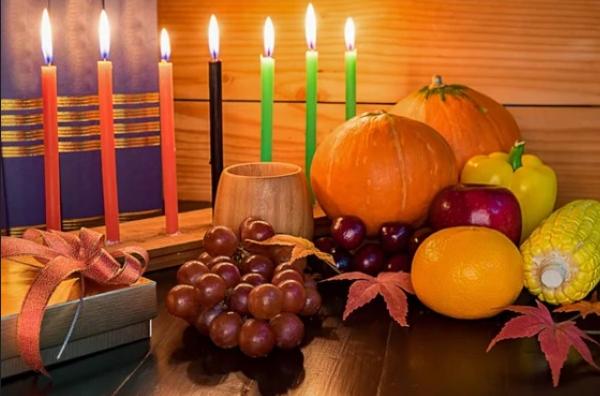
Kwanzaa is rich in symbolism. Key symbols include:
A mat, which serves as a foundation for the celebration.
The unity cup is used for pouring libations.
A candlestick holder (mishumaa saba) that holds seven candles, each representing one of Kwanzaa’s principles.
Ears of corn, symbolize fertility and the children in the community.
The Kwanzaa flag, with blocks of red, black, and green.
Posters depicting the seven principles of Kwanzaa.
The candles are arranged in the candlestick holder, inspired by the Ashanti royal throne, and colored to represent the festival’s core values.
The Growth of Kwanzaa
Kwanzaa has steadily grown in popularity since its inception. According to estimates, about 13% of African Americans, approximately five million people, now observe Kwanzaa in various ways. This holiday has received recognition beyond the cultural sphere. The United States Postal Service issued commemorative stamps in 1997 and again in 2004, celebrating its significance and the values it embodies.
While Kwanzaa faced challenges in its early years, with some viewing it as an alternative to Christmas and potentially anti-Christian, it has evolved into a celebration that embraces both cultural heritage and community values. Organizations and cultural groups often host exhibitions and performances to share and celebrate African influences during the Kwanzaa period.
Conclusion
As Kwanzaa continues to shine a spotlight on African culture and traditions, it serves as a reminder of the importance of community, family, and shared values. By upholding the principles of Kwanzaa and participating in its vibrant celebrations, individuals honor their heritage while fostering unity
and pride within their communities.
MORE NEWS ON EURWEB.COM: John Amos Daughter Hires Lawyer to Investigate Elder Abuse, Son K.C. Fires Back