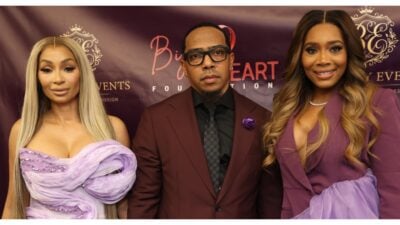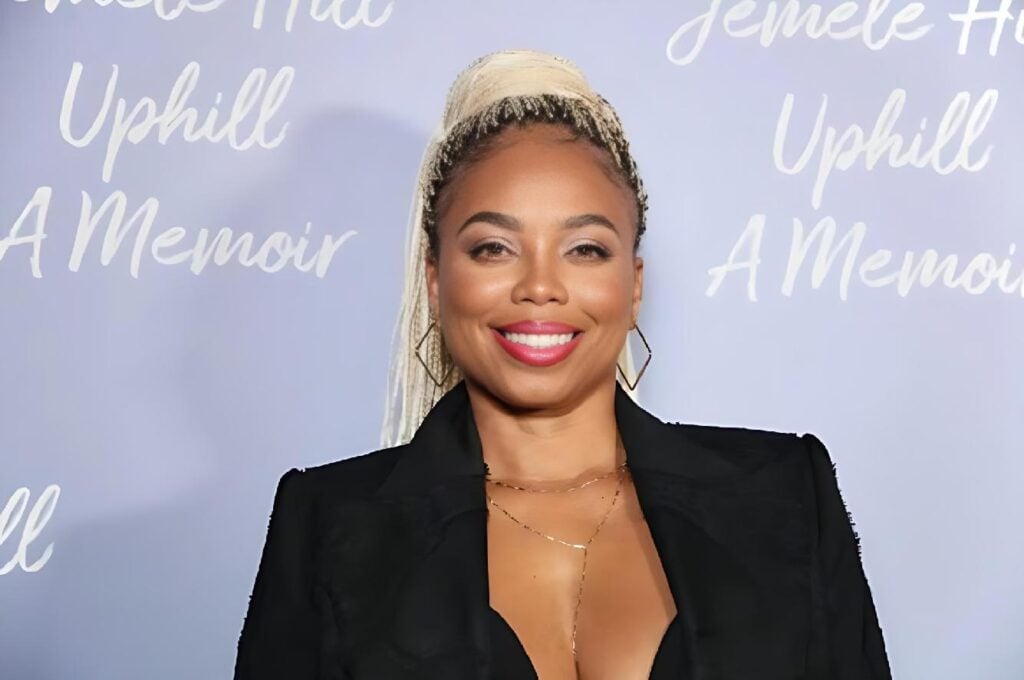
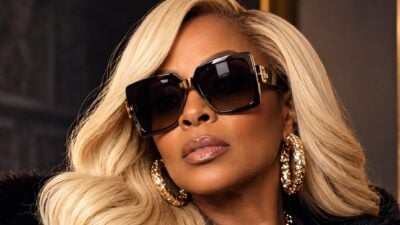
*Jemele Hill is done defending her blonde hair, declaring that “white women do not own blonde hair” after critics accused the veteran sports journalist and commentator of cultural appropriation over her latest look.
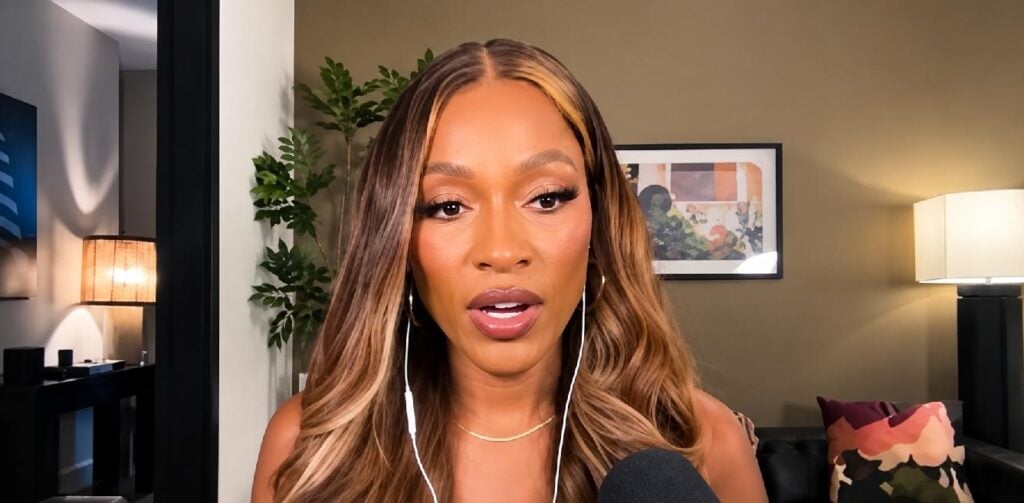
Hill addressed the controversy with Cari Champion on “Flagrant and Funny,” explaining that the latest flare-up followed a public livestream in which someone asked about her hair. Hill’s sharp response subsequently circulated online and generated another round of commentary about her decision to go blonde. For Hill, however, the criticism isn’t simply about somebody disliking her hairstyle.
“I just find it so horribly dumb that people have tried to weaponize my hair and use that as some kind of indication that I am not Black because of the hair choice that I chose,” she said.
Her reason for choosing blonde was considerably simpler.
“I just like the color,” Hill said. “Because I look good in it.”
Scroll to continue reading






“White women do not own blonde hair.”
— The Art Of Dialogue (@ArtOfDialogue_) September 12, 2026
Jemele Hill admits it pisses her off when people accuse her of appropriating white women’s hair as she addresses the recent controversy surrounding her response to a paid subscriber who asked about her blonde hair and calls it horribly dumb… pic.twitter.com/Bqif7cnzVP
Hill Says Black Hair Has Always Been Political
Hill placed the criticism within the larger history of Black people’s hair being scrutinized in American workplaces, schools and public life.
“The fact that they had to pass legislation so that we wouldn’t be discriminated against because of our hair tells you how politicized our hair has been,” Hill said, referencing the CROWN Act.
CROWN Act legislation has been adopted in numerous states and jurisdictions to prohibit discrimination based on hair texture and protective hairstyles historically associated with race.
Hill argues that the concept of cultural appropriation is now being turned into a “gotcha game” against Black people.
“White women do not own the patent on hair,” she said, before getting more specific: “White women do not own blonde hair.”
Hill also pointed to naturally blond people of African or Indigenous ancestry. Her geography was imprecise — she referenced Aboriginal Australians — but the broader point has scientific support. Peer-reviewed research published in Science documented naturally blond hair among Melanesian people in the Solomon Islands and identified a genetic variant distinct from the primary mechanism associated with blond hair in Europeans.
Cari Champion Asks Who Actually ‘Owns’ Blonde
Champion challenged the cultural-appropriation argument from another direction.
“If I was a brunette and I wasn’t Black and then I all of a sudden dyed my hair blonde, is that okay?” Champion asked. “Who are they trying to culturally appropriate?”
The debate carries an additional wrinkle because Hill has previously weighed in when white celebrities adopted hairstyles associated with Black culture. In 2020, she mocked Adele’s widely debated appearance wearing Bantu knots, a hairstyle with African roots.
That history has helped fuel accusations of hypocrisy against Hill. But Hill’s current argument rests on a distinction: a hair color isn’t the same thing as a culturally specific hairstyle.
Whatever critics make of that distinction, Hill isn’t planning a makeover to satisfy them.
“No, I ain’t changing it,” she said. “I’m changing it when I feel like changing it or when I find another color that I like.”
And as for anyone interpreting blonde hair as Hill distancing herself from Blackness, she left little ambiguity.
“I am Black in all the ways,” Hill said. “I am Black. I am proud. I would be Black in every lifetime.”

(If You Like/Appreciate This EURweb Story, Please SHARE it!)
RELATED NEWS ON EURWEB.COM: Bruno Mars’ ‘I Just Might’ Renews Cultural Appropriation Debate | WATCH
We Publish Breaking News 24/7. Don’t Miss Out! Sign up for our Free daily newsletter HERE.