Bruno Mars and the Longstanding Cultural Appropriation Debate
*Bruno Mars’ latest single, “I Just Might,” has reignited a conversation that’s followed him for over a decade: Is he honoring Black music or profiting from it? The track’s retro funk-disco sound, released January 9, sparked both praise and pushback across social media.
The conversation first exploded in 2018 when Mars’ “24K Magic” swept the Grammys. Critics argued that, while Bruno Mars is not Black, he’s built a career on musical styles rooted in Black American culture — like funk, R&B, doo-wop, and soul — without offering innovation. His mixed heritage (Filipino, Puerto Rican, and Ashkenazi Jewish) complicates his place in the conversation.
Critics Say Mars Profits from Black Culture Without Innovating
At the heart of the criticism is the belief that Mars recreates Black musical styles with high polish but little originality. Critics argue he mimics, not evolves, the genre. Tracks like those on “24K Magic” are seen as surface-level tributes to legends like Prince or James Brown, not transformative works.
Activist Seren Sensei became a leading voice in this debate with a viral 2018 video on “The Grapevine.” She called Mars a “karaoke singer” and “blackface performer” who uses Black aesthetics without the lived experience, saying:
“He does not change it, he does not improve upon it… He’s a wedding singer, the person you hire to do Michael Jackson and Prince covers.”
Scroll to continue reading









‘Racial Ambiguity’ and Systemic Industry Privilege
Sensei and others argue that Mars benefits from racial ambiguity, allowing him to straddle genres without backlash. They say he’s perceived as a safe, non-threatening person of color — palatable to white audiences, yet adjacent enough to Blackness to tap into Black culture’s credibility.
Sensei wrote in Riot Material:
“Bruno Mars is representative of a system that smudges out Black people… while white and non-Black persons of color benefit from anti-Black racism.”
She compared him to other non-Black artists, such as Elvis Presley or Justin Timberlake, who also succeeded in Black genres, while Black artists faced roadblocks.
Defenders Say Mars Is an Homage Artist, Not an Impersonator
Not everyone agrees with the criticism. Many Black artists have publicly defended Mars. Charlie Wilson praised him for reviving R&B and New Jack Swing sounds. Stevie Wonder said the attacks lack context, and producer 9th Wonder called the backlash unfair.
Mars himself responded in a 2021 interview on “The Breakfast Club,” saying:
“The only reason why I’m here is because of James Brown, is because of Prince, Michael [Jackson]… This music comes from love, and if you can’t hear that, then I don’t know what to tell you.”
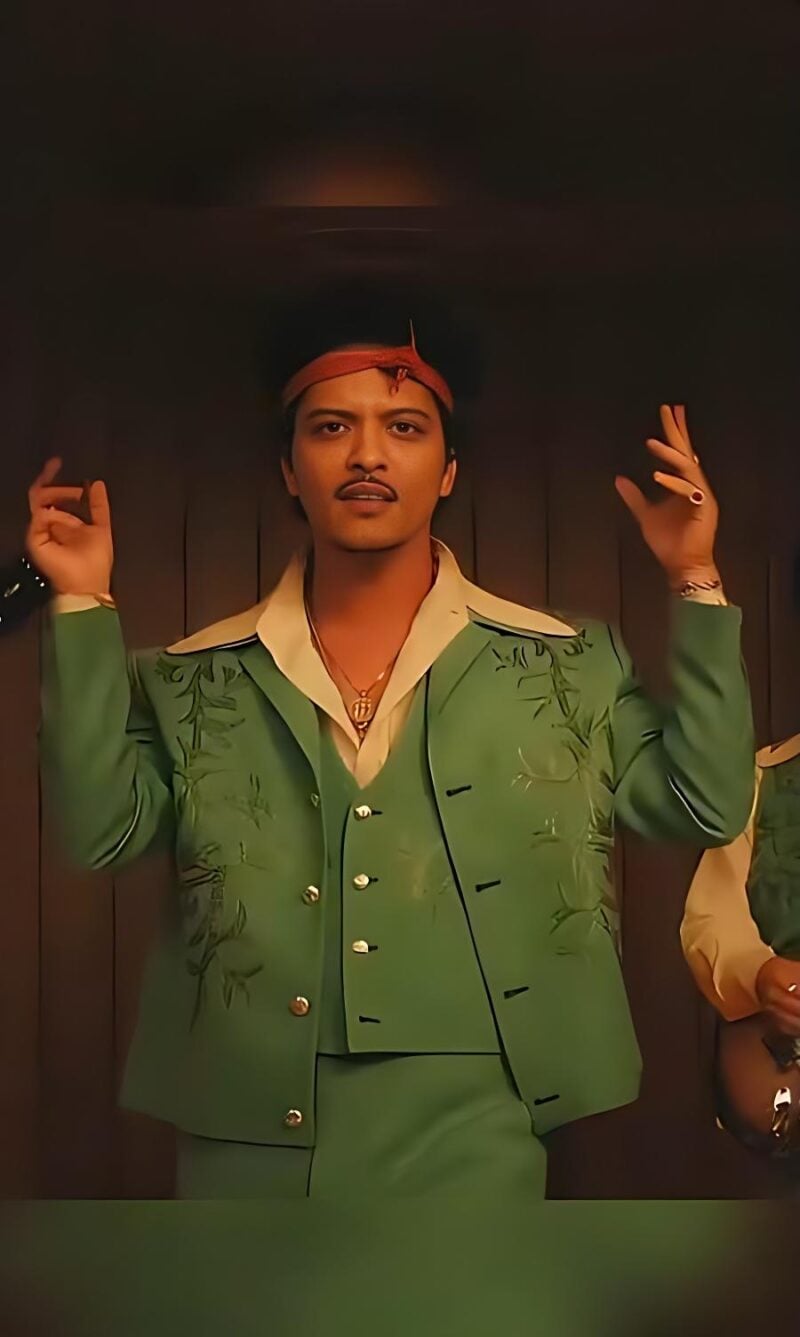
Does Mars Get a Pass Because of Identity and Intent?
Some argue that Mars’ identity as a person of color complicates the cultural appropriation label. He often collaborates with Black artists — such as Anderson .Paak in Silk Sonic — and credits his inspirations in every performance and interview.
His defenders say there’s a difference between stealing from a culture and celebrating it with respect. Mars positions himself in the latter camp, emphasizing that his music is rooted in admiration, not exploitation.
‘I Just Might’ Reignites Online Debate in 2026
With the release of “I Just Might,” critics are once again questioning his creative direction. The song leans heavily on ’70s funk, disco, and soul — genres steeped in Black history. Some users on X labeled it “egregious black caricature slop” and accused Mars of coasting on nostalgia.
Others praised it as a joyful, dance-ready track that continues Bruno’s tradition of tribute through performance. As one user wrote: “You can’t deny the man has talent. He knows how to entertain, and he always credits his sources.”

Why This Debate Around Bruno Mars Still Matters
This conversation goes beyond one artist. It speaks to larger issues about who gets rewarded in the music industry, and whose stories are being told. The concern is not just about sound, but power — and how cultural expression becomes commodified.
Bruno Mars remains at the center of that debate because of his success and his sound. Whether seen as appreciation or appropriation, his work keeps forcing pop culture to reckon with those blurred lines.
Where the Line Between Homage and Exploitation Gets Murky
Sensei and others call for more support of Black artists doing the same styles as Mars, but with less recognition. She cited artists like Jeremih struggling with labels while Mars racks up Grammys and praise.
Ultimately, the question is not whether Mars has talent — few deny that. The real issue is: Who gets to profit from Black music? And what does real homage look like in a system where race, privilege, and art constantly collide?
(If You Like/Appreciate This EURweb Story, Please SHARE it!)
MORE NEWS ON EURWEB.COM: Bruno Mars Drops ‘I Just Might’ to Funky Praise and Mixed Reactions | WATCH
We Publish Breaking News 24/7. Don’t Miss Out! Sign up for our Free daily newsletter HERE.