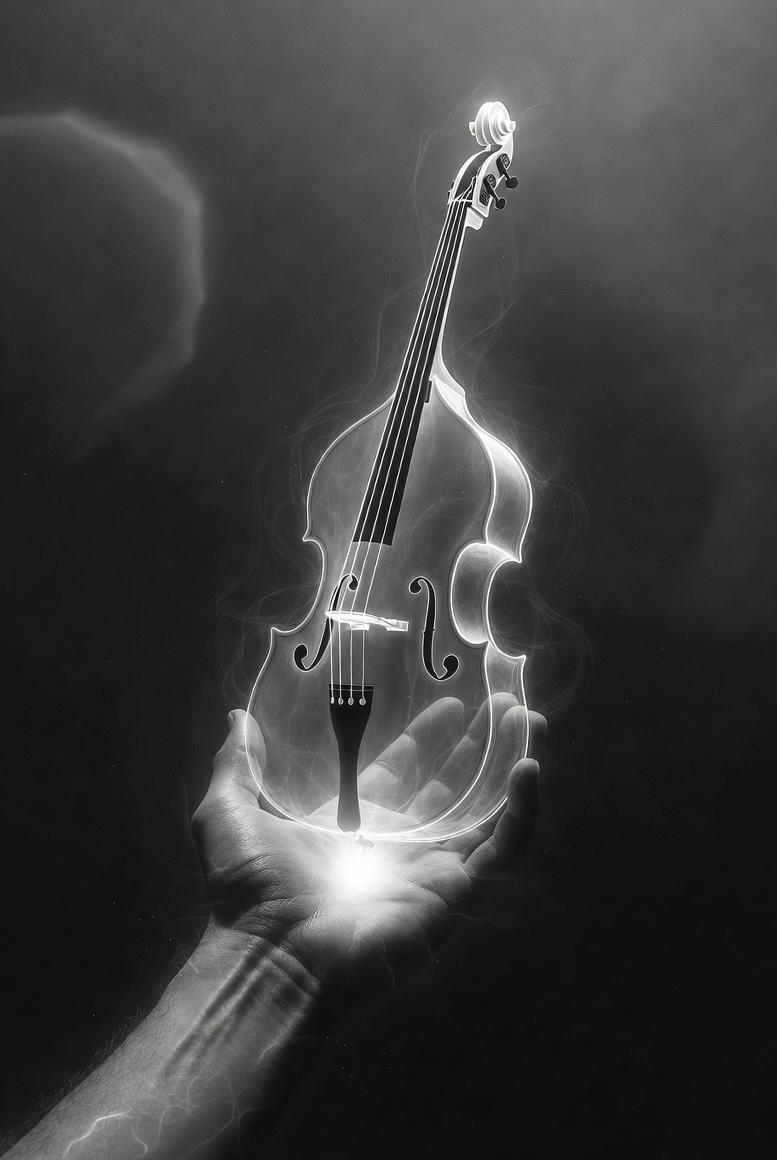
*One of the differences between you and God: When you check your wrist, you feel a pulse, and God’s pulse is a bass line.
It’s true. It could be the swaggering, walking notes of an upright acoustic double bass or the ethereal pinging of electric bass harmonics, the sheer thunder of some serious thumpin’, the low purr of a Hammond B-3 foot pedal bass, or the phat, impassioned submarine-deep moan of a Moog synthesizer bass. In every case, bass, at its most inspired, is nothing less than divine.
Often understated by intuitive, ingenious design, the bass supports a musical arrangement—cradling it, guiding it, enriching it. I love the sound of many instruments. But whether it’s a recording or a live performance, that love is artfully co-signed by bass.
Before I heard the bass, I saw it. Paul McCartney’s signature Hofner 500/1, which he played with the rest of the Beatles on The Ed Sullivan Show that magical night in 1964, captivated my eight-year-old self, partly because its body resembled a violin but mainly because it was the Beatles. I was an instant fan.
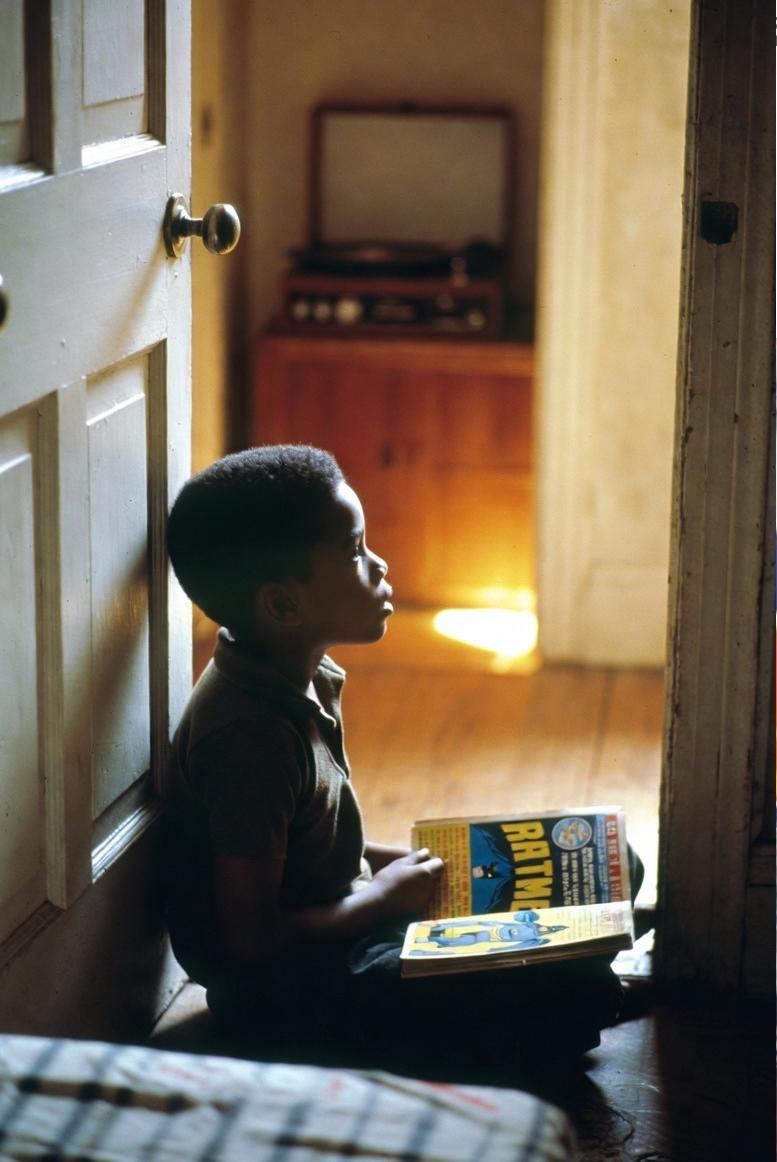
However, my love for the sound of the Deep Dark Tone came three years later, on a summer Saturday evening, when Mama let Barbara, my teenage sister, host a house party. Told to stay out of the way, I could still hear the music from my room. A 45 single played several times that evening made me lift my head out of my Batman comic book and pay attention.
The song opened with electronic beeping reminiscent of a cheesy B-movie sci-fi flick, immediately followed by an otherworldly sound that transitioned into a rich, warm bass line floating over a dreamy electric piano and a rhythmic tambourine.
Scroll to continue reading




Then came a voice I instantly recognized as belonging to Diana Ross: “Through the mirror of my mind/Time after time/I see reflections of you and me….”
The bass’s subtle dynamism on “Reflections,” the 1967 Supremes hit, lies in its feel—powerful, quietly commanding, and confident, yet still blending seamlessly with the rest of the recording.
That Holland-Dozier-Holland production changed how I experienced music. From then on, whenever I listened to a recording, my young ears immediately looked for its bass. My relationship with the sound was personal and emotional: from a solid bassline, I felt assured, comforted. Years later, I’d learn the man playing bass on that Motown recording and many others was none other than James Jamerson.
Arguably the greatest electric bassist in pop music history, Jamerson pushed the boundaries and traditions of bass playing. Not content to merely play the root and repetitive notes typical in pop, if you isolated Jamerson’s playing on a recording, you would think he was soloing. Jamerson’s lines were all over the place but still managed to hit the essential notes supporting a song’s arrangement. An example of Jamerson’s genius is his masterful performance on “Darling Dear,” the Jackson 5’s 1970 cover of Smokey Robinson‘s song on the J5’s The Third Album.
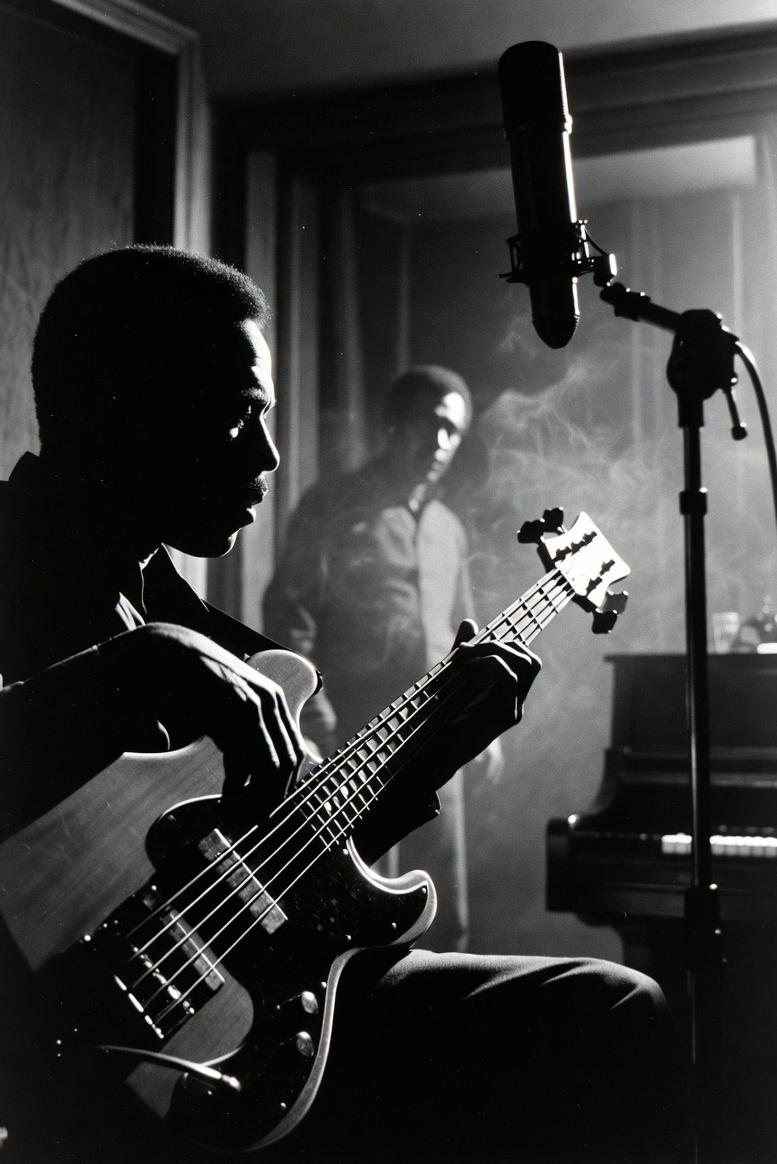
Considering the abundance of notes Jamerson played on Motown songs, it is ironic that a hallmark of his technique (something not displayed during “Darling Dear”) was the canyons of space—the nanoseconds of silence —between his notes, a result of his uncanny patience and penchant for playing behind the beat. In Jamerson’s style, a single sustained note could last long enough to support a full three words of a lyric.
That Jamerson wasn’t credited as a co-writer on many of the Motown songs he played—unlike Anthony Jackson’s legendary bass line on the O’Jays’ driving, anthemic “For the Love Money,” which earned him a co-writing credit with writers/producers Kenny Gamble and Leon Huff—Is no small crime. More than any other element, Jamerson’s bass defined “The Motown Sound.”
And to think, Motown founder Berry Gordy, after hiring him to play in the studio session band, collectively known as The Funk Brothers, initially didn’t care for Jamerson’s style, deciding it was too jazzy or busy.
During Jamerson’s early Motown sessions, Gordy would stand guard near the studio, making sure Jamerson played conservatively. When Gordy would turn to leave, mischievously, Jamerson would begin adding more notes, causing Gordy to turn back around. Motown staff producers who valued the depth Jamerson brought to their recordings convinced Gordy to let the bassist do his thing.
After discovering Jamerson, I began exploring the giants who inspired other great bassists, including icons as diverse as acoustic double-bass legends Charles Mingus, Ray Brown, and Ron Carter, the latter being the most recorded jazz bassist ever; funk bass pioneer Larry Graham, who popularized the thump/slap technique; Michael Henderson, session greats Abraham Laboriel, Chuck Rainey, and Carol Kaye; jazz fusion trailblazers Stanley Clarke and Jaco Pastorius; Earth, Wind & Fire’s Verdine White; Bootsy Collins, who, before joining Parliament-Funkadelic and later becoming a bandleader, supported James Brown, and Chic’s Bernard Edwards.
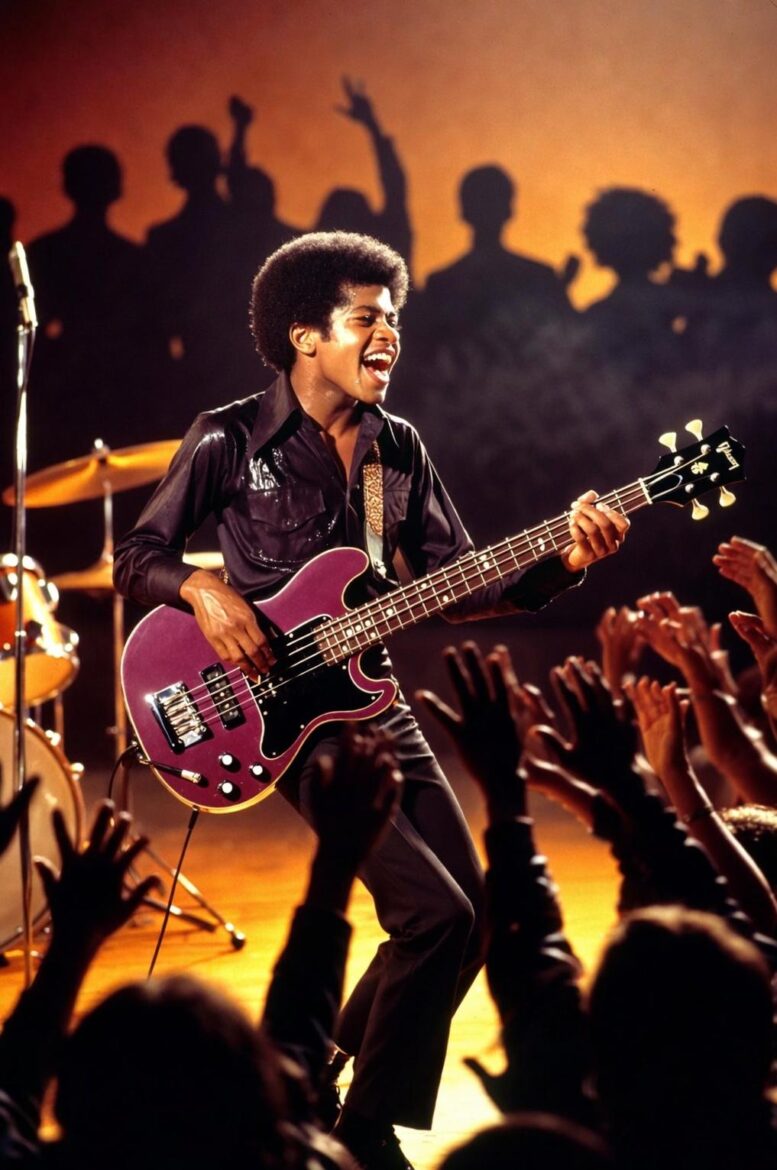
And then there was Jermaine Jackson. Making his Motown debut with the Jackson 5 in 1969, wearing his trusty—and weighty—wine-colored Gibson EB-3 bass, Jackson inspired more Black kids to pick up the electric bass during the late ‘60s and early ‘70s than any other musician. A 13-year-old Marcus Miller, who’d just started playing bass and initially thought, like many of us, that Jermaine was on those J5 recordings (and not Jazz Crusaders saxophonist/bassist Wilton Felder, Jamerson, or session man Bob Babbitt, among others), said he told himself, “I gotta step up my game.”
But Motown didn’t recruit Jermaine or guitarist Tito to perform during the group’s recording sessions; neither of them read music, which is usually (but not always) necessary for playing during sessions. According to bassist and Jamerson protégé Tony Newton (who told me that, at Motown’s Detroit studio, unbeknownst to listeners, he played on some early Motown hits with Jamerson simultaneously), session producers regularly had musicians tackle three songs in a three-hour session.
“We recorded the track for [the J5’s] ‘Never Can Say Goodbye’ in L.A. in two or three takes,” Newton said of the session, which was produced by Motown staff producer Hal Davis with the music arranged by Gene Page, and featured Crusaders member Joe Sample on keyboards, guitarist David T. Walker, drummer Earl Palmer, and Jack Arnold on percussion. “You have to be able to read music because time is money.”
Motown was more interested in establishing Jermaine as pop music’s first Black teen sex symbol than a musician (in all the J5 concerts I attended, there wasn’t one bass solo segment). Still, Jermaine’s skill at playing the basslines on those hits during live concerts earned him the nickname “Lil’ Jamerson” around Motown’s Hollywood headquarters.
I never understood the skepticism about Jermaine’s musical talent. You try working a 40-city tour, singing and performing choreography while playing “The Love You Save” bassline at age 15.
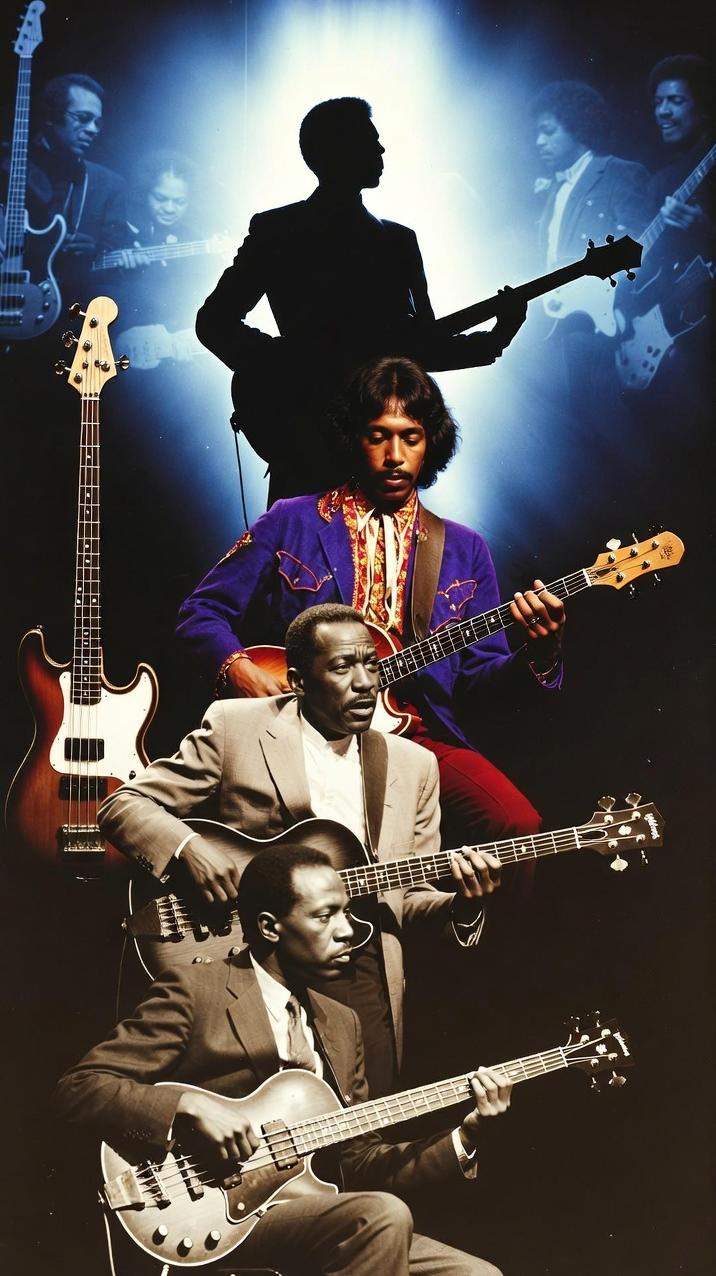
Indeed, many of these musicians launched professional careers at an early age. Bassist Keni Burke of the sibling vocal group the Five Stairsteps’ “Ooh Child” fame (whose playing Larry Graham once said comes the closest to capturing his style) was only 13 when, with his parents’ permission, Curtis Mayfield used to pick him up at his family’s Chicago home and drive him to the studio to do session work.
Leon Sylvers III was in his late teens when he wrote most of the songs for the Sylvers’ first two early ‘70s albums. Melodic, introspective songs like “Fool’s Paradise” and “Cry of a Dreamer” lyrically reflected a prolific young man with a lot on his mind. These albums served as a foundation for Leon’s legendary run as the chief staff producer at the SOLAR label, where he crafted hits for Shalamar, the Whispers, and others, and played some of the funkiest, complex lines ever delivered on a Rickenbacker bass.
Meanwhile, Stevie Wonder revolutionized bass playing as we know it, using the Moog synthesizer to create the fluid, edgeless bass lines on groundbreaking ‘70s albums like Music of My Mind, Talking Book, Innervisions, and Songs in the Key of Life. Wonder, along with the brilliant keyboardist Bernie Worrell of Parliament/Funkadelic, would later popularize synthesizer bass in Black music.
Aforementioned monsters like Clarke and Jaco influenced a new generation of bass beasts, among them Marcus Miller, Louis Johnson, the Gap Band’s Robert Wilson, Meshell Ndegeocello, Victor Wooten, Esperanza Spalding, Thundercat, Rhonda Smith, Pino Palladino, and the list goes on.
The art of the bass has come a long way since Monk Montgomery (brother of guitar legend Wes and vibraphonist Buddy) reportedly became the first musician to be recorded playing the electric bass guitar during a 1953 session for The Art Farmer Septet.
Since then, the instruments, techniques, and styles of playing have evolved. However, one thing hasn’t changed: it’ll always be about that bottom.
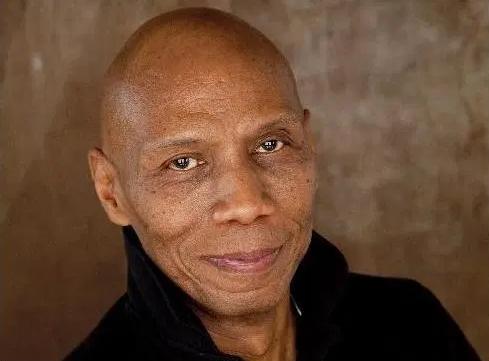
Steven Ivory, a veteran journalist, essayist, and author, writes and discusses popular culture across various platforms, including the Internet, TV, radio, documentaries, magazines, and newspapers. The Last Man on AOL is at [email protected]
(If You Like/Appreciate This EURweb Story, Please SHARE it!)
MORE NEWS ON EURWEB.COM: Halle Berry Says She’s Done Faking Orgasms: ‘I Cum First’
We Publish Breaking News 24/7. Don’t Miss Out! Sign up for our Free daily newsletter HERE