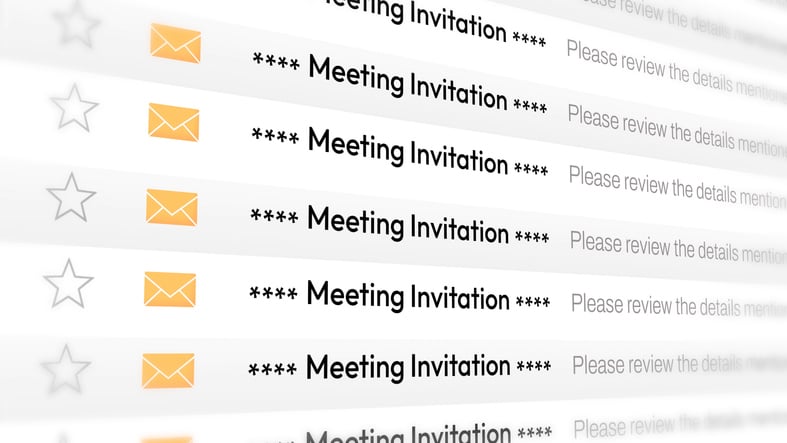
*That meeting invite you don’t remember accepting could be a trap. Security experts warn that scammers are now slipping fake events onto people’s calendars, and the trend is spiking fast.
The first line of defense is simple. Malwarebytes suggests turning off the feature that lets emailed invites land on your calendar automatically. If a strange event still shows up, block the sender and delete it without clicking anything.
Mark Morris, a threat detection engineer at Sublime, says these attacks have gone from niche to widespread. “This attack type has finally hit the mainstream,” he wrote in a blog post. “To really drive that point home, the increase [in attacks] from May to September is projected to be ~33,000%.”
Part of the appeal for scammers is cost. Many attacks run on free services, and even if a spam filter catches the email, the invite can still reach your calendar. Most people also trust their Google or Microsoft calendar, so they don’t think twice.
Scroll to continue reading









Some fakes look like they came from your own office. “If they want to, they could make it look like an internal invitation,” Max Gannon of Cofense told the Guardian. “They can customize the content, maybe by adding the logo of your company.”
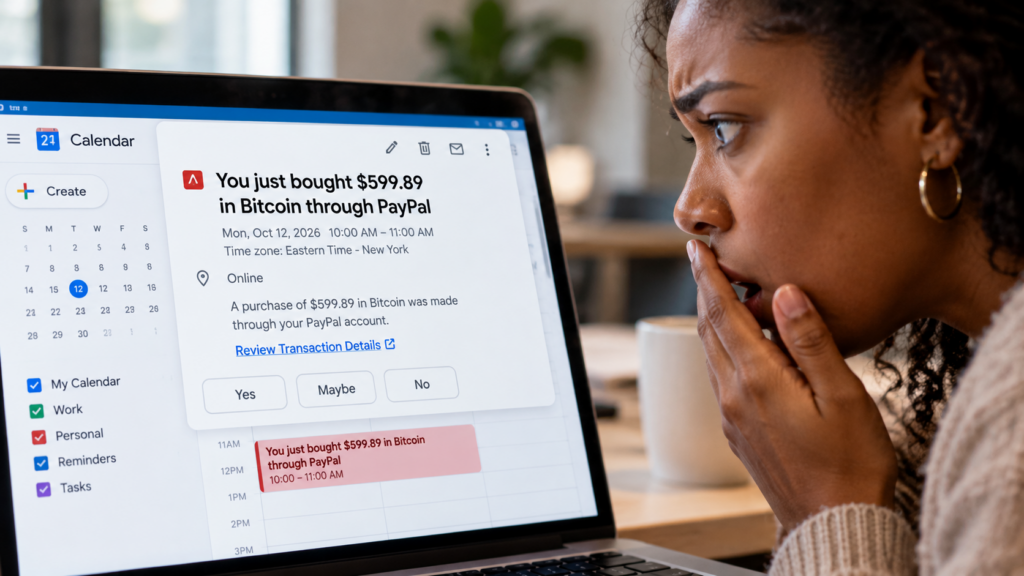
Others lean on panic. One invite Sublime flagged warned of a $599.89 Bitcoin charge on a PayPal account and urged recipients to call a support line, which led straight to scammers. These phone-based schemes are known as callback phishing, and calendar invites drove nearly 20 percent of them in late 2025, per Sublime.
The danger only starts when someone takes the bait. A click, a download, or a phone call can hand over passwords, and some invites carry spyware that lets attackers spy on and take over a device.
Anyone who falls for one should notify their account administrator right away. Turning on multifactor authentication can also keep criminals out of the account.
MORE NEWS ON EURWEB.COM: Nicki Minaj Tells Christians to Wake Up and Vote
Sign up for our Free daily newsletter HERE