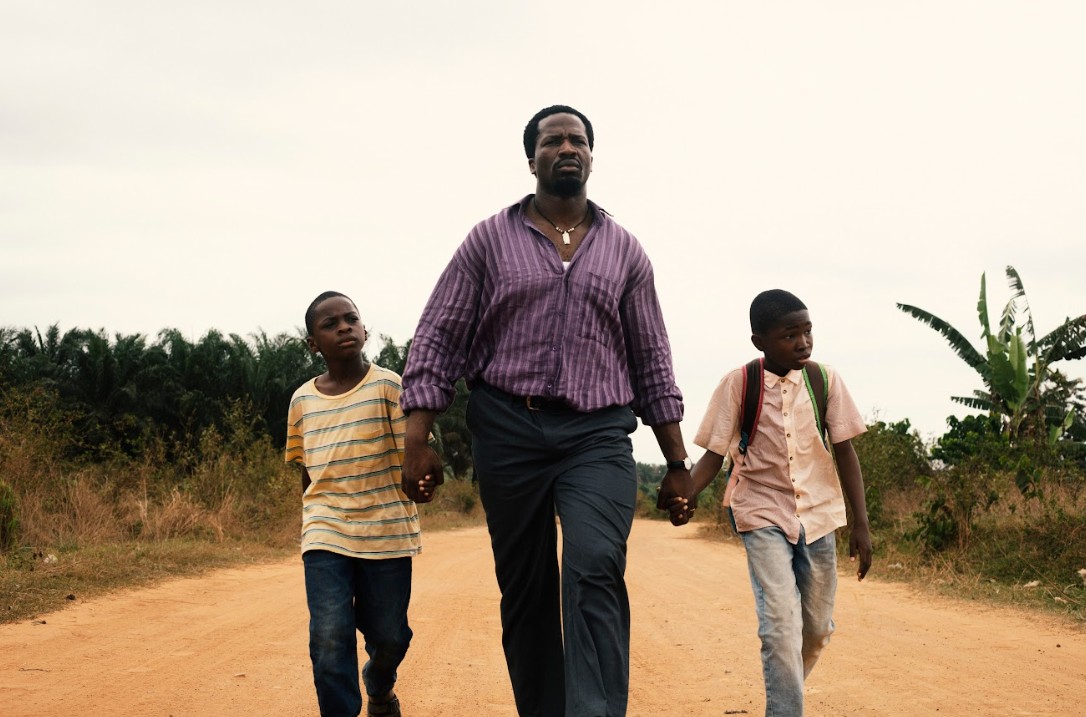
*”My Father’s Shadow,” the debut feature film from British-Nigerian director Akinola Davies Jr., is as much a personal reckoning as it is a cinematic achievement.
The semi-autobiographical drama, set over the course of a single day in Lagos during the 1993 Nigerian election crisis, follows a father estranged from his two young sons as political unrest threatens their journey home through the sprawling city. Starring Ṣọpẹ́ Dìrísù, Chibuike Marvellous Egbo, and Godwin Egbo, the film was produced by Rachel Dargavel and Funmbi Ogunbanwo and written by Davies alongside his brother Wale Davies.
The film released exclusively in select theaters on February 13th, following a remarkable awards run that included a British Independent Film Award, two Gotham Independent Film Award nominations, and its selection as the UK’s entry for Best International Feature Film at the 98th Academy Awards. Most notably, “My Father’s Shadow” made history at the 2025 Cannes Film Festival when it became the first Nigerian film selected for the festival’s Official Selection, premiering in the prestigious Un Certain Regard section and taking home a Special Mention for the Camera d’Or.
For Davies, the story hits close to home in the most profound way. He was the same age as the film’s youngest character on June 12, 1993, the day that would define a generation of Nigerians. “What happened in 1993 on the backdrop of this election result is based on real memory,” Davies explained. “I was the same age as the two characters, as the younger character, and my brother was the same age as the older child in this film.”
Scroll to continue reading

The political backdrop centers on a moment of devastating hope. Nigeria was transitioning away from a string of brutal military dictatorships toward democracy, and the excitement among ordinary citizens was palpable. “We’d seen our parents sort of lose a lot of this idea of resistance and protests had sort of waned out of them by these authoritarian regimes,” Davies said. “And this idea of moving to democracy was really exciting for them, because they were optimistic about the country fulfilling its potential and becoming this African giant.”
That optimism, however, was short-lived. The military ultimately annulled the election results, crushing the democratic aspirations of millions. Davies and his brother Wale used the screenplay as an opportunity to explore something equally personal alongside that historical wound. Davies lost his father when he was just 20 months old and grew up alongside his brother with only a single shared memory of the man.
“We have one memory of our father, which was playing on a bed with him, which we put in the opening sequence of the film,” he said. “We never knew if we fabricated that or someone told us, or our elder siblings maybe told us, or we made it up. But what mattered is that that feeling belonged to us.”
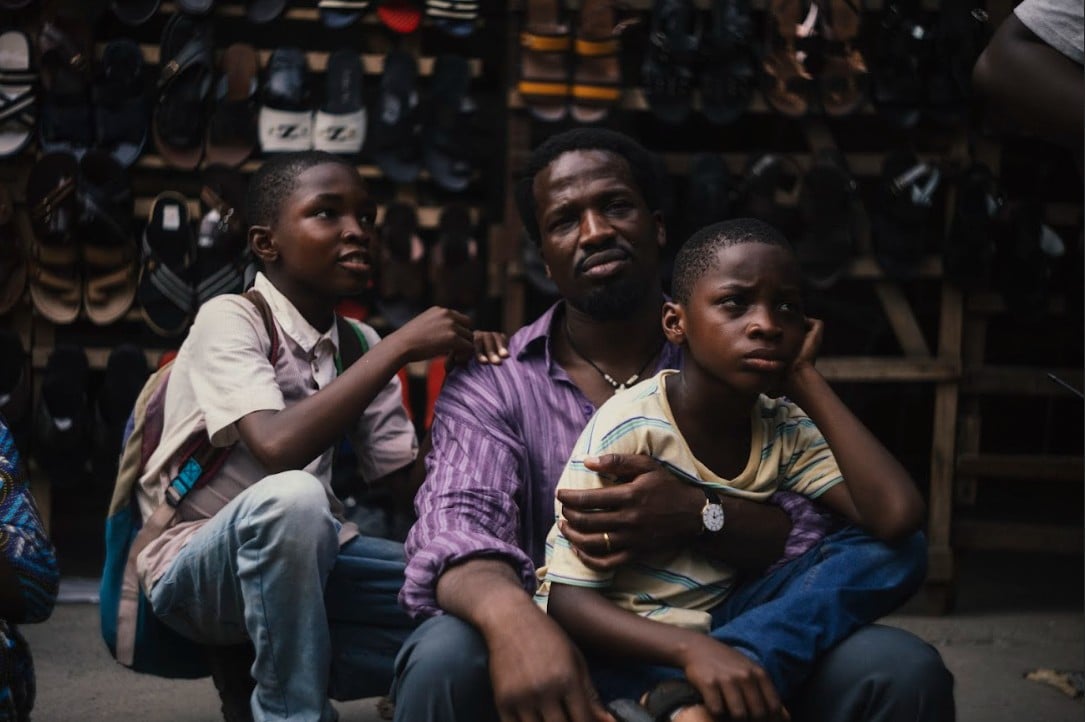
The film deliberately confronts the stereotype of the absent Black father by reframing the narrative around circumstance, sacrifice, and love. Davies was clear about his intentions. “It’s sort of getting away from this idea of absent black fathers, this kind of demonization of the black dad,” he said, “to show that black people are not (a) monolith. We have completely divergent views on our experiences.”
He also wanted to challenge the broader perception of Nigeria itself, a country he described with unmistakable warmth. “Being amongst Nigerians and living with Nigerians is probably the biggest gift that my parents ever gave to me,” Davies said. “I’m very proud, and I sort of romanticize this country that I grew up in.”
The decision to confine the story to a single day was both a practical and emotional choice. Davies described how the compressed timeline creates an organic sense of urgency without relying on conventional thriller mechanics. “The idea of a single day means the day is finite,” he said. “It means like, as an audience member, you already know that the clock’s ticking because as soon as the film starts to get darker, and the night falls, you’re getting close to the end.”
One of the film’s most technically ambitious elements was directing its two young leads, real-life brothers Chibuike Marvellous Egbo and Godwin Egbo, neither of whom had significant acting experience before the film. Davies spoke about the care taken to build their confidence and trust on set.
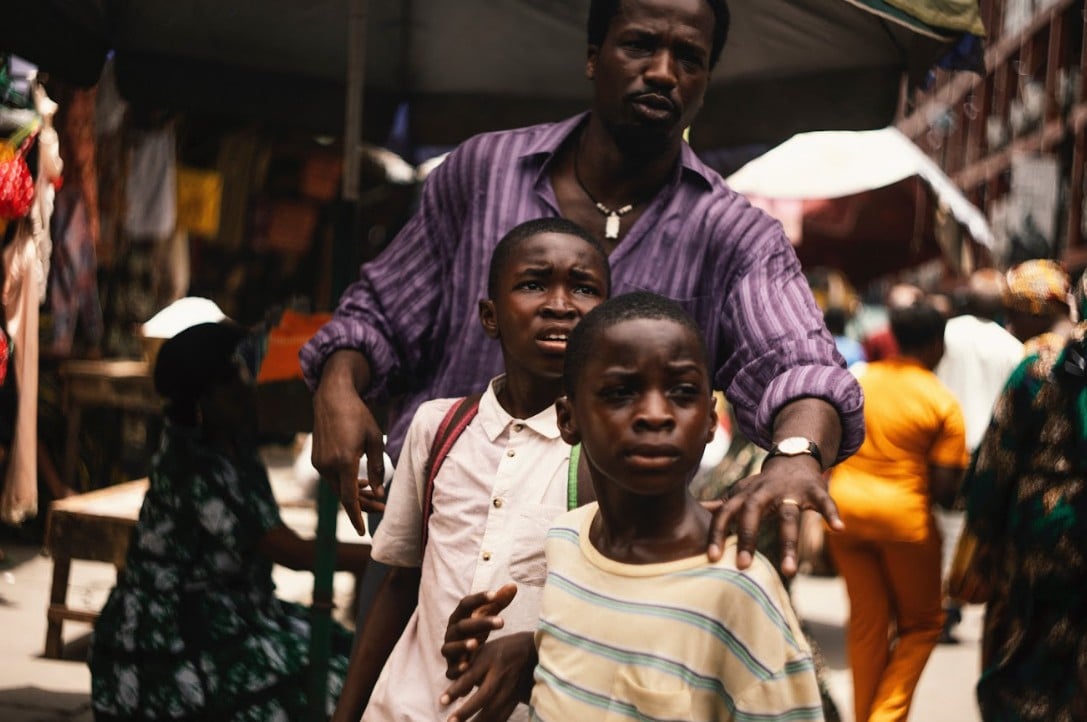
“I think if you give them a certain level of trust, they always tend to pleasantly surprise you,” he said. His approach leaned away from rigid direction and toward collaboration, giving the boys the freedom to bring themselves fully into the work.
Ultimately, Davies hopes “My Father’s Shadow” sparks something lasting in everyone who sees it, regardless of their background or familiarity with Nigerian history.
“I hope they’re able to project their experiences into it,” he said. “I think the specificity of this film makes it even more of a global story, because I think there’s something in there for everyone.”
Above all, he hopes the film moves audiences to bridge emotional distances within their own families. “I hope that people learn to hold space for their elders, for their family, for their parents,” Davies said, “because I think historically as black people, maybe we don’t tend to communicate about our feelings and what we’ve been through.”
Watch our full conversation with Akinola Davies Jr. via the clip below.
*This interview has been edited for length and clarity.
MORE NEWS ON EURWEB.COM: Amber Reign Smith on Joining the Madea Universe and What Makes ‘Joe’s College Road Trip’ a Must-See | EUR VIDEO Exclusive
Sign up for our Free daily newsletter HERE.