*The ongoing felony assault trial of rapper A$AP Rocky has ignited widespread criticism due to the use of the N-word by non-Black members of both the prosecution and defense.
The controversy erupted when Los Angeles Superior Court Judge Mark Arnold explicitly instructed courtroom participants to refrain from stating the full N-word aloud. The directive was issued during a Thursday afternoon session, though the live stream of the trial had been cut off prior to the issuance of his comment, leaving only those present in the courtroom to hear it.
A$AP Rocky, whose legal name is Rakim Mayers, has pleaded not guilty to two felony counts of assault with a semiautomatic firearm stemming from a November 2021 incident in Hollywood.
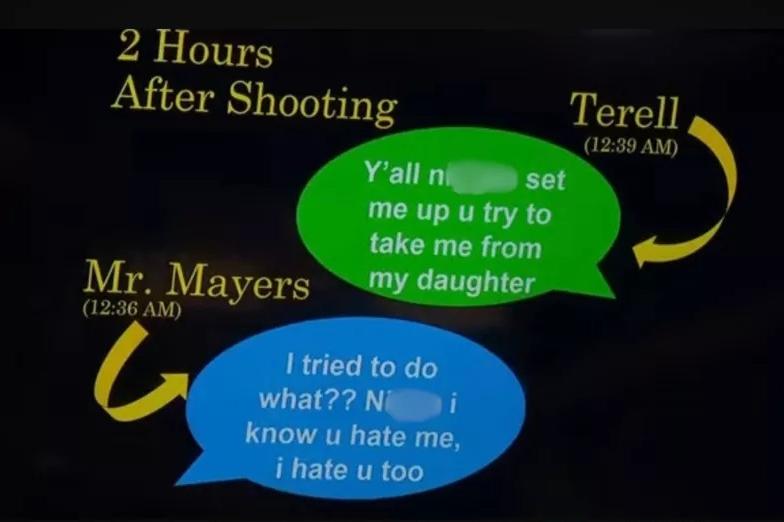
The rapper is accused of firing a weapon at his former friend, A$AP Relli, whose real name is Terell Ephron. Rocky denies the allegation, claiming that the firearm is a starter pistol intended solely for safety purposes.
Scroll to continue reading





During the trial, text messages exchanged between A$AP Rocky and A$AP Relli, which included variations of the N-word, have been read aloud by attorneys on both sides. As legal affairs journalist Meghann Cuniff pointed out in her commentary on X (formerly Twitter), the use of the word has been indisputably prevalent in the courtroom, with no apparent concerns exhibited by the judge, the defense, or the prosecutors, Newsweek is reporting.
Criticism surrounding the use of the N-word in legal contexts is not new. In a parallel case, Judge Paige Reese Whitaker presided over rapper Young Thug’s RICO trial last year and apologized after using the term while reading text evidence aloud. She expressed regret, stating, “I hope that was not offensive to anyone,” indicating the complexities of racial language within legal frameworks.
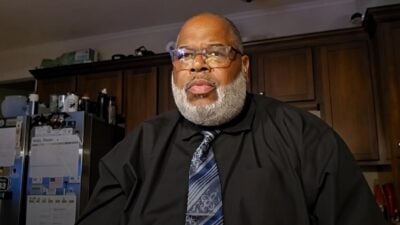
In this current trial, civil rights attorney David Sanford articulated that while the N-word may be necessary to quote direct communication, courtroom decorum must be maintained. He remarked that judges should forewarn jurors about the specific language they may encounter, noting that sanitizing the language could detract from the case’s factual context.
Former federal prosecutor Neama Rahmani echoed this sentiment, emphasizing that there aren’t explicit rules governing the use of racial slurs or expletives in court if they are part of evidentiary material. He highlighted the necessity for lawyers and witnesses to accurately read such texts aloud, as proper transcription is vital for an accurate legal record. However, Rahmani strongly urged a cautious approach, advising that lawyers should refrain from using such language unless it serves a clear evidentiary purpose.
The matter raises broader questions surrounding racial sensitivity and the importance of contextual understanding in legal proceedings. The courtroom setting inherently reflects societal tensions over language, race, and power dynamics. While quoting evidence is important for judicial efficacy, the implications of who is speaking and how they express contentious language cannot be overlooked.

In addition to the linguistic controversy, the presence of A$AP Rocky’s partner, superstar Rihanna, in the courtroom has also raised eyebrows regarding potential juror influence. Attorney Gloria Allred commented that, despite judicial instructions to focus solely on admissible evidence, the star power of a celebrity could inadvertently affect the jurors’ perspectives:
“Although jurors are instructed by the judge to consider only the evidence admitted by the court, it is human nature for many jurors to look at a celebrity sitting in the courtroom. “Even though jurors should not take those facts into consideration and even if jurors state that they will not consider that, some jurors will not be able to ignore it.”
Her observation reflects a well-documented phenomenon whereby jurors may struggle to compartmentalize personal biases and societal perceptions in the face of fame.
Rocky, maintaining his innocence throughout the proceedings, asserts that the weapon in question was never used in a harmful manner.
The duality of a high-profile trial, alongside the contentious discussions regarding language, behavior, and celebrity presence, underscores the intricate dynamics of the American legal system and societal discourse on race.
View this post on Instagram
As the trial progresses, commentators and legal experts continue to highlight the necessity for introspection regarding language in court. Cases like A$AP Rocky’s illustrate that the complexities of race and expression are not only matters of public interest but also pivotal components that can impact the pursuit of justice. The surrounding discourse serves as a reminder of the sensitivities inherent to discussions about race, particularly in settings where legal outcomes may hinge on how language is interpreted and perceived.
In conclusion, the current trial of A$AP Rocky raises a multitude of issues including the appropriateness of using racially charged language in legal contexts, the influence of celebrity presence on juror perceptions, and the persistent struggles within society over issues of race, equity, and justice. As this high-stakes trial unfolds, it becomes increasingly important for conversations surrounding these themes to be approached with both sensitivity and awareness of their profound implications.
MORE NEWS ON EURWEB.COM: Karen Clark Sheard Defends Saying the N-word During Church Sermon | WATCH