*America did not merely criminalize a plant. It criminalized a people. Before “marijuana” became America’s most politically weaponized slang term, the plant was widely known as cannabis—used in medicine, industrial hemp, and natural remedies.
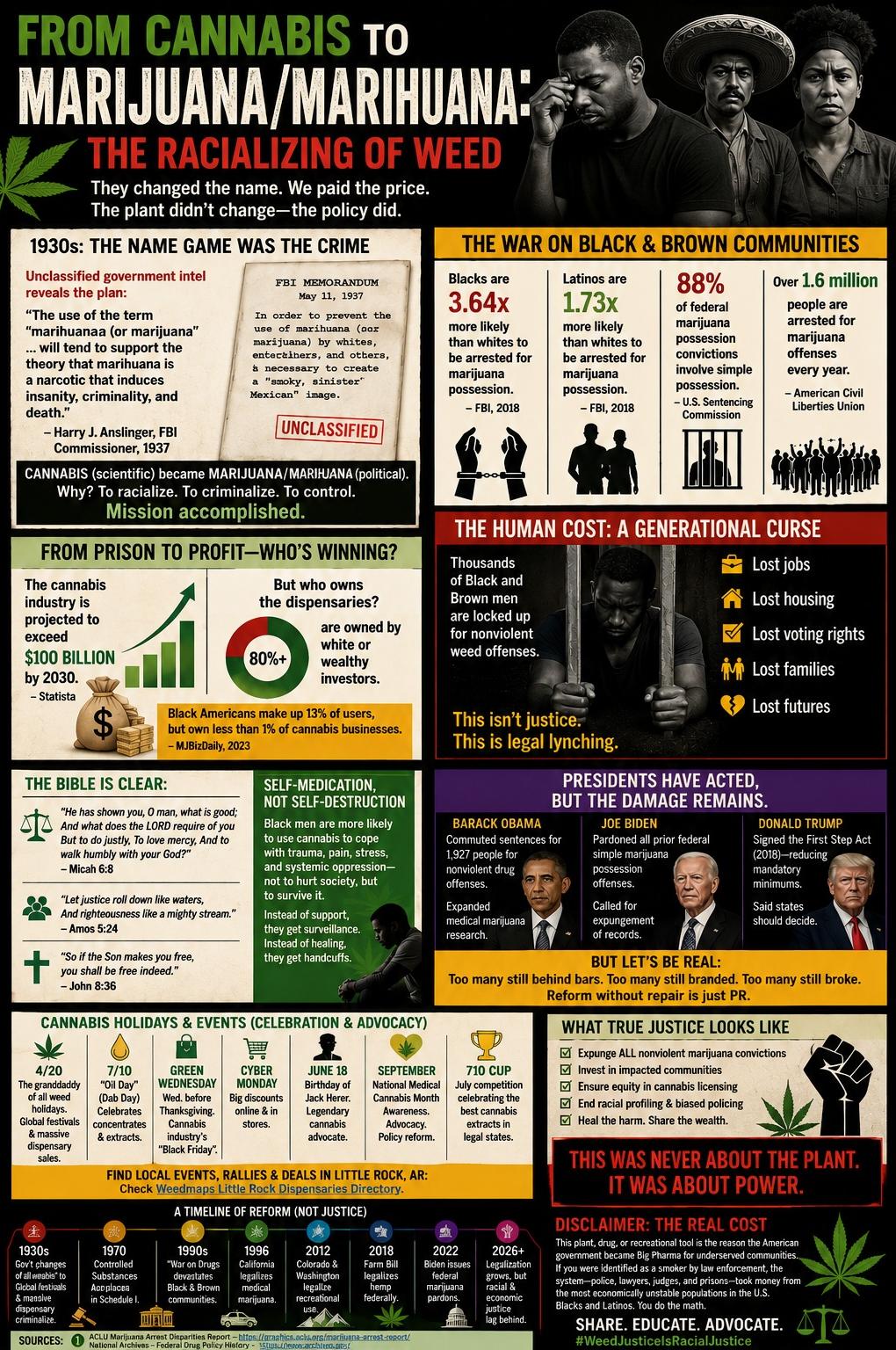
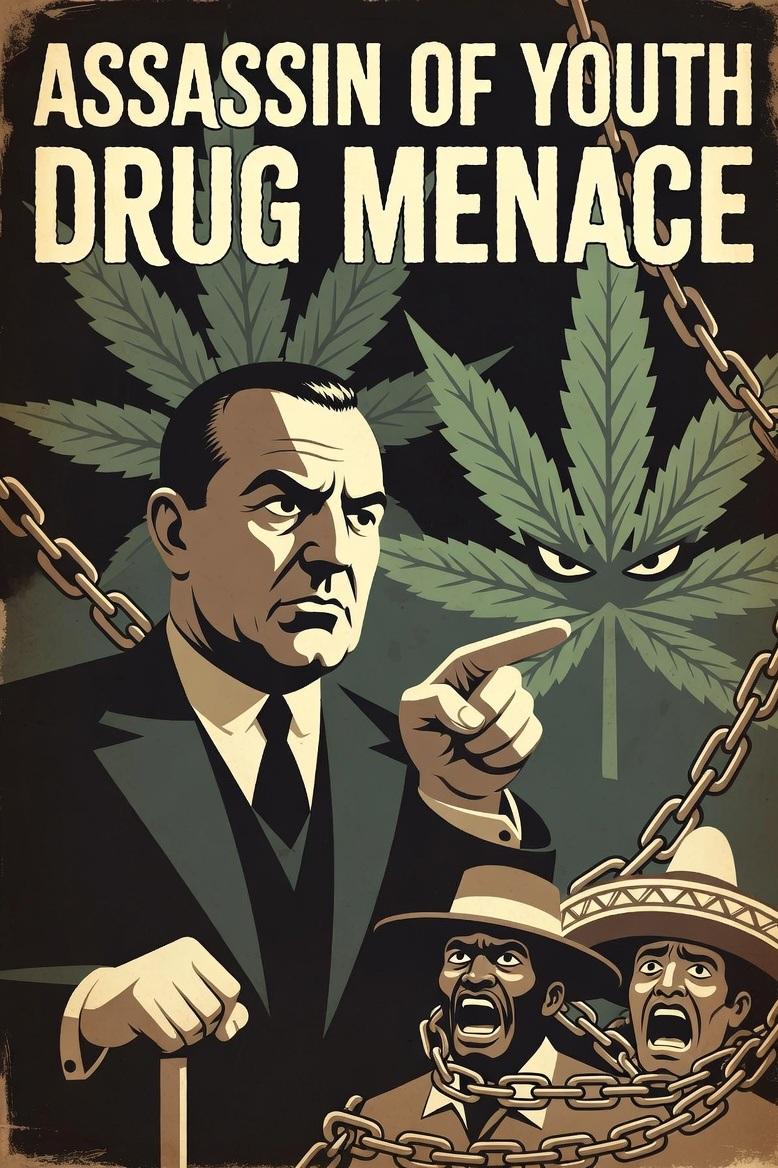
But in the 1930s, federal anti-drug propaganda weaponized the Spanish-derived word “marihuana” to culturally link the plant to Mexicans, immigrants, Black jazz culture, and racial fear. According to the U.S. Customs and Border Protection, one hundred years ago, the federal government was not overly concerned with marijuana, the common name for the Cannabis sativa L. plant.
Initially spelled “marihuana,” it was also known as hemp, Mary Jane, Mary Warner, and by a variety of other terms. Most Americans seemed unaware of its presence, let alone its exploitation as a drug. When alcohol prohibition was repealed, people in power and policymakers found marijuana to be the next appropriate target to deem detrimental to the country, as well as the communities using it. Weed was strongly stigmatized as being associated with Mexican immigrants since it was presumed to have been brought with those fleeing from the Mexican Revolution in the early 1900s. This is despite weed being farmed in North America since the 1600s and used generously in over-the-counter medicine since the 1840s.
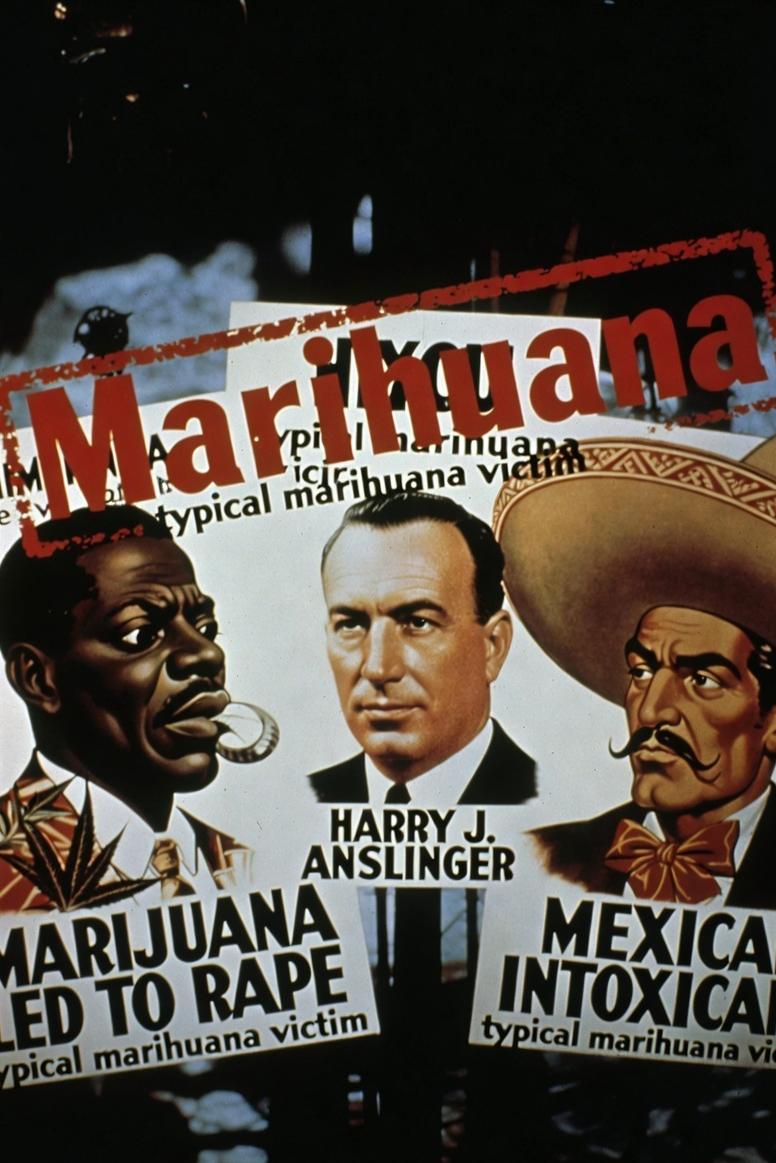
1850 was the year the National Library of Medicine noted that cannabis, a plant with a history of medical use for thousands of years, was listed for the first time in the U.S. Pharmacopeia, 3rd edition, as “Extractum Cannabis or Extract of Hemp.” The listing continued until 1942, five years after the passage of the Marihuana Tax Act of 1937, which noted that cannabis, or by then marijuana, was more deadly than meth. He famously associated cannabis use with Mexican immigrants and African Americans, making inflammatory claims that it caused “insanity” and prompted racial minorities to commit violent crimes or seek sexual relations with white women.
Scroll to continue reading




According to the Association of Cannabinoid Specialists, there are other names for cannabis. In fact, it’s reported that there are over 200 names for the “devil’s lettuce”: weed, chronic, pot, hemp, Mary Jane, reefer, dope, grass—you get the picture. Some of these words became common among jazz musicians and their followers in the 1930s. They would speak in code to avoid mention of the vilified cannabis plant. Other terms have their roots elsewhere: Pot comes from the Spanish term “potación de guaya,” referring to a brandy steeped like tea with cannabis buds. Weed comes from the term “locoweed”, referring to a North American toxic plant unrelated to the cannabis plant.
The plant did not change. The politics did, as generations of Black and Brown Americans paid the price. The ethnicity of marijuana only has one name, Harry Anslinger. Federal Bureau of Narcotics [FBN] chief and father of racist manifestos against African Americans and Latinos (Mexicans), Harry Anslinger. Anslinger helped drive one of America’s earliest racialized fear campaigns, portraying cannabis not as a public health concern but as a dangerous “foreign” social toxin. What followed was decades of policing, sentencing, incarceration, and economic extraction. From Misinformation to Mass Incarceration: The role of racism in drug policy mantra was kick-started by Harry Anslinger in the 1930s. Yet his name is honored on walls, in books, and on the internet at places like the DEA Museum with its upgraded America 250 website featuring Harry Anslinger. He served as the first director of the Federal Bureau of Narcotics (FBN), established by the U.S. Treasury in 1930.
Let’s call this what it was:
A pipeline. Law enforcement arrests you. Courts sentence you. Lawyers profit. Judges process you. Private prison systems or public correctional systems house you. Probation fees drain you. Families collapse around you. And pharmaceutical America often steps in later to medicate the trauma that criminalization helped create.
You do the math.
For economically unstable communities—especially Black and Latino populations—this was not just drug policy. It became a business model. America turned poor communities into customers of punishment. Today, the irony is almost obscene. Cannabis is now a legal medicine in many states. A luxury wellness product. A billion-dollar entrepreneurial opportunity. A social event. A holiday culture. Yes, America now celebrates weed.
April 20th has become the unofficial international cannabis celebration day.
July 10th, or “7/10″ (“Oil Day”), celebrates concentrates and extracts.
Green Wednesday—the day before Thanksgiving—is one of the cannabis industry’s biggest sales days.
September’s Medical Cannabis Awareness observances advocate for patient access.
Pause there.
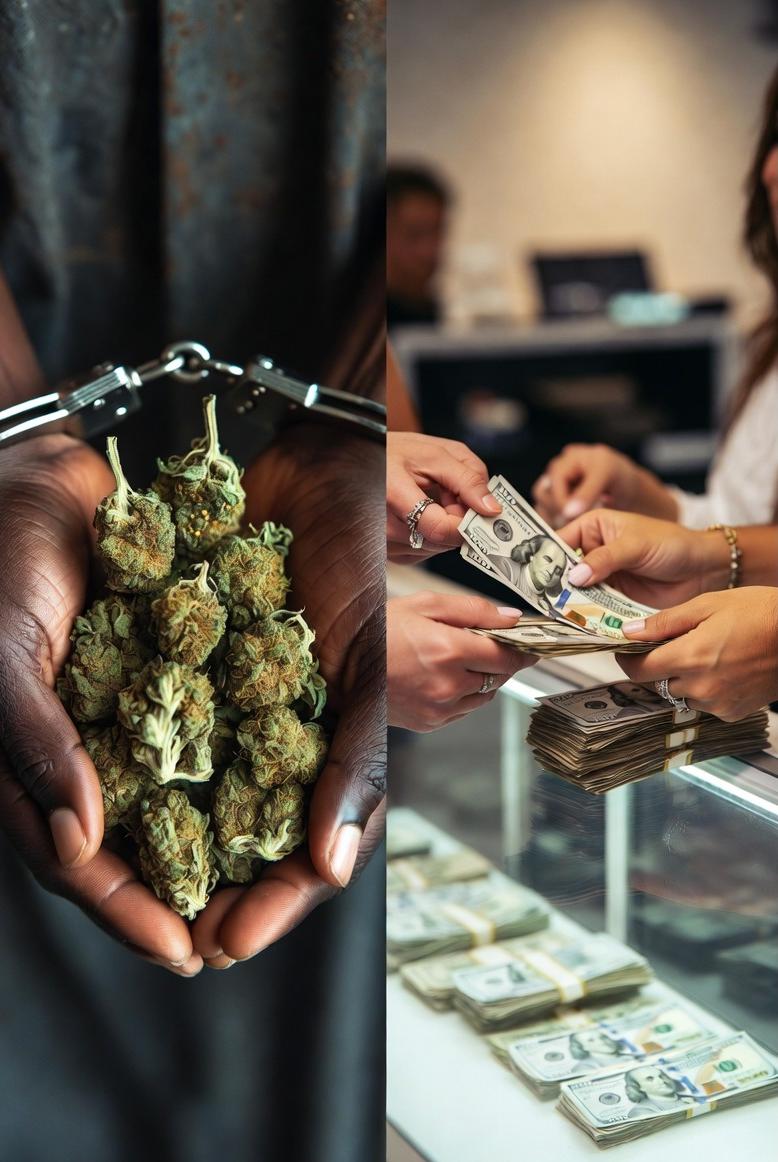
The same nation that once arrested Black youth over possession now promotes dispensary discounts. The same government that demonized weed now taxes it.
That is not justice. That is capitalism with amnesia. According to the ACLU, Black Americans are 3.64 times more likely than white Americans to be arrested for marijuana possession despite comparable usage rates. That means the crime was never truly the substance. The crime was who had it.
Ecclesiastes 8:9 says: “Man has exercised power over man to his harm.”
America perfected that. And while wealthy investors, private equity groups, and well-capitalized entrepreneurs acquire cannabis licenses, countless poor Americans still carry records from low-level possession offenses. Especially Black men, then Latinos and poor whites, caught in the same machinery of modern witchcraft. This is not simply race. It is race plus class. Poverty plus punishment. And for many, cannabis was never purely recreational. It was self-medication for trauma, depression, economic anxiety, untreated PTSD, emotional wounds rooted in poverty, racism, instability, and generational stress, to say the least.
Instead of therapy, healing, or culturally competent care, America offered surveillance and handcuffs. That should haunt us; it is haunting us. Let’s examine presidential reform. President Barack Obama granted clemency to more than 1,700 individuals convicted largely of nonviolent drug offenses. President Donald Trump signed the First Step Act (2018), reducing some mandatory minimums and improving sentencing flexibility. President Joe Biden issued pardons for federal simple marijuana possession offenses and pushed governors toward expungement efforts. Those actions matter.
But let’s be honest. Federal gestures do not erase local devastation. County convictions remain. State records remain. Housing barriers remain. Employment discrimination remains. Family disruption remains.
Micah 6:8 reminds us:
“Act justly. Love mercy. Walk humbly with your God.” Justice is not selective mercy. Justice is repair. A brief timeline tells the story:
1937: Marihuana Tax Act effectively criminalizes cannabis.
1970: Controlled Substances Act labels marijuana as Schedule I.
1980s–1990s: War on Drugs devastates urban and working-class communities.
1996: California legalizes medical cannabis.
2012: Colorado and Washington legalized recreational use.
2018: Hemp was legalized federally.
2022: Biden issues federal marijuana pardons.
2026: Cannabis remains profitable—but justice remains incomplete.
And here is the most uncomfortable truth:
America created an underground market. Then criminalized survival inside that market. Then legalized profit for those with capital. That sounds less like reform and more like economic gentrification.
John 8:36 says:
“So if the Son sets you free, you will be free indeed.”
But in America, freedom often comes with paperwork, privilege, and access to capital.
Real cannabis justice must include:
- Automatic expungement of nonviolent convictions
- Equity licensing for historically harmed communities
- Reinvestment into Black and Latino neighborhoods
- Mental health services for trauma-impacted populations
- Federal decriminalization or descheduling
- Fair banking access for minority cannabis entrepreneurs
Because if cannabis prohibition was built through racial fear. Then reform without repair is hypocrisy. America owes more than apologies. It owes an opportunity. It owes restoration. It owes truth. Because this was never just about the plant. It was about power.
Credible Sources
ACLU Marijuana Arrest Disparities Report: https://graphics.aclu.org/marijuana-arrest-report/
National Archives Federal Drug Policy History: https://www.archives.gov/
ABOUT THE AUTHOR:
Edmond W. Davis is an American social historian, international speaker, and Amazon #1 bestselling author. He is a global authority on the Tuskegee Airmen and serves as the founder and executive director of the National HBCU Black Wall Street Career Fest. A native of Philadelphia, PA, and current resident of Little Rock, AR, Davis is committed to cultural empowerment and educational equity through storytelling and civic engagement. Davis is a grand marshal at the 38th Annual African American History Month Celebration Parade.
(If You Like/Appreciate This EURweb Story, Please SHARE it!)
MORE NEWS ON EURWEB.COM: The Black Roots of Memorial Day: The Powerful Story America Often Forgets
We Publish Breaking News 24/7. Don’t Miss Out! Sign up for our Free daily newsletter HERE.