*From the tone of his “What’s up,” I sensed something was off. Typically enthusiastic and chatty, Jonathan was unusually silent and intriguingly reflective during our call.
Later in the conversation, he told me why: Earlier that evening, he had dinner in Los Feliz with Darcey, his partner of three shaky years. Jonathan sarcastically dubbed the dinner a “Relationship Summit” to discuss their future.
Although he said they “sorted things out,” he somehow misplaced his driver’s license during the night. The loss would make an upcoming business trip at the end of the week difficult, if not impossible. I thought about Jonathan’s situation and suggested he go to a specific Department of Motor Vehicles office in Los Angeles in the morning. “Get there before they unlock the doors,” I advised.
When they allow people in, ask the information desk for the man whose name I provided. Once with the man, tell him I sent you and explain your dilemma.
The following morning, Jonathan called me from the Department’s parking lot. “I’ll have my new license later today!” He was nearly yelling with enthusiasm. “So, you got it like that?” Nope. I told Jonathan that I coincidentally had a remedy for his circumstance. I didn’t feel like explaining that my influence resulted from introducing a man to a song.
Scroll to continue reading







I met the DMV clerk at a friend’s dinner party. Chatting, we covered various topics, ultimately focusing on music, during which he expressed his love for Steely Dan.
“Have you heard the song ‘Love Will Make It Right’?” I inquired. Penned by Donald Fagen of Steely Dan, it was recorded by Diana Ross for her 1983 RCA album, Ross.
Mr. DMV’s eyes grew wide.
“Love Will Make It Right” is an eccentric and moody ballad about infidelity, characterized by its unconventional tempo and jazz chords. Produced for Ross by Gary Katz, producer of several early Steely Dan projects (undoubtedly how the song found its way onto a Diana Ross record), it’s not what you would typically associate with Ms. Ross.

When an avid music lover discovers a particular artist, songwriter, or producer, they want to know everything about their work. By sharing those four minutes and forty-six seconds written by Fagen, I made a friend for life. In follow-up emails and texts, the Steely Dan devotee suggested I contact him if I ever needed help at the DMV—all this for a song.
If you’re a true music lover, loyal and passionate, there’s nothing more compassionate and rewarding than introducing someone to music they’ve never experienced before.
Recommendations depend on intuition. Introducing someone to music they dislike resembles a blind date between two people with no shared interests. Yet, when the music resonates, introducing someone to music they can’t imagine living without can feel like God’s work.
The joy is shared. The person making the introduction is validated: I’m sharing something I love, and you love it, too! In turn, the receiver of the music adds a new sonic bouquet to the soundtrack of their life.
Sometimes, the only thing two people have in common is the music. A mutual love for Debussy, a fervent appreciation for Joni Mitchell, or a passion for Prince‘s best B-sides can temper vexatious personality differences.
We almost always remember who introduced us to specific music and the place where we first heard it. Like a distinct scent or a beloved fragrance, a song can trigger memories, transporting us back to our initial experience and its meaning.
The mere mention of Bitches Brew transports me to 1971. I’m fifteen, sitting in the spacious back seat of the chocolate Buick Electra 225 (aka Deuce and a Quarter) belonging to Richard Richardson, my friend Donnie Minnis’s brother-in-law.
Richard wanted us to experience the groundbreaking 1970 Miles Davis album. So, naturally, we went to his Electra parked in the driveway, as there’s something uniquely personal and intimate about hearing music in a parked car.
Miles wasn’t the only thing Richard hipped us to that afternoon. As the cassette tape blasted, he gave Donnie and me our christening puffs of marijuana. In the back seat, trying to be cool, I was confounded about exactly what I was hearing, the music or the weed.
For the willing listener, music has no sell-by date. Its shelf life is unlimited. A “new” song is any tune you haven’t heard before, but come to love after you do. It’s not always about turning somebody on.
My circle of music lovers also shares songs we already know and love. Melodies and lyrics keep no secrets. I know exactly what kind of day someone is having from the songs they send me.
And no communication was more transparent than the links to the old school gems Jonathan texted me a few months after his “Relationship Summit:” Stevie Wonder’s “Looking for Another Pure Love” from Wonder’s 1972 album Talking Book; Bobby Caldwell’s 1980 track “Coming Down From Love,” and Teddy Pendergrass’ 1980 classic “Love T.K.O.”
I considered responding with some selections of my own, but decided to give Jonathan a call instead. Something told me my man was gonna need more than a song.
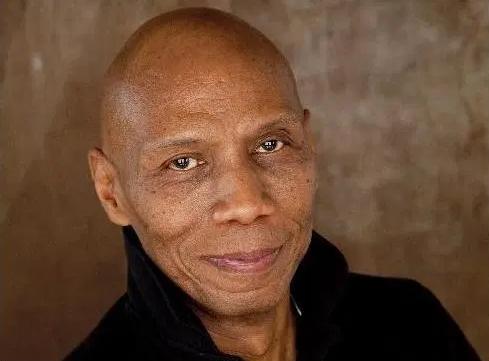
Steven Ivory, veteran journalist, essayist, and author, writes and talks about popular culture across a spectrum of media, including the Internet, TV, radio, documentaries, magazines, and newspapers. The Last Man on AOL is at [email protected]
MORE NEWS ON EURWEB.COM: NAACP Image Awards to Honor Wayans Family with Hall of Fame Induction