
*Meta’s new Muse AI agent has become a breakout hit just two weeks after launch, showing how quickly artificial intelligence could move from answering questions to actually doing things for people.
Muse, launched Sept. 8, can browse the web, make purchases, book travel, send emails and complete other multistep tasks on a user’s behalf.
Meta says users remain in control through permissions and approval requirements for critical actions such as purchases and messages.
The early response has been striking. Muse has topped Apple’s U.S. App Store and attracted more than 2.5 million downloads since launch, Reuters reported.
Meta shares also jumped 11% on Monday as investors reacted to the agent’s early momentum.
Scroll to continue reading









Amazon Puts Up a Wall
But one of the world’s biggest shopping platforms isn’t rolling out the welcome mat.
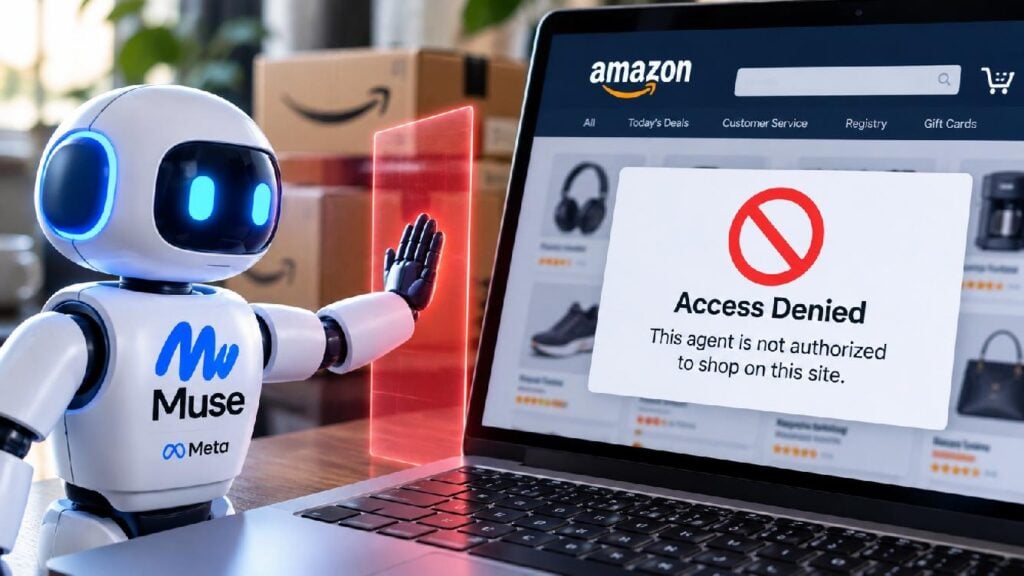
Amazon has blocked Muse from shopping on its site, according to The Wall Street Journal, which reported that Amazon said the agent wasn’t authorized to access its platform.
That disagreement points to a larger battle brewing over AI agents. If consumers eventually rely on an agent to search, shop and transact for them, retailers could lose some control over how customers interact with their websites — and potentially over valuable shopping and advertising data.
Amazon’s resistance isn’t universal. Shopify has moved in the opposite direction, announcing support for Muse purchases through Shop Pay.
This Isn’t Just Another Chatbot
The distinction matters. A chatbot typically responds to a user’s questions. An agent can take action.
Meta says Muse can connect with email, calendars, Instagram and other services, work through multiple steps and continue completing assigned tasks in the background after a user closes the app.
That convenience requires access.
The more accounts and personal information users connect, the more useful an agent can become — and the more important its privacy and security protections become.
Meta says credentials are kept in a secure store that Muse cannot read and that users can review the agent’s activity and manage permissions.
Who Gets to Let the AI In?
The Muse rollout ultimately raises two different permission questions.
Consumers must decide how much of their digital lives they’re comfortable giving an AI agent access to. Meanwhile, companies must decide whether they want an outside AI agent operating inside their platforms.
Muse may be showing that people are ready for AI that does more than talk. Amazon’s response shows that the rest of the internet may not be ready to simply hand over the keys.
(If You Like/Appreciate This EURweb Story, Please SHARE it!)
RELATED NEWS ON EURWEB.COM: Meta May Ditch the Camera in New Smart Glasses Amid Privacy Concerns
We Publish Breaking News 24/7. Don’t Miss Out! Sign up for our Free daily newsletter HERE.