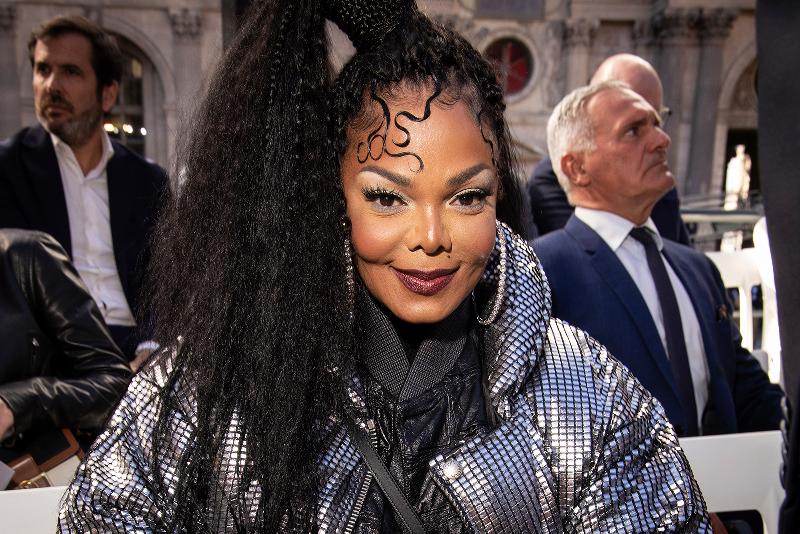
*After making herself look – shall we say – “poorly educated,” Janet Jackson has apologized for her recent statements about Vice President Kamala Harris‘ racial identity. The controversy arose during an interview when Jackson claimed that Harris, the first female Vice President of the United States, was not Black.
Echoing previous comments made by former President Donald Trump, Jackson’s remarks have sparked considerable backlash and debate about racial identity and representation.
At 58, Janet Jackson’s reputation as a musical legend has been built over decades. However, her comments have overshadowed her artistry and prompted a reevaluation of her understanding of racial discourse.
When questioned about the significance of having a female Black leader, Jackson stated: “She’s not Black. That’s what I heard. That she’s Indian. Her father’s white. That’s what I was told.”
Scroll to continue reading




This statement reflects a lack of awareness regarding Harris’s personal and cultural background, which is a blend of both Indian and Jamaican heritage.
Following the criticism, Jackson’s manager, Mo Elmasri, released a statement to Buzzfeed clarifying the singer’s position. The statement conveyed Jackson’s respect for Vice President Harris and acknowledged the importance of accurate representation in public discussions about race.
“She deeply respects Vice President Kamala Harris and her accomplishments as a Black and Indian woman. “Janet apologizes for any confusion caused and acknowledges the importance of accurate representation in public discourse. We appreciate the opportunity to address this and will remain committed to promoting unity.”
The racial identity of Kamala Harris has been a topic of discussion since her ascent to political prominence. Born to Shyamala Gopalan, an Indian cancer researcher, and Donald Harris, a Black economics professor from Jamaica, Kamala has often spoken about her rich cultural heritage.
Harris’ upbringing instilled in her a deep appreciation for both sides of her identity, leading her to engage profoundly with her Jamaican roots and the historical context of her family.
The controversy surrounding Jackson’s comments echoed former President Donald Trump’s misinformed assertions at the National Association of Black Journalists convention earlier this year. Trump insinuated that Harris has only recently embraced her Black identity, casting doubt on the legitimacy of her racial background.
“[Harris] was always of Indian heritage, and she was only promoting Indian heritage. I didn’t know she was Black until a number of years ago when she happened to turn Black, and now she wants to be known as Black.” He questioned: “So I don’t know, is she Indian or is she Black?” Trump added: “I respect either one, but she obviously doesn’t, because she was Indian all the way, and then all of a sudden she made a turn and she went – she became a Black person. I think somebody should look into that too.”
Such rhetoric, reminiscent of Jackson’s remarks, perpetuates the harmful narrative of questioning the authenticity of people’s identities based on their heritage.
As the backlash continues, it raises important questions about how public figures consider and discuss race. Janet Jackson’s apology serves as a reminder of the need for greater sensitivity when it comes to discussions surrounding racial identity, especially in a time of increasing attention to social justice and equality.
MORE NEWS ON EURWEB.COM: Janet Jackson Reveals Hilarious ‘Booty Crack’/Pants Splitting Incident in Front of Queen Elizabeth | WATCH Her Tell the Story