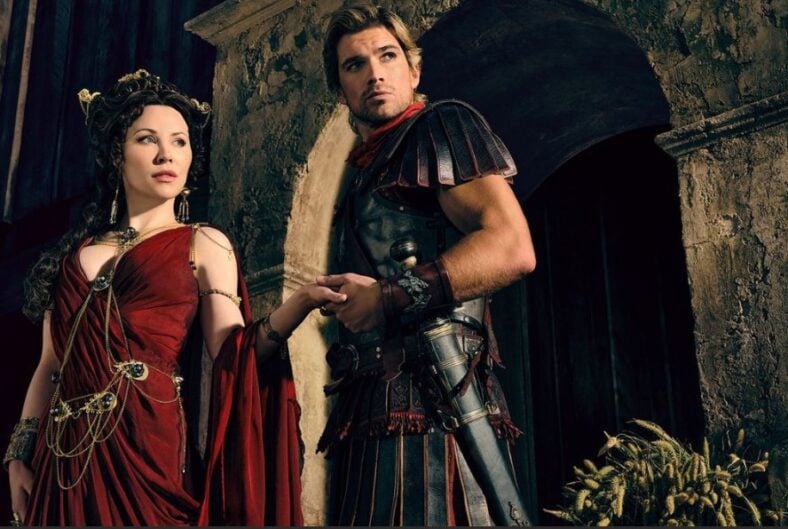
*The first season of “Spartacus: House of Ashur” closed with seismic shifts that left no corner of its blood-soaked world untouched. Achillia triumphed over the Scythian, while grief over Celadus drove Achillia and Tarchon into each other’s arms. Most shocking of all, Ashur killed Julius Caesar, an act of betrayal with consequences yet to fully unfold. The full season is now streaming on STARZ.
For Jaime Slater, who plays the calculating Cornelia, that final twist sets the stage for something explosive. Though her character has yet to learn of Caesar’s murder, Slater already knows the fallout would be devastating. “We really won’t know unless there’s another season. But we’re all very hopeful. So at this point she doesn’t know, but I suspect when she does know, or if she does find out, there’s going to be hell to pay.”
Cornelia exists at the summit of Roman society, a woman whose status is both her armor and her weapon. In a world where betrayal is currency, Slater says survival is not the concern for a woman of Cornelia’s standing. “I think for Cornelia, because she is status personified, it’s all thriving for her. How does she avoid boredom? She has goals and schemes and ambitions, but it’s more about getting through the day to day and making sure her goals are on track.”
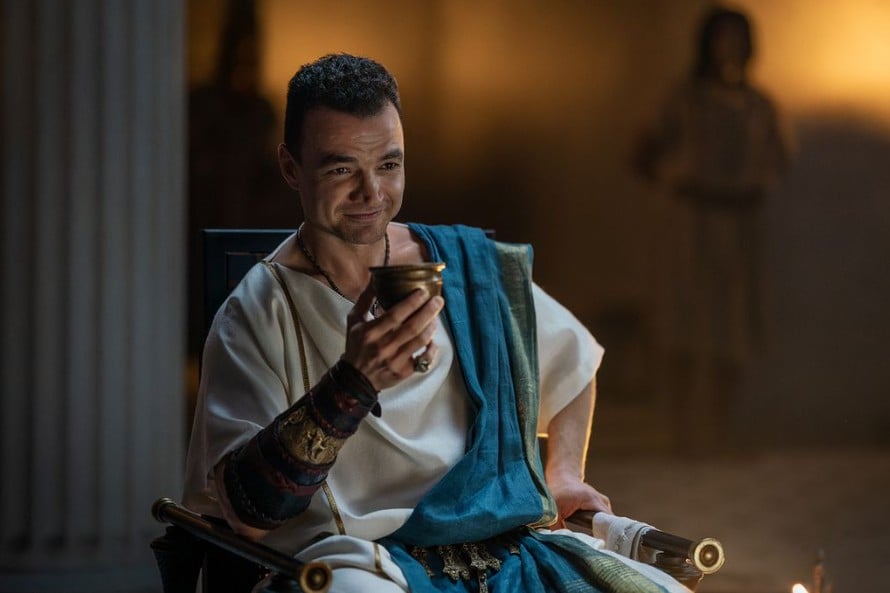
“Spartacus: House of Ashur” is a history-bending, roller-coaster experience that builds on everything that made the original series a colossal hit. No longer a slave, Ashur has clawed his way to power, owning the same ludus that once owned him. He flips tradition by unleashing Achillia, a fierce gladiatrix eager to prove herself in a man’s world, igniting a new kind of spectacle that shocks and offends the Roman elite with every drop of blood.
Scroll to continue reading









Stepping into a franchise with such a devoted following was both thrilling and daunting for Slater. She admits the character’s ruthlessness initially gave her pause. “The role initially scared me a little bit because she is so devious and treacherous. So it was exciting in that I was getting an opportunity to play all of these qualities and characteristics I haven’t been able to yet, but there was such a disconnect between who I am as a person and who she is and how she operates. So I had to kind of find a way in because I was intimidated by her.”
Her solution was to abandon moral judgment entirely and lean into the pleasure of Cornelia’s villainy. “A lot of these things I, as Jamie, can’t justify, but I was like, clearly she does. I can’t judge this character because I’m about to be her. So my way was really kind of flipping everything on its head going, what if this was fun? What if I liked it? How can I access the part of myself that was like, there’s no culpability. There’s no moral sensibility hanging over my head. I just had to kind of get into how is this fun? How is this delicious?”

When it comes to what drives Cornelia, Slater is unequivocal. “Oh, I think power for sure. She is incredibly wealthy and powerful, but you know, more is more in this case. I think she’s really bent on elevating her husband, Julius Caesar, and climbing the upper echelons.”
Navigating relationships with Rome’s most dangerous power players required Cornelia to wear many masks throughout the season. Slater found the dynamics with Cassidia and Viridia particularly fascinating. “Ultimately Cornelia, she is essentially the queen of Rome, so her status is well above theirs, but she still needs something from them. She’s constantly having to mask and play girlfriends. She’s use to telling people what to do and not really caring what people think of her, but in this instance, because she’s trying to work them, she has to play a very specific game, which is, I think, tedious for her.”
Slater points to episodes six and seven as the moments where Cornelia truly commands the screen. “Episode six, you see this naughty superior side to her where she just does not care. She’s like, you will do what I say and this is how it’s going to be. She just holds court with Viridia and Cassidia. And in episode seven, you see a very playful side and a bit seductive and gentler side with Messiah. And then she flips it and puts the screws to Ashur in that second part of the scene.”
Working alongside Nick Tarabay, who plays Ashur, and the rest of the cast brought out the best in everyone. “It was so playful and fun. And everybody was just really committed. Nick is such a professional. He’s so great to work off of. He gives you so much.”
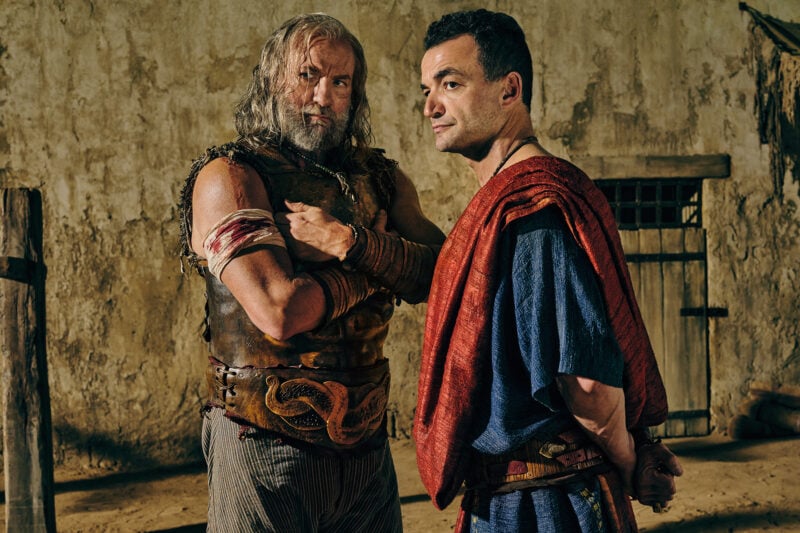
Slater even confessed to moments where her admiration for her scene partners nearly pulled her out of character. “There were moments where I, you have to be in your character, think your character’s thoughts and drive the storyline as written. But sometimes I would kind of catch myself drifting out of character and watching Nick and feeling really bad. And I’m like, no, no, Cornelia, stay in Cornelia.”
Over the course of the season, Cornelia is tested in ways she does not anticipate, particularly by Ashur. Slater says the challenge of being outmaneuvered is new territory for a woman accustomed to being five steps ahead. She hopes audiences walk away recognizing the depth beneath Cornelia’s polished exterior.
“I hope that they understand that she’s incredibly intelligent. And initially she might look like she’s just some prima donna swanning around the villa, but she’s got plans. She’s got intelligence. She’s got education. There’s a scene where she speaks fluent Greek, she’s clearly a learned woman. So I hope that’s not missed because it’s easy to focus on the physicality and the sexual aspects and also how conniving she is.”
Being part of the “Spartacus” legacy carries deep personal meaning for Slater, who was a fan long before she joined the franchise. “It’s thrilling, and such an honor. I was such a huge fan of the original show, and so I never would have thought that there would be this other opportunity to be a part of something like this. I’m so grateful for the opportunity.”

She sees Cornelia as a character who represents both menace and empowerment. “I hope she brings another level of villainhood. And at the same time, this might sound a little twisted, but empowerment, right? Because she’s a woman in a very patriarchal society, but she still finds ways to assert herself, even though she has a bit of a different status, but she’s still working within a patriarchy. She’s finding ways to maneuver men to essentially help elevate herself, because if she elevates her husband, they climb together. So yeah, I would say empowerment and villainy.”
Should “Spartacus: House of Ashur” return for another season, Slater has a clear vision for where she wants Cornelia to go next.
“Well, given the fact that Caesar’s murdered and by Ashur, I would love to see the vengeful, rageful side of her and she’s out for blood. I would like to see like a dirty, rough side of her.”
The original “Spartacus” series and all subsequent chapters, including “Spartacus: Blood and Sand” (2010), the prequel “Spartacus: Gods of the Arena” (2011), “Spartacus: Vengeance” (2012), and “Spartacus: War of the Damned” (2013), are available on the STARZ app.
MORE NEWS ON EURWEB.COM: Jackson Gallagher Talks Julius Caesar’s Brutal End in ‘Spartacus: House of Ashur’ Finale | EUR Exclusive
Sign up for our Free daily newsletter HERE.