*As predicted, Hurricane Helene made its catastrophic landfall in Florida’s Big Bend region on Thursday evening as a powerful Category 4 storm. This rapid intensification occurred over the Gulf of Mexico’s unprecedented warm waters, marking one of the strongest storms to hit the area in recorded history.
As the hurricane approached landfall around Taylor County, officials reported initial casualties and significant impacts set to rock several states.
In a late-night news conference, Florida Governor Ron DeSantis confirmed the loss of at least one life due to the hurricane. Tragically, officials in Georgia later reported two additional fatalities attributed to a suspected tornado spawned by Helene’s storm system. The tragedy underscores the serious threat posed by this powerful weather event.
The National Weather Service (NWS) issued dire forecasts, stating that Florida’s Big Bend region could face historic storm surges of 15 to 20 feet, described as “catastrophic and unsurvivable.” As the hurricane barreled inland, hurricane warnings extended beyond Florida, with parts of metro Atlanta bracing for the storm, where hurricane-force wind gusts were anticipated. Meteorologist forecasts warned that significant tree damage and prolonged power outages could occur throughout the affected areas, according to Axios.
Scroll to continue reading









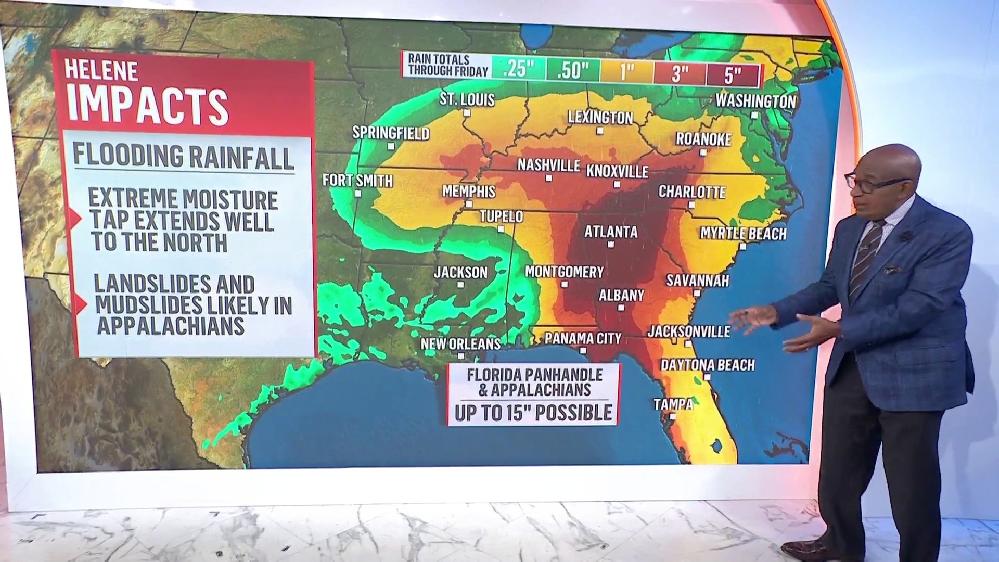
Further complicating the situation, heavy rainfall led to potential flooding across the southern Appalachians, particularly in western North Carolina. Authorities expect rainfall totals to reach up to 15 inches, raising concerns for historic flooding and landslides in an area unaccustomed to such severe weather events. Flood warnings were issued for major cities like Tallahassee, Tampa, and Jacksonville, prompting strong recommendations for residents to secure their homes and evacuate if necessary.
As the storm continued its track, thousands of people found themselves without power. By 11:45 p.m. ET, over 1 million customers in Florida had already experienced outages. This number is expected to grow as more power lines succumb to the force of the storm, presenting a daunting challenge for utility workers tasked with restoring services amid dangerous conditions.
As Helene moves rapidly north-northeast at 24 mph, several measures were activated to prepare for the worst. The impact of the storm’s extensive wind field, coupled with its swift movement, poses a significant risk not only to coastal areas but also to inland states like Georgia and South Carolina, where prolonged power outages are likely.
In a stark reminder of nature’s unpredictability, the NWS warning issued for western North Carolina evokes memories of the floods of 1916, suggesting that Helene could be one of the most significant weather events in the region in contemporary times. Residents across several states remain on high alert, united in their efforts to prepare for and respond to the ongoing peril of Hurricane Helene.
MORE NEWS ON EURWEB.COM: Hurry! Not Much Time to Prepare – Major Hurricane (Helene) Could Hit Florida in Just 48 Hours | VIDEO