DEA Seized His $8,500 at the Airport—Now They Owe Him $23,700
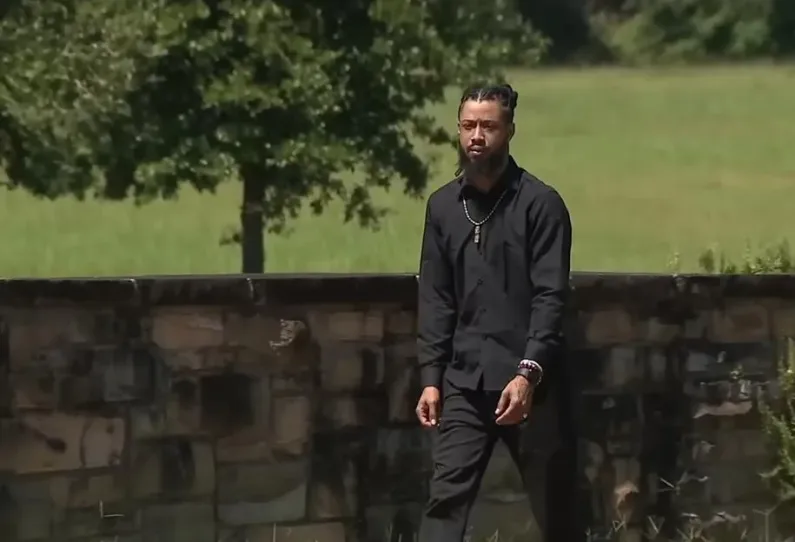
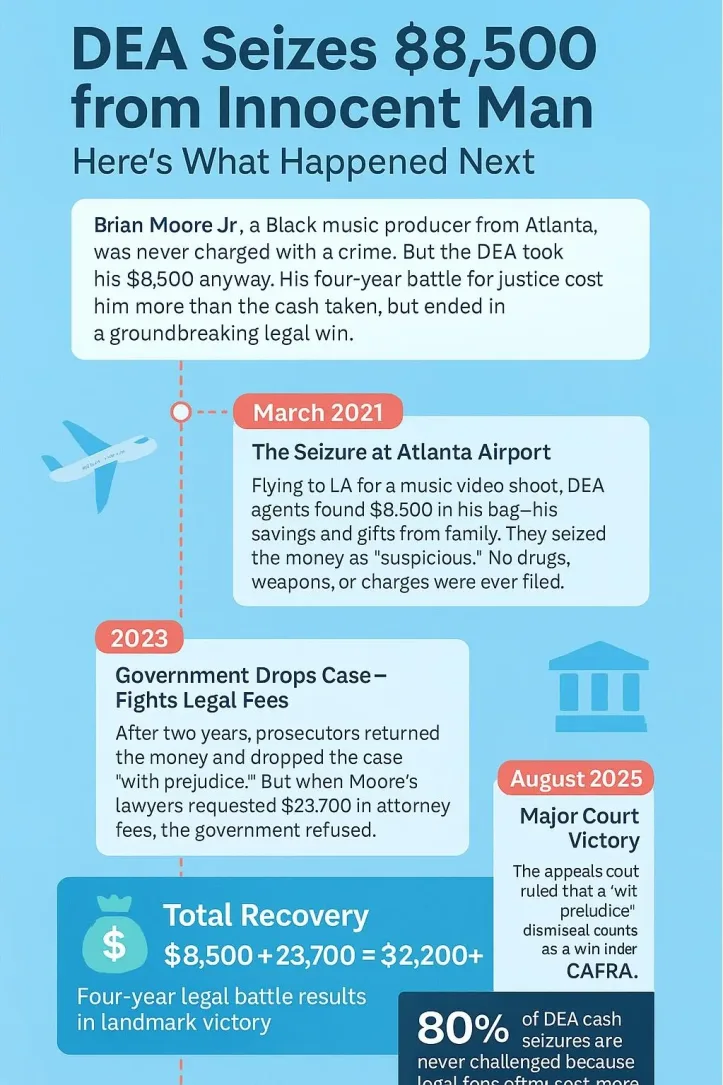
*Yes! Good for him. Brian Moore Jr., a 28-year-old Black music producer from Atlanta, just beat the Drug Enforcement Administration (DEA) in court. In March 2021, DEA agents seized $8,500 in cash from him at Hartsfield-Jackson Atlanta International Airport—even though he was never arrested or charged with a crime.
After a four-year legal battle and more than $15,000 in attorney’s fees, Moore not only got his money back but also forced the federal government to reimburse his costs. A federal appeals court ruled in August 2025 that the seizure violated civil forfeiture protections, giving Moore a total recovery of over $23,700.
DEA Agents Took the Cash Without Any Charges Filed
The incident happened as Moore was headed to Los Angeles for a music video shoot. DEA agents approached him at the gate, asked about drugs and weapons, and searched his bag. Inside was $8,500 in savings and family gifts. The agents took the money, called it “suspicious,” and let Moore board his flight.
“They told me that I looked suspicious,” Moore later said. “And they were just going to take my money based on the fact that I looked suspicious.” This kind of seizure is legal under civil asset forfeiture laws, even without criminal charges. But Moore chose to fight back.
Scroll to continue reading









The Legal Battle Cost More Than the Seized Cash
Moore hired attorneys from the Institute for Justice, a nonprofit that challenges civil forfeiture nationwide. They filed suit under the Civil Asset Forfeiture Reform Act (CAFRA), which allows people to recover legal fees if they win back their property.
In 2023, prosecutors dropped the case with prejudice and returned the $8,500. But U.S. District Judge Mark Cohen denied Moore’s $15,200 legal fee request, claiming the dismissal didn’t count as a win on the merits since there was no trial verdict.
Appeals Court Reverses Decision, Sides With Moore
Moore appealed—and won. In August 2025, the 11th U.S. Circuit Court of Appeals ruled that a dismissal “with prejudice” qualifies as a legal victory under CAFRA. The court ordered the DEA to pay Moore’s legal fees in full. One judge even asked prosecutors, “How is that legal, let alone fair?”
With interest, Moore’s total recovery now exceeds $23,700. He told WSB-TV, “I felt a little bit of justice finally,” though he called the process a “nightmare.” His case is now a landmark example of the financial and emotional cost of challenging unjust seizures.
This Case Shines a Spotlight on ‘Policing for Profit’
The DEA had quietly paused its airport cash seizure program earlier in 2025. A Treasury Inspector General report revealed that 91% of ATL airport cash seizures involved funds from legal sources. Moore’s case fueled renewed scrutiny of the practice.
Critics argue that civil forfeiture laws allow police and federal agents to seize money without due process—especially targeting Black and Latino travelers. Dan Alban of the Institute for Justice called the win “a step toward ending policing for profit.”
More States Are Pushing for Forfeiture Reform
Several states, including New Mexico, have already banned civil forfeiture without a criminal conviction. Others are pushing federal reforms to raise the burden of proof or require court approval before taking money. Moore’s victory could influence future court rulings and legislation.
Though he got his money back, Moore paid a high price in time, stress, and legal costs. “Most people would’ve walked away,” his attorney said. “But Brian stood up.” His case is now a rallying point for those fighting unjust forfeiture laws nationwide.
(If You Like/Appreciate This EURweb Story, Please SHARE it!)
MORE NEWS ON EURWEB.COM: Trump Commutes George Santos’ Sentence After Only 84 Days in Prison | WATCH
We Publish Breaking News 24/7. Don’t Miss Out! Sign up for our Free daily newsletter HERE.