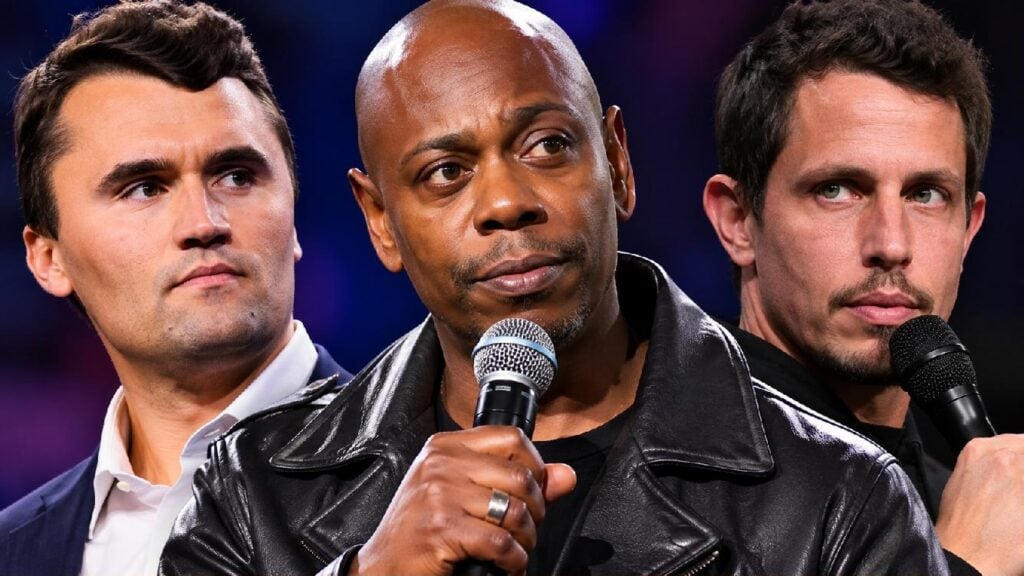
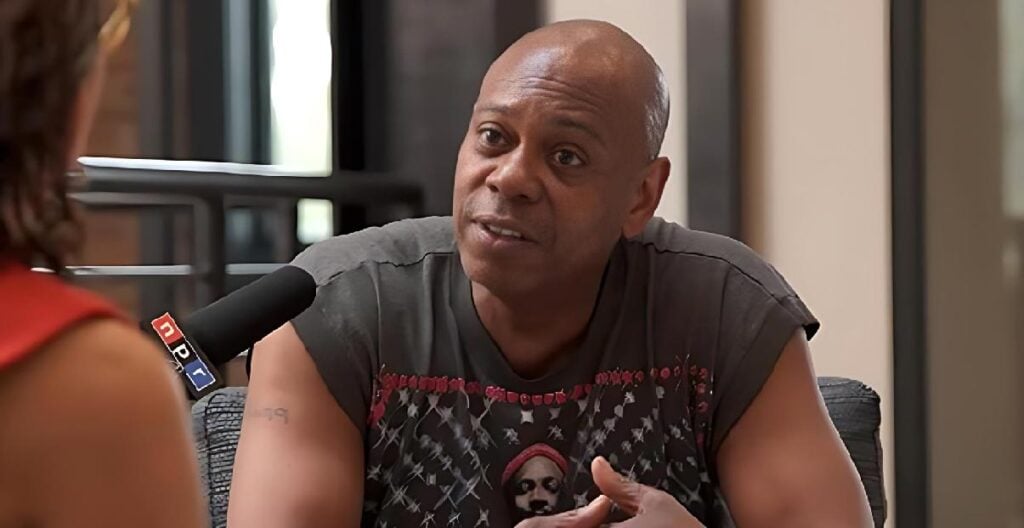
*Dave Chappelle has spent decades making audiences uncomfortable. But his controversial joke about the late Charlie Kirk may have accomplished something even more revealing: exposing how differently Americans react when offensive comedy targets someone on their own side.
The comedian sparked outrage after joking about Kirk, the conservative activist assassinated in September 2025, during a November 7 performance at Madison Square Garden.
“Ever since that guy Charlie Kirk got murdered — and I shouldn’t say this publicly — but I feel better,” Chappelle told the audience in footage that quickly circulated online.
Critics called the remarks cruel, insensitive and disrespectful to Kirk’s grieving family. But another Chappelle punchline has attracted attention for a reason that goes beyond the initial controversy.
It sounded remarkably similar to a joke comedian Tony Hinchcliffe delivered months earlier about George Floyd, the Black man murdered by Minneapolis police in 2020. And that resemblance raises a question worth asking: When does offensive comedy become unacceptable, and who gets to decide?
Scroll to continue reading

Dave Chappelle: ‘Ever since that guy Charlie Kirk GOT MURDERED… and I shouldn’t say this publicly but…. I FEEL BETTER’ ‘I just be driving around like ‘Why am I in such a GOOD MOOD?… Oooh” https://t.co/Z9bIwvQdRl
— RT (@RT_com) November 8, 2026
Dave Chappelle’s Joke Has a Familiar Punchline
In another recording from his Madison Square Garden performance, Chappelle suggested Kirk was looking up from the afterlife, laughing so hard he couldn’t breathe.
The wording closely resembled Hinchcliffe’s joke during Netflix’s May 2026 roast of Kevin Hart.
Hinchcliffe’s punchline referenced Floyd looking up from the afterlife and being unable to breathe — a particularly disturbing reference to Floyd’s final moments beneath a Minneapolis police officer’s knee.
Floyd’s family and other critics condemned the joke. Hart subsequently defended the roast format, explaining that outrageous material was part of what audiences should expect from Hinchcliffe.
The similarities have prompted speculation that Chappelle deliberately turned Hinchcliffe’s joke around, replacing Floyd with Kirk.
That interpretation is plausible, although Chappelle has not publicly confirmed that the resemblance was intentional.
Charlie Kirk Backlash Raises Questions About Comedy
Kirk’s widow, Erika Kirk, condemned comedians and commentators who treat political assassination as entertainment.
“A culture that laughs at assassination is one of profound moral decay,” she wrote on X.
British broadcaster Piers Morgan also criticized Chappelle, pointing out that the comedian himself survived an onstage attack in 2022. Elon Musk joined those condemning the remarks.
Their objections deserve consideration. Kirk was murdered while speaking at a public event, leaving behind a wife and two children. His death was an act of political violence, regardless of how anyone viewed his beliefs.
But George Floyd also left behind a grieving family, including a daughter who has had to confront public jokes about her father’s death.
Both families have reason to find such humor deeply hurtful.
The question isn’t whether either family should be offended. It’s whether the broader public applies the same moral standards when the victim’s politics, race or public reputation changes.
Is Free Speech a Principle or a Team Sport?
Defending a comedian’s right to tell an offensive joke doesn’t require laughing at it, endorsing it or dismissing the pain it causes.
Likewise, condemning a joke doesn’t automatically mean demanding censorship. Those distinctions often disappear when political identity enters the conversation.
Some people who champion unrestricted comedy become considerably less enthusiastic when the joke targets someone they admire. Others defend transgressive humor until it crosses their own political or cultural boundaries.
However, the existence of two controversial jokes does not, by itself, establish that every critic is a hypocrite. Hinchcliffe faced substantial backlash over his Floyd joke, too.
A genuine double standard emerges when the same person excuses one punchline but condemns the other without explaining the difference.
The Real Question Dave Chappelle Leaves Behind
Chappelle’s remarks may have been deliberately provocative, a calculated callback or simply another example of his willingness to venture into uncomfortable territory.
Whatever his intention, the controversy has reopened a debate that extends far beyond two comedians and two very different public figures.
Political violence should never become acceptable because the victim belongs to the opposing camp. Neither should the pain of grieving families become less significant because their loved ones are unpopular. But if Americans insist that comedy must be free to offend, they should be prepared to defend that principle even when they’re the ones offended.
Because if a joke is protected when it targets somebody else but suddenly becomes intolerable when it targets your side, perhaps the real issue isn’t the joke. It’s the mirror.
(If You Like/Appreciate This EURweb Story, Please SHARE it!)
RELATED NEWS ON EURWEB.COM: Dave Chappelle Says He Feels Better Since Kirk’s Death, Widow Responds
We Publish Breaking News 24/7. Don’t Miss Out! Sign up for our Free daily newsletter HERE.