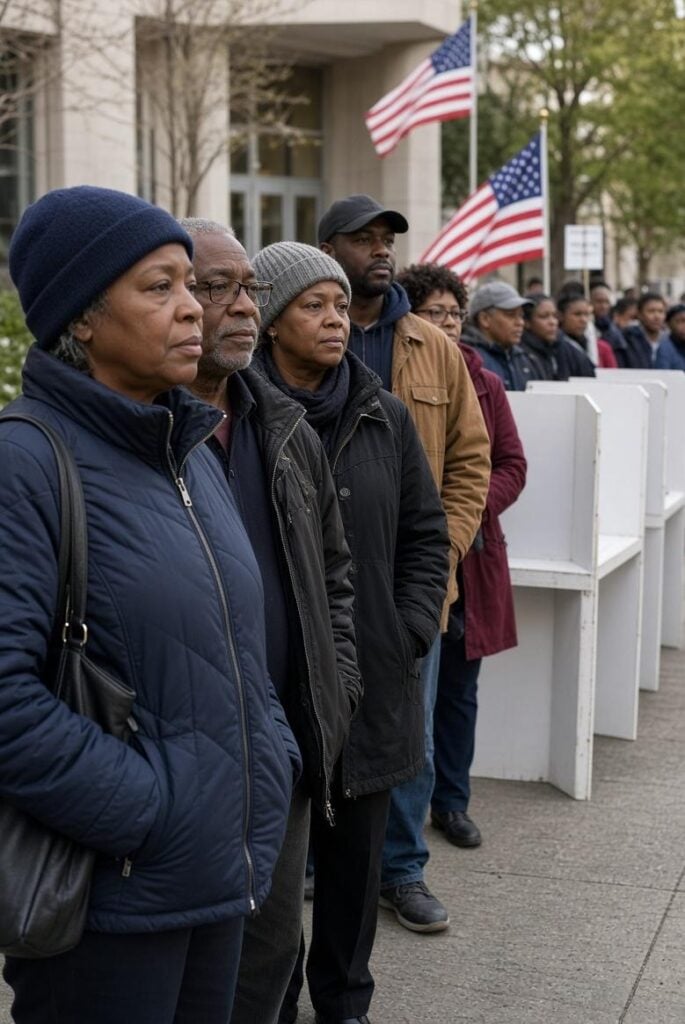
Within the Black community, a convoluted narrative about when Blacks became U.S. citizens is emerging as Black leaders and Civil Rights advocates challenge the Supreme Court’s recent redistricting decision.
For example, Rev. Otis Moss, III of the Trinity United Church of Christ stated to his predominately Black Chicago congregation, “We as a people have only been citizens in this nation since 1965,” the year the Voting Rights Act was signed. The VRA was intended to enforce the protections guaranteed by the Fourteenth and Fifteenth Amendments to the Constitution. Moss commented about the strain the redistricting decision places on the VRA her Moss continued to lament the absence of full rights for Black before the law changed. He said state rights “marginalized the power of people of African descent.” This assessment of the discriminatory treatment of Black Americans is only partially correct.
Indeed, Jim Crow practices perpetuated racism and prejudice in U.S. society challenging Black access to the ballot box as well as equal access to facilities, literacy tests, poll taxes, while violence suppressed political participation. Yet, it is imperative that staunch semantical interpretations do not ignore the facts.
Here are the key facts that simmer the arguments about Blacks only being citizens since the sixties :
Scroll to continue reading







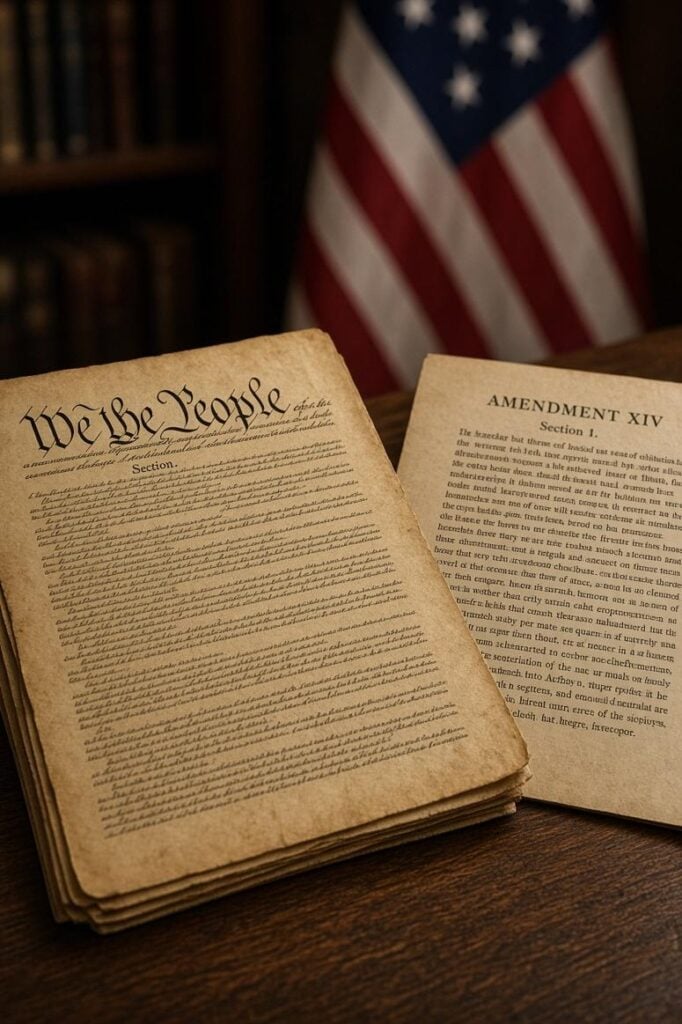
Section 1 of the 14th Amendment to the Constitution specifies, “ALL persons born or naturalized in the United States, and subject to the jurisdiction thereof, are citizens of the United States and of the State wherein they reside.” This Constitutional rule was established nearly a century before the passage of the Civil Rights Act or the Voting Rights Act and is the very legal decision that enabled Blacks to be elected to Congress along with the 15th Amendment that gave Black men the right to vote. Citizenship is a requirement to hold office. Census data shows that Blacks were counted as citizens. U.S. born slaves became citizens in 1868 with the passage of the 14th Amendment. Some say Blacks have only been citizens since 1965 when the Voting Right Act was signed into law. The rationale is that because the right to vote was not fully bestowed to everyone — men and women, regardless of race — Blacks were not “FULL” citizens.
Diminishing the work that secured the right to belong in America or the constitutional rights and privileges that enabled Black America’s first leaders to participate in government is not only faulty but also risky. Those rights gradually allowed every eligible person to vote and the first Black president, Barack Obama to be elected.
Nuance becomes a weapon by creating technical loopholes in rationale that can be used to erase history, weaken protections, and justify new forms of exclusion. The view that full “citizenship” was delayed is like giving opponents a tool to use in arguments against allowing changes for special circumstances that heretofore have been employed to support marginalized groups. Instead.
Equating disenfranchisement with non‑citizenship opens the door for bad‑faith actors to:
1. Revise history to minimize past progress
If Black citizenship only “began” in 1965, then the Reconstruction ere, a period when Black men held office, built institutions, and shaped democracy, disappears from the story.
2. Undermine constitutional protections today
If citizenship is framed as conditional or revocable, it becomes easier to justify rolling back rights.
3. Suggest that discrimination was merely a “policy disagreement”
Instead of acknowledging it as a violation of rights guaranteed since 1868.
In conclusion, the delayed citizenship narrative is a fear response tied to what appears to be a weakened constitution that could easily be misconstrued. One must consider that the current fight to restore voting rights is essentially about the frailty of the Constitution itself. Poet Gil Scott Heron sang on the 1974 recording “Winter In America,” that the Constitution is a “noble piece of paper.” One interpretation of that opening line is that the rights inscribed in the Constitution are worthless if they were not applied as the writers intended. Otherwise, the nation’s blueprint for fair laws is merely paper. His words today are especially relevant as key parts of the document seem to be getting shredded, leaving Black Americans who are concerned about the creation of equitable voting districts feeling insecure — appearing to hold Heron’s sentiment.
(If You Like/Appreciate This EURweb Story, Please SHARE it!)
MORE NEWS ON EURWEB.COM: Supreme Court Limits Voting Rights Act in Louisiana Map Case – Obama and Trump Respond | VIDEO
We Publish Breaking News 24/7. Don’t Miss Out! Sign up for our Free daily newsletter HERE.