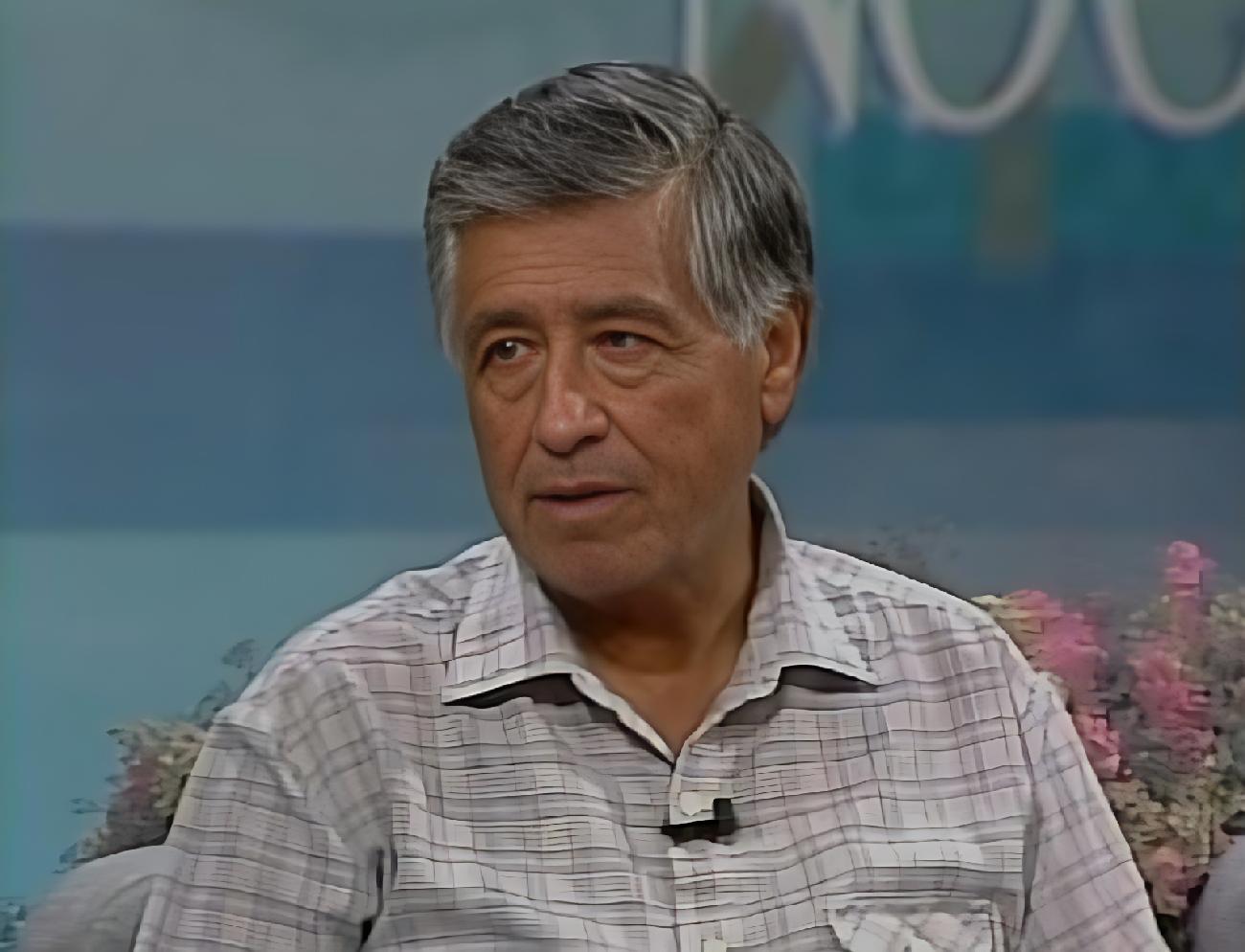
*Here are two continuing burning Cesar Chavez questions. One, should he be remembered as the much-revered labor and civil rights icon? Or should he be remembered as the much-reviled sexual abuser, molester, and rapist? Two, should streets, parks, schools, and any public space that bears his name be erased?
These are two questions I had to answer. There was a special, personal reason why the Chavez debacle drew my extra special attention, and I must add, agony. I still have the fresh, fond memory of the awe, admiration, and healthy dose of respect I had for him when I interviewed him at the height of his renown decades ago.
I was immediately struck by his quiet unassuming manner and dignity. He punched all the right buttons on labor and civil rights issues. But it was his fulsome praise of Dr. Martin Luther King that really marked him as someone special to me. He repeatedly hailed King as his teacher and inspiration in his stress on nonviolent, civil disobedience, anti-war, and anti-poverty campaigns. He especially praised King for his embrace of Black Brown unity and unswerving backing of the farm workers organization and struggles.
I remembered that King had corresponded with Chavez during the farm workers’ grape strike. That labor action put Chavez and the United Farmworkers Union on the nation’s political map. King endorsed the strike, praised Chavez, and vowed to do everything possible to help the union win its battle for union recognition and labor fairness against the growers. It was truly a mutual admiration society between the two nationally known civil rights leaders.
Scroll to continue reading



During the interview I felt I was in the presence of living history. By then his accomplishments were the stuff of near legend. He was the titular figure of a movement of some of the poorest, most exploited, most neglected and abused, workers, the farm workers. He transformed their union into a powerful, even fearsome labor force. His accomplishments were even more remarkable given that a substantial number of the workers were non-citizens and non-English speaking.
Chavez was not just hailed as a top line national labor leader, but a top Iine civil rights leader. In the years after King’s assassination in 1968, Chavez’s name and stature soared. He was often mentioned in the same breath as Dr. King’s as much-admired civil rights leaders.
Chavez died in April 1993. Almost immediately the rush was on to name schools, parks, and streets after him. That was capped by California creating his birthday, March 31, as an official state holiday. For decades there have been countless commemorative events held on that day to honor his legacy and memory.
Now thirty-six years after his death, that all has come crashing down. The allegations of sexual abuse, fathering children out of wedlock, and sexually exploiting minors exploded with shock, rage, and for many a deep sense of betrayal. There was no way that these charges against him could be swept under the rug despite his historic accomplishment. The UFW ironically, the organization that he built, led, and made a national name was the first in the door to cut and run from the Chavez legacy. It publicly announced it would not hold or participate in the standard events in his name.
After that, the roof caved in on Chavez. The stampede is on to distance themselves from Chavez. His name on the state holiday was summarily removed. L.A. city and county officials wasted no time in dropping his name from any public sponsored activity on the designated Chavez holiday.
So, again the first compelling question. Which Chavez do I and others who admired him as a paramount labor and civil rights leader for so long remember. The towering figure in the labor and civil rights struggle or, the sexual exploiter, abuser, and rapist? It may well be both.
The second question. Should Chavez’s name be erased from every public space that bears it, and there are plenty of them? Yes, And here’s why. If his name remains on a street, a school, a park, the conversation will always be about his alleged vile sexual abuses. That will obscure, detract, and deflect from what should be the focus. That’s that Chavez and the farm workers transformed, uplifted, and cast a new face and dimension to the labor and civil rights movement in the country.
It’s simply too risky to obscure or worse trash that history and legacy. Wherever Chavez’s name appears we’ll always hear “but yes he was a rapist and child molester” That will totally usurp any discussion of the importance then and now of the transformative labor and civil rights organizing he led and inspired.
It’s no contradiction to call for honoring what Chavez fought for and not him. Removing his name as an eternal flash point of controversy from streets, parks, and schools is sadly the only way that can be done. Again, I’ll continue to honor his legacy just as I did the day I interviewed, but not him.
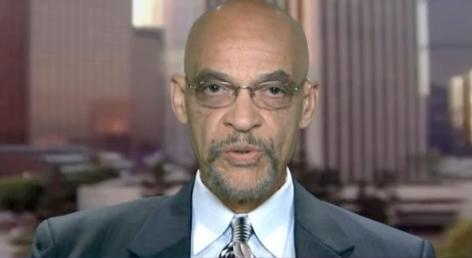
Earl Ofari Hutchinson is an author and political analyst. His forthcoming book is The Epstein “Distraction” (Amazon ebook and Middle Passage Press). He hosts the weekly news and issues commentary radio show The Hutchinson Report Wednesdays 6 PM PST – 9 PM EST at ktymgospel.net
(If You Like/Appreciate This EURweb Story, Please SHARE it!)
RELATED NEWS ON EURWEB.COM: The Smithsonian’s American Latino Museum Opens First Exhibit in June
Sign Up for Our Free daily newsletter HERE