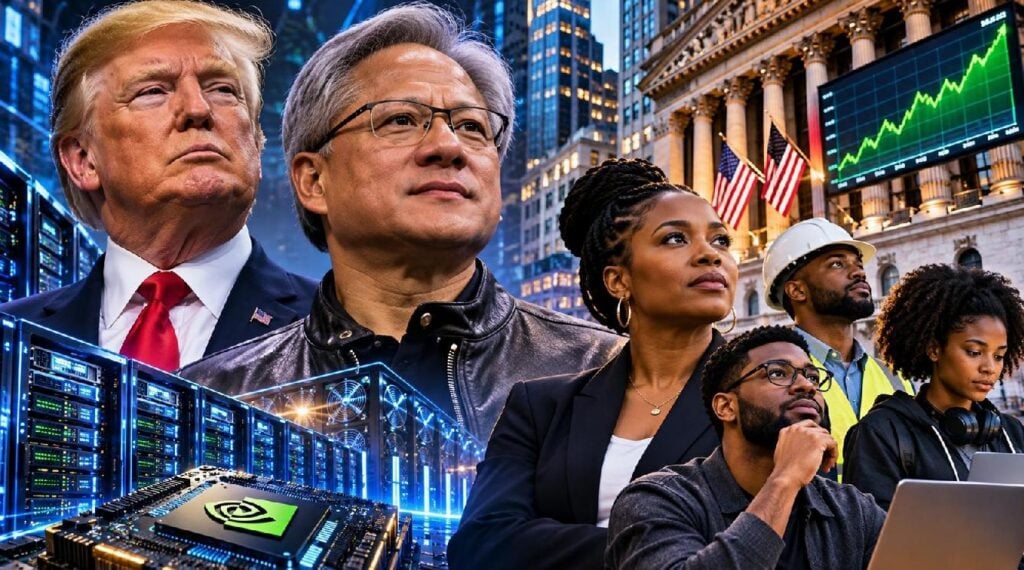
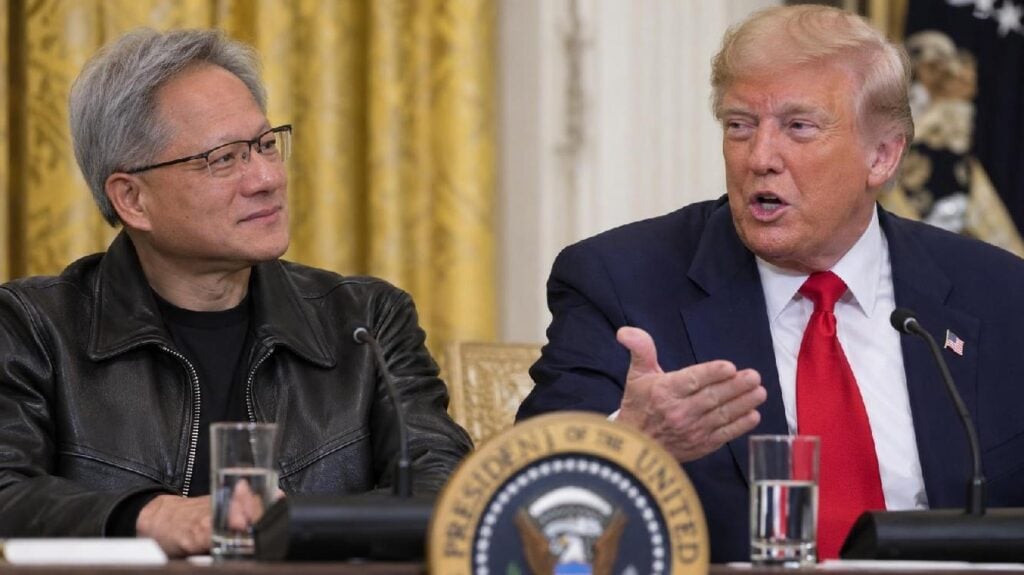
*When President Donald Trump intervened to help restore Jensen Huang as CEO of NVIDIA, the move exposed just how important artificial intelligence has become to America’s economic ambitions.
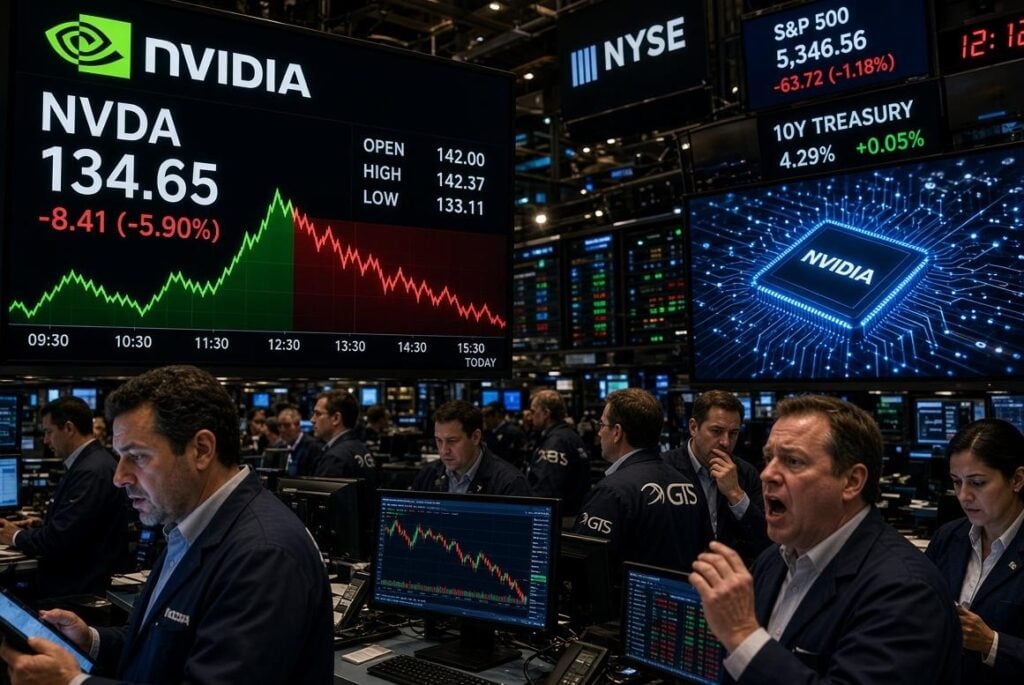
NVIDIA shares surged more than 30% Monday following the announcement of Huang’s reinstatement, triggering a broader Wall Street rally.
However, the celebration proved short-lived. Shares fell 5.9% Tuesday as investors reassessed the risks surrounding Huang’s return, according to Reuters.
Meanwhile, Trump has entertained the possibility of pardoning Huang and even suggested that the federal government could acquire an ownership stake in NVIDIA.
Beyond the boardroom drama, international intrigue and Wall Street volatility lies a question that deserves considerably more attention: What does America’s increasingly expensive bet on artificial intelligence mean for Black Americans?
Scroll to continue reading








Trump’s Extraordinary Intervention at NVIDIA
NVIDIA announced Huang’s reinstatement November 23, less than two weeks after his resignation following revelations of extramarital relationships, including an alleged relationship with a woman suspected of connections to Chinese intelligence.
The espionage allegations remain unproven.
Trump welcomed the board’s decision, maintaining that Huang’s return posed no national security risk and saying the attorney general had confirmed that the government possessed no evidence of unlawful conduct by Huang.
However, that does not mean all outstanding investigations have been concluded.
According to Reuters, NVIDIA and its board continue to face potential legal exposure despite Huang’s reinstatement.
Huang reportedly acknowledged violating portions of the company’s code of conduct during a Tuesday meeting with employees, while disputing allegations that he was an abusive executive.
Trump Leaves the Door Open to a Pardon
In a November 24 interview with the New York Post, Trump addressed the possibility of pardoning Huang.
“It’s always an option, I guess, but I don’t think it’ll be necessary.”
As of November 24, no pardon has been announced.
Trump also raised the possibility of the federal government acquiring an equity stake in NVIDIA, similar to its investment in Intel.
The suggestion introduces another question about the increasingly close relationship between government and America’s technology giants.
Meanwhile, congressional scrutiny continues, with lawmakers from both parties questioning Huang’s reinstatement and seeking answers about national security concerns.
Has NVIDIA Become Too Important to Fail?
NVIDIA occupies an extraordinary position in the global technology ecosystem. Its advanced processors power many of the world’s leading artificial intelligence systems.
Monday’s spectacular rally, followed by Tuesday’s decline, illustrates how deeply financial markets have become intertwined with the fortunes of a single technology company.
EURweb previously examined another dimension of that dependence in “Jay-Z vs. Jensen Huang: Two Billion-Dollar Empires, One Big Business Lesson.”
America’s economy is not entirely dependent on NVIDIA. However, the company’s influence over financial markets and AI infrastructure makes disruptions increasingly consequential.
What happens if expected AI profits fail to materialize, infrastructure spending slows or investors lose confidence?
Ordinary Americans could experience the fallout through retirement accounts, employment opportunities and broader economic conditions.
The risks extend well beyond Silicon Valley.

Black America’s Unequal Stake in Wall Street
While NVIDIA shareholders celebrated Huang’s return, the benefits of rising stock prices are not distributed equally among American households.
According to the Federal Reserve’s 2022 Survey of Consumer Finances, approximately 66% of white families owned stocks, compared with 39% of Black families.
Among stock-owning families, the typical white family’s holdings were valued at approximately $68,000, compared with $17,000 for Black families.
That disparity becomes increasingly consequential when artificial intelligence generates enormous financial rewards for investors.
Black Americans who own stocks, participate in retirement plans or invest in diversified funds can benefit from the AI boom. Households without substantial investments are less positioned to capitalize on soaring technology valuations.
Research published by McKinsey & Company in February 2024 illustrates the potential magnitude of that inequality.
McKinsey estimates that generative AI could produce nearly $500 billion in additional household wealth by 2045.
Under one scenario, Black households could gain approximately $70 billion if they participated proportionately in that wealth creation. However, if existing wealth ownership patterns persist, that figure could fall to $27 billion.
The difference represents a potential $43 billion annual shortfall for Black households.
That is a modeled scenario, not an inevitable outcome. Nevertheless, it illustrates how technological progress could reinforce existing economic inequalities.
Will AI Create Jobs or Eliminate Them?
Artificial intelligence presents Black workers with both opportunities and challenges.
The expansion of data centers, semiconductor manufacturing, cybersecurity, software development and energy infrastructure could open new career pathways.
However, automation also threatens tasks performed by workers in administrative support, customer service and other occupations.
As EURweb explored in “AI Wants to Drive Your Car, Fold Your Laundry and Maybe Take Your Job,” artificial intelligence is expanding far beyond computer-based activities.
The danger is that companies could eliminate traditional pathways to middle-class employment faster than accessible alternatives emerge.
A displaced customer service representative cannot necessarily transition overnight into an AI engineering career.
Affordable education, apprenticeships, workforce development and employer-supported career transitions will be essential.
Communities hosting data centers must also consider electricity costs, water consumption, local hiring and whether promised economic benefits actually reach surrounding neighborhoods.
HBCUs and Black Businesses Have a Role to Play
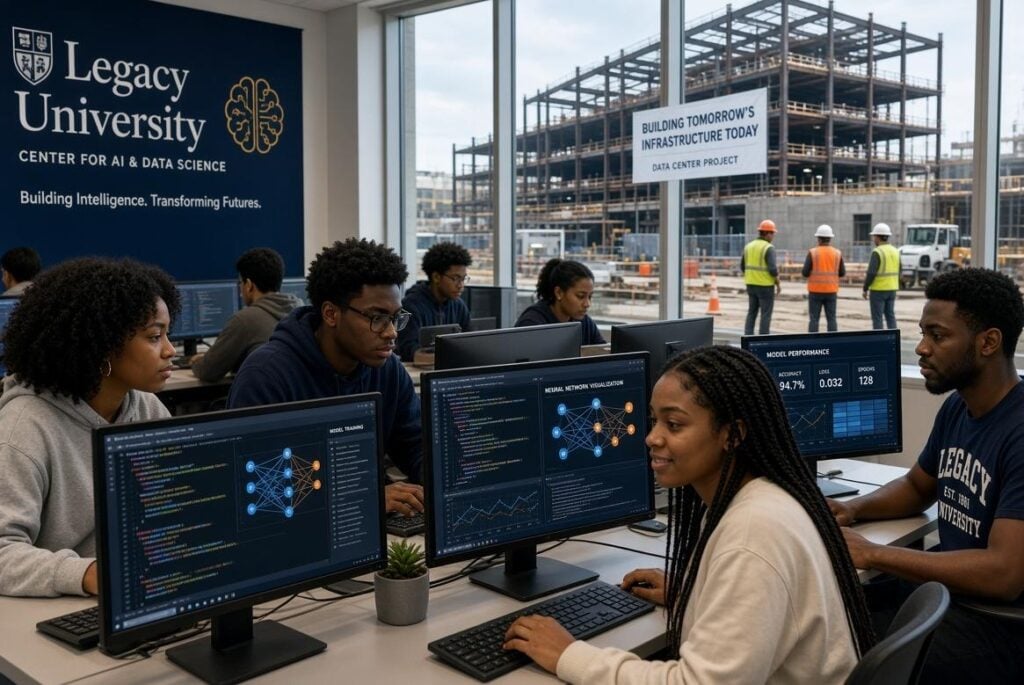
Historically Black colleges and universities could become increasingly important players in preparing Black Americans for an AI-driven economy.
Expanding access to computing resources, technical training, industry partnerships and artificial intelligence research could help HBCUs prepare students for emerging career opportunities.
AI literacy should not be limited to computer science majors. Future healthcare professionals, educators, journalists, entrepreneurs and financial specialists will also need to understand how these technologies affect their industries.
Black-owned businesses could use AI to reduce administrative expenses, improve marketing, expand customer services and compete with larger corporations.
But access to investment capital, computing infrastructure, government contracts and business development resources will remain critical.
Black Americans should have opportunities to own companies developing AI solutions, not merely purchase subscriptions to their products.
Protecting Billionaires — What About Everybody Else?
Trump’s intervention on Huang’s behalf raises a broader policy question.
If protecting America’s AI leadership warrants extraordinary presidential attention, shouldn’t ensuring widespread participation in its economic benefits warrant similar urgency?
Supporters of Huang’s reinstatement argue that stabilizing NVIDIA protects American technological competitiveness, investments and economic growth. Critics question whether corporate influence and financial considerations are being given excessive weight amid unresolved national security concerns.
Both arguments deserve scrutiny.
But for Black America, the conversation must extend beyond who runs NVIDIA.
If the federal government eventually acquires an ownership stake in NVIDIA, Americans should also ask how such an arrangement would benefit taxpayers and the broader economy.
The discussion must address workforce development, access to capital, educational investment, retirement security and meaningful participation in the industries shaping America’s future.
The ultimate measure of the AI revolution should not simply be how many trillion-dollar companies it creates.
It should also be how many ordinary Americans it empowers.
Black Americans cannot afford to be spectators in an economic revolution whose consequences they will inevitably share.
(If You Like/Appreciate This EURweb Story, Please SHARE it!)
MORE NEWS ON EURWEB.COM: Trump Helped Bring Nvidia’s Jensen Huang Back – Congress Wants Answers
We Publish Breaking News 24/7. Don’t Miss Out! Sign up for our Free daily newsletter HERE.