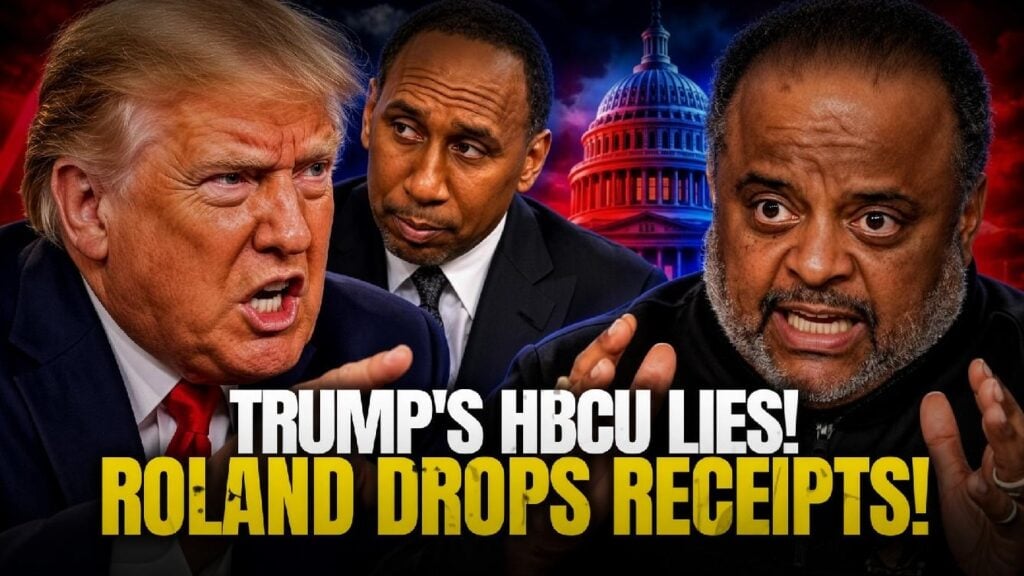
*President Donald Trump says he saved historically Black colleges and universities. But did he really rescue institutions supposedly headed for bankruptcy?
During a November 12 White House interview with Stephen A. Smith, Trump declared that Black Americans have benefited more from his policies than any other community.
He highlighted criminal justice reform and federal investments, particularly his support for historically Black colleges and universities (HBCUs).
Smith challenged Trump’s funding comparisons, but journalist Roland Martin later accused the president of distorting the record—and Smith of failing to confront him aggressively enough.
The controversy raises a bigger question: Did Trump save HBCUs, or is he taking credit for decades of federal investment in Black higher education?
Scroll to continue reading






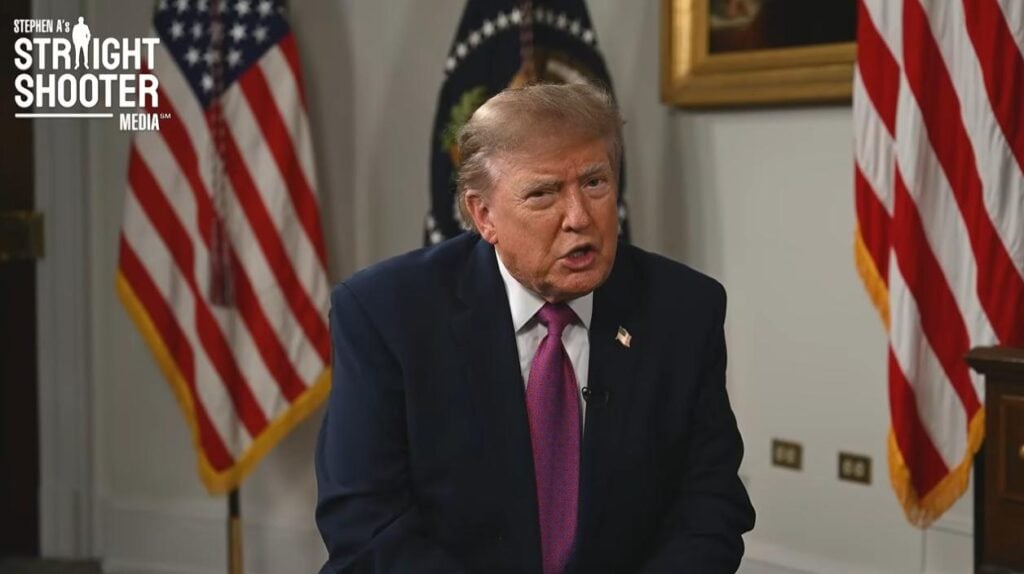
Trump Claims He Rescued HBCUs From Bankruptcy
“The Black community is the biggest beneficiary of what I’ve done,” Trump told Smith.
He added: “I saved the historically Black colleges and universities. They were out of business.”
Trump cited $438 million in additional HBCU funding in 2025 and another $174 million announced in September 2026.
The Department of Education confirms more than $612 million in additional funding across those two fiscal years.
But his claim that HBCUs collectively faced bankruptcy is unsupported. Financial struggles at individual institutions don’t establish that the entire sector was about to collapse.
Stephen A. Pushes Back, but Misses a Key Detail
Smith challenged Trump, citing billions in federal HBCU support under Presidents Barack Obama and Joe Biden.
Trump dismissed those comparisons, insisting the institutions were going bankrupt and his predecessors had done nothing meaningful for them. But another revealing moment came before the questioning began.
Smith told Trump that Tuskegee University officials wanted to thank him for approximately $1.6 billion in HBCU debt relief.
That attribution needed clarification.
Congress authorized the debt relief through legislation signed in December 2020, during Trump’s first term. The Biden administration subsequently reported discharging approximately $1.6 billion in capital-financing debt for 45 HBCUs.
The distinction between authorizing and implementing the relief went unexplored.
Roland Martin: Trump Is Rewriting HBCU History
Roland Martin wasn’t buying Trump’s version.
During Roland Martin Unfiltered, he accused the president of exaggerating his accomplishments and criticized Smith’s interview preparation.
“Stephen A did not correct him,” Martin complained.
Martin focused on the bipartisan FUTURE Act, signed by Trump in December 2019.
The law made permanent approximately $255 million annually for minority-serving institutions, but only about $85 million was designated for HBCUs.
“That particular program is not just for HBCU,” Martin explained.
The funding existed before Trump. His signature made the program permanent rather than creating it.
Martin also highlighted Congresswoman Alma Adams’ role in advancing the legislation.
His larger argument: Signing an important bill doesn’t mean a president personally created the program or rescued an entire educational sector.
Where Did Trump’s Additional $612 Million Come From?
Trump’s additional HBCU funding is real. But Martin questioned its origins.
In 2025, the administration redirected education resources after eliminating approximately $350 million in grants for programs serving minority-enrollment-based institutions.
Those included Hispanic-Serving Institutions and other minority-serving colleges.
The administration argued that certain eligibility requirements were unconstitutional because they relied on racial or ethnic enrollment thresholds.
Martin countered that affected programs also supported Asian American and Pacific Islander students and students at Predominantly Black Institutions (PBIs).
PBIs serve substantial Black student populations but are legally distinct from HBCUs.
“So, he took the money from other minorities,” Martin said, arguing that the administration shifted resources between underserved communities while celebrating its HBCU investments.
The Associated Press documented the funding changes.
Additional support benefits HBCUs, but reallocating existing education funds isn’t the same as Congress providing entirely new money.
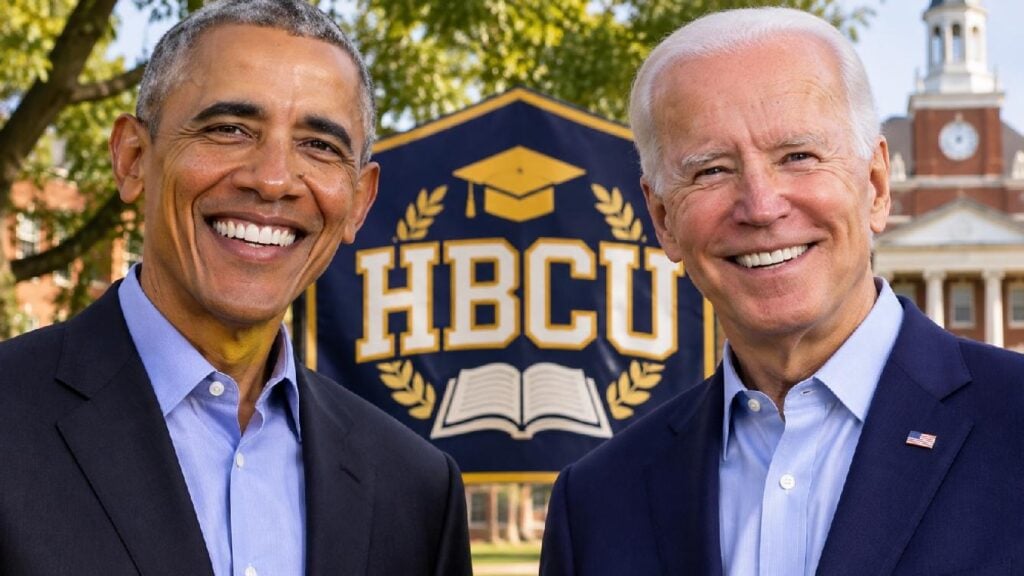
Obama, Biden and the Funding Trump Didn’t Create
Federal HBCU support predates Trump by decades.
The Higher Education Act of 1965 established important institutional programs, while President Jimmy Carter created the White House Initiative on HBCUs in 1980.
The Obama administration continued federal support for Black colleges.
Biden’s administration reported more than $16 billion in cumulative support from fiscal years 2021 through 2024, including institutional grants, pandemic relief, student assistance and debt relief.
Those multiyear totals aren’t directly comparable with Trump’s two-year supplemental increases.
Nevertheless, they contradict Trump’s assertion that Obama and Biden did nothing for HBCUs.
Did Trump Save HBCUs? The Bottom Line
Trump deserves credit for signing the FUTURE Act, supporting HBCU initiatives and directing substantial additional funding toward Black colleges.
But his claim that he rescued the entire sector from bankruptcy goes beyond the evidence.
Martin’s criticism raises another legitimate question: Did Smith sufficiently challenge the president?
Smith disputed Trump’s funding comparisons but didn’t fully examine the programs or the origins of the money.
HBCUs have endured through generations of Black leadership, alumni support, philanthropy, congressional action and federal investment.
No president can reasonably claim sole credit for that legacy.
The real test isn’t who boasts loudest about saving Black colleges. It’s whether the institutions—and their students—have the resources to thrive long after the political applause fades.
(If You Like This EURweb Story, Please SHARE it!)
RELATED NEWS ON EURWEB.COM: HBCUs Navigate Federal Support Amid Trump’s DEI Crackdown
We Publish Breaking News 24/7. Don’t Miss Out! Sign up for our Free daily newsletter HERE.