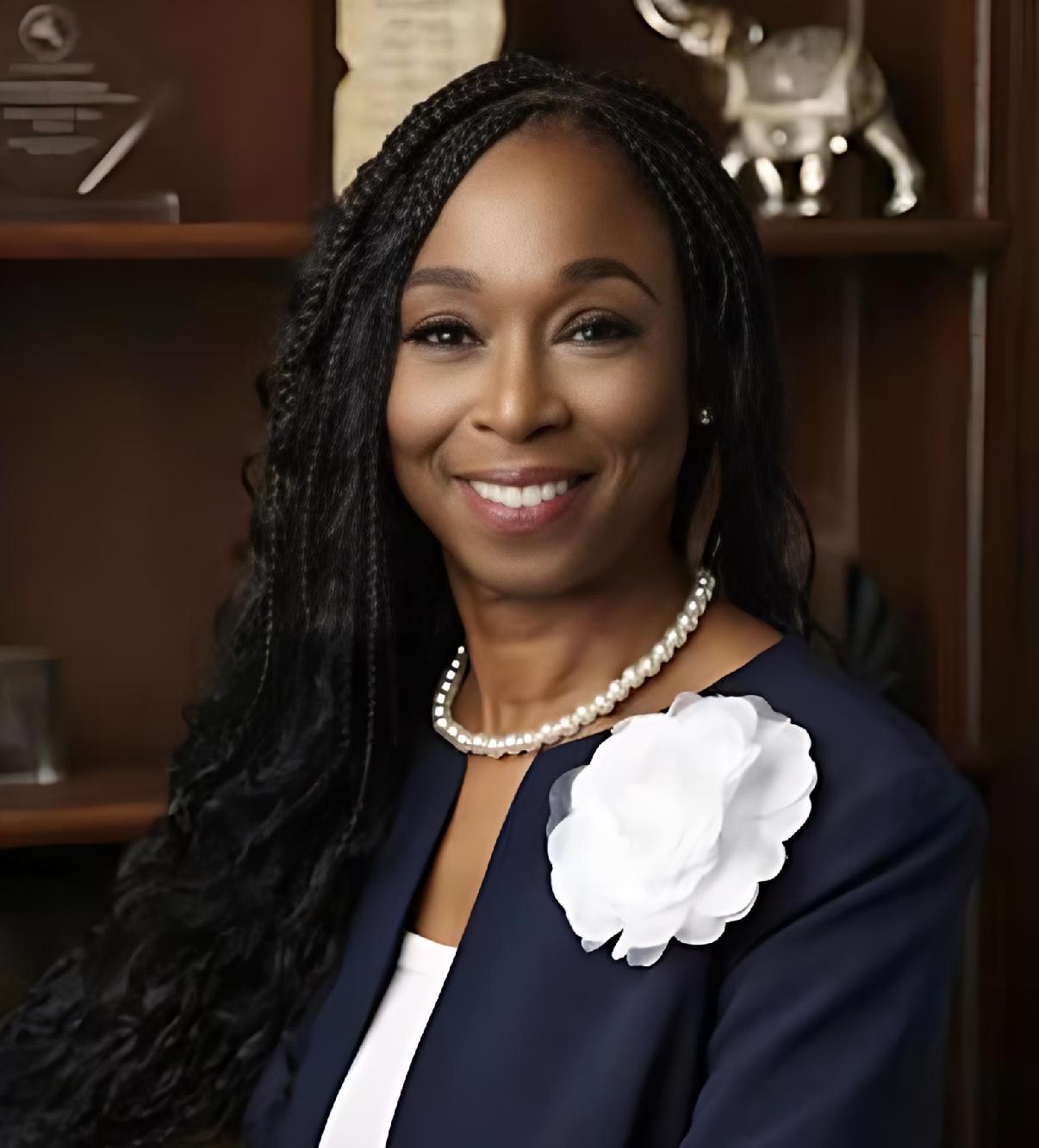
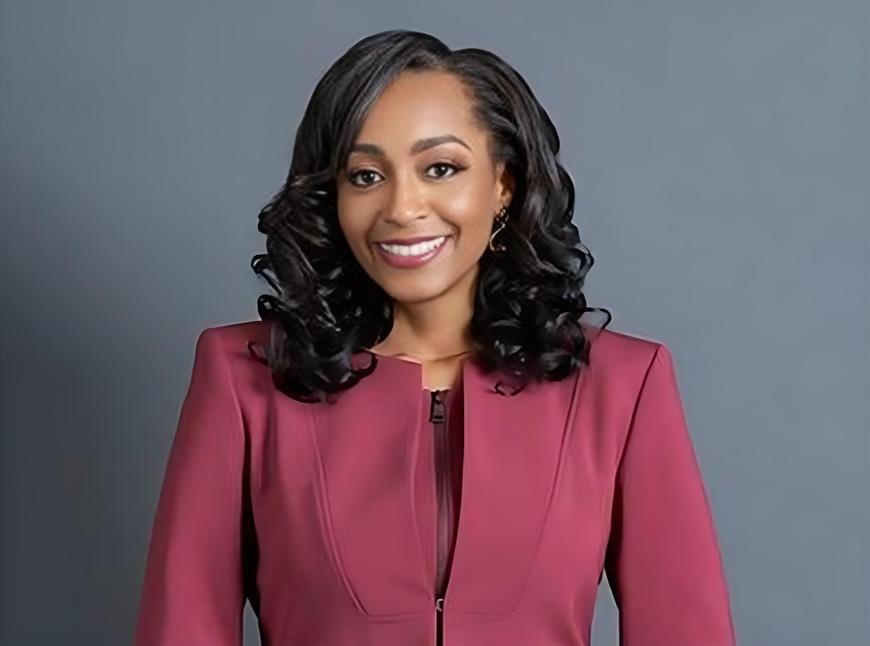
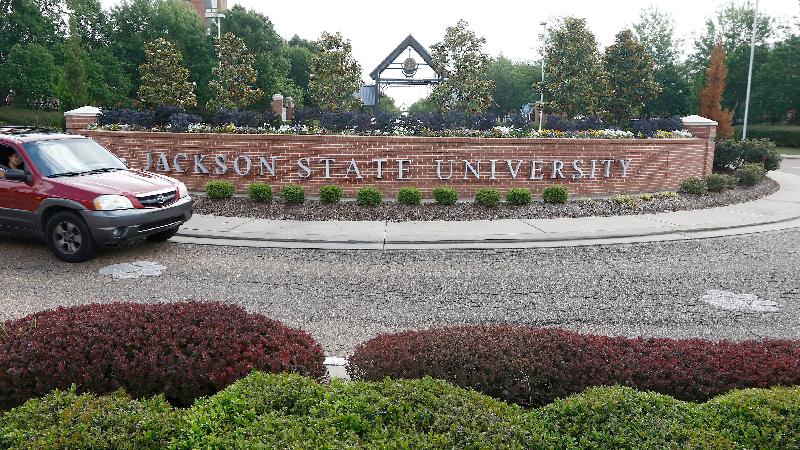
*When Jackson State University named Dr. Denise Jones Gregory its permanent president, many viewed the appointment as a natural choice.
Gregory knows the institution from nearly every angle. She is a magna cum laude graduate of Jackson State, a former provost and vice president of academic affairs, a life member of the Jackson State University National Alumni Association, and the wife of a former Tigers quarterback who helped lead the football program to three Southwestern Athletic Conference championships.
Yet her appointment is drawing attention for another reason.
According to reporting from The Edu Ledger and the Associated Press, Gregory will become the first Jackson State president to receive formal executive coaching as part of her transition into the role.
That distinction comes at a particularly notable moment. Gregory is Jackson State’s sixth president in 10 years and the university’s tenth president in the past 15 years, a level of turnover that has made leadership continuity an ongoing concern.
Scroll to continue reading





A New Approach To Presidential Support
Executive coaching is hardly unusual in higher education.
Many colleges and universities invest in leadership consultants, onboarding programs and transition coaches to help new presidents navigate increasingly complex institutions. Governing boards often view such support as a way to improve long-term success and avoid costly leadership disruptions.
But Gregory’s coaching arrangement stands out because it appears to be the first of its kind at Jackson State, one of the nation’s most prominent historically Black universities.
The move has prompted a larger discussion about who is best equipped to prepare and support HBCU leaders.
The HBCU Difference
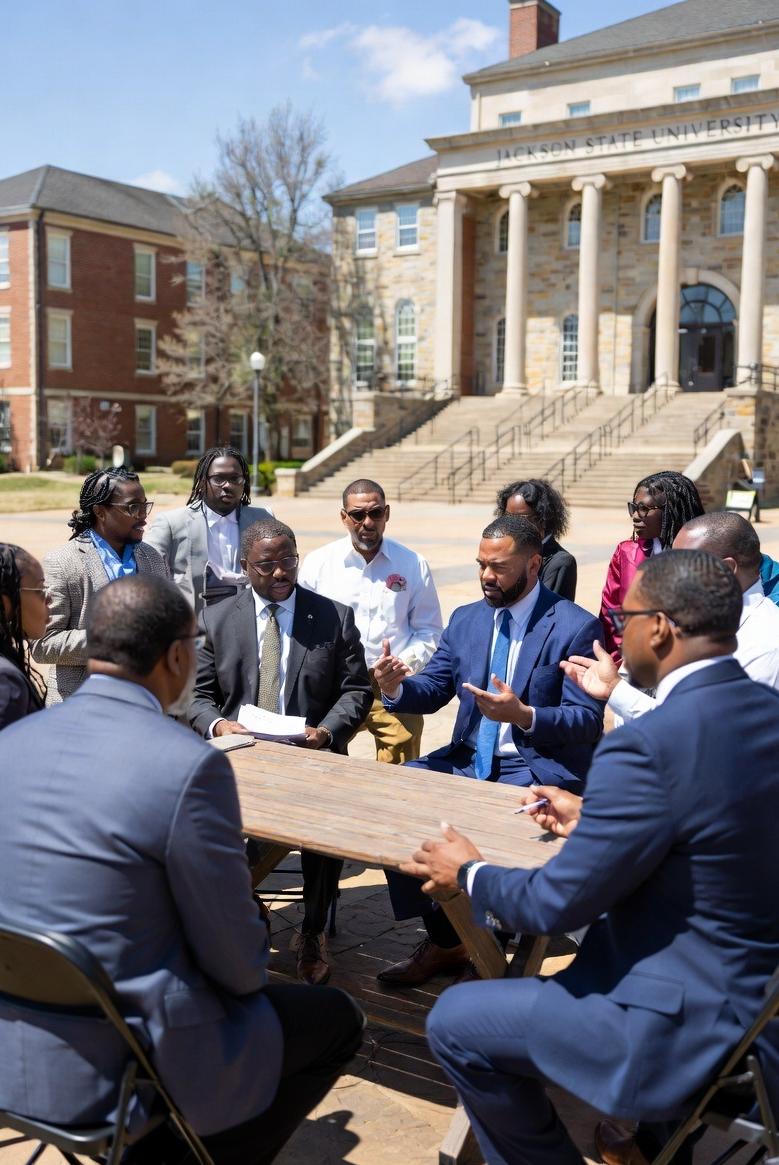
For some higher education leaders, the answer lies within the HBCU community itself.
Dr. Melva K. Wallace, president of Huston-Tillotson University and a graduate of Jackson State University’s executive Ph.D. program, told The Edu Ledger that leadership support is essential, particularly when presidents face unique institutional challenges.
“I’ve worked at a community college, I’ve worked at a PWI, a private liberal arts institution, I’ve worked at a state institution, I’ve worked at a system, I’ve worked at a small HBCU – and all of those are different,” Wallace said.
Part of what Wallace valued about Jackson State’s own leadership program was its emphasis on HBCU experience and mentorship from former HBCU presidents.
“It was HBCU-centric, the faculty had HBCU experience,” Wallace said. “10/10 do recommend.”
Her comments highlight a central question raised by Gregory’s coaching arrangement: Should leadership development for HBCU presidents primarily come from outside consultants or from leaders who have spent their careers navigating HBCU environments?
Why Networks Matter
Wallace, who co-founded the Higher Education Leadership Foundation, argued that peer relationships often become one of the most valuable resources available to college presidents.
“You don’t have a peer on campus as the president,” Wallace said. “Oftentimes, reaching out to another HBCU president is beneficial, and it has helped me tremendously.”
The observation underscores one of the unique realities of presidential leadership. While administrators can rely on colleagues within their departments, presidents frequently operate without an equivalent peer structure on campus.
For HBCU leaders, Wallace believes shared experience matters.
“The HBCU space is very nuanced, it’s very different than our traditional institutions,” she said.
That nuance extends beyond academics and administration. It can include alumni expectations, institutional history, community relationships, athletics, homecoming traditions and the broader cultural mission many HBCUs carry.
A Bigger Question For HBCUs
Notably, none of the leaders quoted in the reporting suggested that executive coaching is unnecessary or inappropriate.
In fact, Wallace said presidents should seek as much support as possible.
The debate instead centers on whether HBCUs should increasingly rely on external coaching models or continue investing in leadership-development networks rooted in HBCU culture and experience.
Gregory’s deep ties to Jackson State may ultimately prove to be one of her greatest strengths as she assumes leadership of an institution that has experienced significant turnover in recent years.
Sources familiar with the university told The Edu Ledger that her experience as provost could be especially valuable given the institution’s recent faculty-administration challenges.
As Gregory begins her presidency, her success will likely depend on more than any single coaching arrangement. It may hinge on her ability to draw from multiple sources of support, including executive coaching, HBCU leadership networks, alumni relationships and her own long-standing connection to Jackson State.
In that sense, her appointment has sparked a conversation that reaches far beyond one campus. It raises a question many HBCUs will continue to face in the years ahead: How can institutions develop and sustain leaders capable of providing the stability their campuses need?
(If You Like/Appreciate This EURweb Story, Please SHARE it!)
MORE NEWS ON EURWEB.COM: MacKenzie Scott Surpasses $1 Billion in HBCU Donations
We Publish Breaking News 24/7. Don’t Miss Out! Sign up for our Free daily newsletter HERE.