*For three seasons, Prime Video’s “Harlem” has delivered a refreshing and authentic look at the lives of four ambitious Black women navigating love, career, and self-discovery in one of New York’s most historic neighborhoods. But with the show ending, series creator Tracy Oliver had one final mission—to ensure the women’s journeys ended in a way that felt satisfying, true to life, and reflective of the sisterhood that has always been the core of the series.
In an exclusive conversation with EUR, Oliver opened up about rewriting the final season to give the characters a proper send-off, the importance of centering friendship, and how Harlem has always been more than just a backdrop—it’s a love letter to the culture and community.
When Harlem was renewed for a third season, Oliver already had a vision for where she wanted to take Camille (Meagan Good), Quinn (Grace Byers), Tye (Jerrie Johnson), and Angie (Shoniqua Shandai). But then, everything changed.
“I had an idea of what I wanted season three to be,” Oliver revealed. “We had already mapped it out. There were scripts written. Then I get a call midway through the writers’ room that this will most likely be the last season.”
Scroll to continue reading


With that news, Oliver made a bold choice, she scrapped everything and started over.
“I was like, if this is the last season, I want to go out in a way that shows the women maturing and growing in unexpected ways,” she explained. “I wanted to pay off the threads that started in season one and bring them full circle. Not necessarily in the way the characters would have expected or even wanted, but in a way the audience would appreciate.”
That decision set the tone for a final season filled with deep personal reflection, evolving relationships, and a renewed focus on the show’s central theme—friendship.
While Harlem has explored the ups and downs of romantic relationships, the series has always made one thing clear—friendship is the most enduring love story.
“It was important for me to show their individual growth but also make sure we never lost sight of them as a unit,” Oliver emphasized. That intention is evident in the show’s final moments.

“The last frame of the show is them walking down the streets of Harlem together,” Oliver revealed. “I wrote that because, yes, Harlem started as Camille’s story, but it’s really all of their stories. And it’s about Harlem as well. That one frame captures everything—it’s a love story about these women and their friendships with each other. It doesn’t end with men. There are no men in the frame. Just them.”
But Oliver wanted to go even further, taking viewers beyond the present-day journey of the women and offering a glimpse into their future.
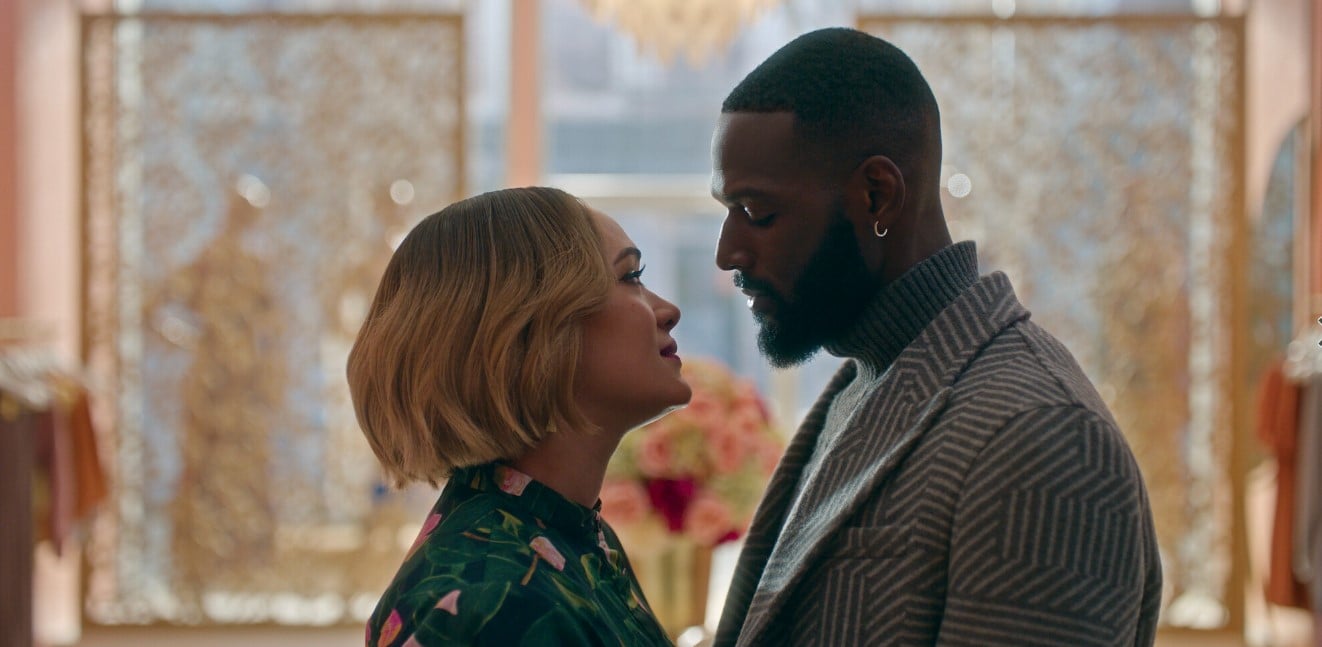
“At that moment, we’ve jumped forward in time. In my mind, it’s about a year later,” she explained. “Camille is married. She has a child. You see a wedding ring on her hand in that final shot. But even with those life changes, she’s still prioritizing her friendships. That was so important for me to show.”
From the beginning, Oliver set out to make Harlem more than just a setting—it was a character in its own right, representing a vibrant and historic Black cultural hub. That commitment continued throughout the show’s final season.
“We shot a lot in the streets of Harlem,” Oliver said, reflecting on the experience. “What I enjoyed the most was seeing Black people in Harlem just standing in the streets, excited that we were filming there.”

She acknowledged that shooting in Harlem came with its challenges—fans would often stop production just to show love to the cast.
“Sometimes it was disruptive,” Oliver laughed. “People would be cheering for us, yelling ‘Hey Meagan Good!’ or asking for pictures. But they were just so genuinely excited that we were there. A lot of shows set in New York don’t actually shoot in Harlem. They film in other neighborhoods and don’t consider Harlem a prime backdrop. So for us, it was important to be there for real.”
Beyond filming, Oliver and her team consciously tried to support Harlem businesses: “We worked with Black-owned restaurants for catering, we hosted events at local spots, and when we needed wardrobe or gifts, we shopped in Harlem,” she shared. “We spent so much time giving back to the community that welcomed us. And the love we received in return was incredible.”
For Oliver, Harlem has always been about representation—of Black women, sisterhood, and a community that has long been a cultural epicenter.
“I’m grateful we got to tell these stories in a way that felt authentic,” she said. “And I’m proud we could honor Harlem in the process.”

Jill Munroe is a Los Angeles-bred entertainment journalist, producer, and host. You can follow her on all social media @StilettoJill or check out JillMunroe.com
RELATED NEWS ON EURWEB.COM: Gail Bean & Logan Browning on Shaking Things Up in Harlem’s Final Season