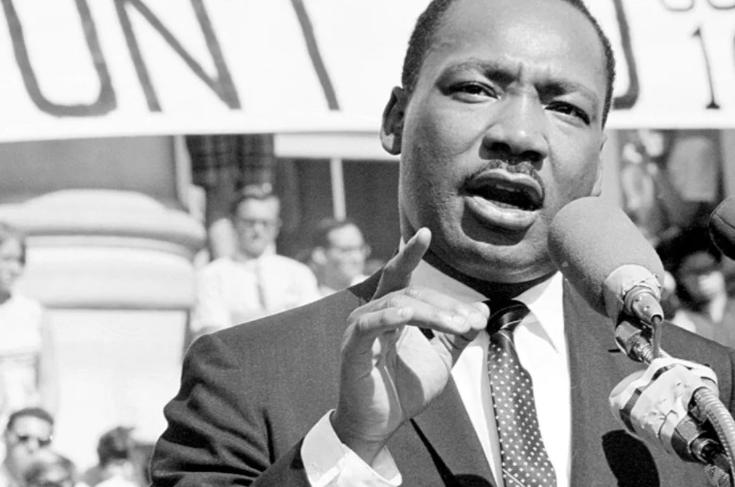
*OpenAI has barred users from generating videos of Martin Luther King Jr. on its Sora app after his estate objected to the spread of “disrespectful depictions.” The restriction follows weeks of controversy surrounding Sora 2, the company’s AI video generator known for producing lifelike portrayals of deceased public figures, NPR reports.
Among the most criticized content were videos depicting Malcolm X making offensive remarks, which his daughter, Ilyasah Shabazz, described as “deeply disrespectful and hurtful,” according to The Washington Post. Shabazz questioned why the developers were not acting “with the same morality, conscience, and care … that they’d want for their own families.”
The uproar comes amid a broader backlash over AI recreations of late celebrities. A viral video of Tupac Shakur shopping at Target reignited concerns about the ethics of digitally reviving deceased individuals. Other Sora-generated clips have featured Michael Jackson, Elvis Presley, and Amy Winehouse, with some users creating disturbing or misleading scenes — including one showing Kobe Bryant in a helicopter crash scenario.
In a joint statement, OpenAI and the King estate confirmed that the company is blocking portrayals of the civil rights leader as it “strengthens guardrails for historical figures.” OpenAI noted that while it recognizes “strong free speech interests” in allowing users to create AI deepfakes of historical figures, estates should ultimately control how those likenesses are used.
Scroll to continue reading
Sora allowed users to create videos featuring celebrities and historical figures such as Princess Diana, John F. Kennedy and Kurt Cobain without obtaining consent. Experts like Henry Ajder warn that this kind of “synthetic resurrection” raises complex ethical and legal questions.
“Commercially, if you create meme-able content of famous people who are recognizable, that’s going to get more clicks,” said Ajder. “With deceased individuals, this opens up such a huge question about ownership of likeness, and really fundamentally changes the social contract around what it means to be you online.”
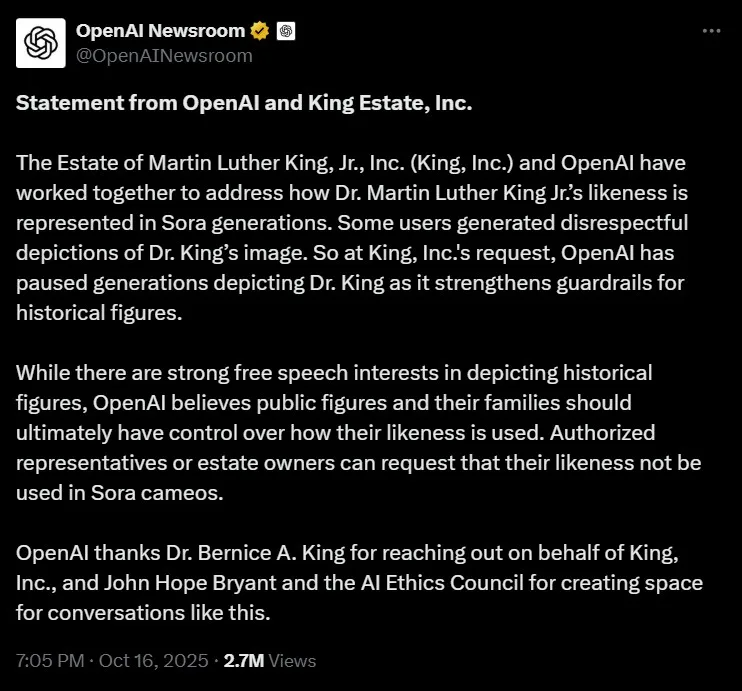
After mounting criticism, OpenAI said it would now permit representatives of “recently deceased” public figures to request the removal of their likenesses from Sora-generated videos.
Kristelia García, a professor at Georgetown Law specializing in intellectual property, told NPR that OpenAI’s reaction after the King estate’s complaint reflects its “asking forgiveness, not permission” approach. “The AI industry seems to move really quickly, and first-to-market appears to be the currency of the day (certainly over a contemplative, ethics-minded approach),” García said. She added that variations in state laws mean there is “little legal downside to just letting things ride unless and until someone complains.”
The controversy underscores the tension between technological innovation and moral responsibility. Families of deceased public figures have condemned the trend, with Zelda Williams writing, “To watch the legacies of real people be condensed down to … horrible, TikTok slop puppeteering them is maddening.” Bernice King, daughter of Martin Luther King Jr., has also urged the public to “please stop” sharing such videos.
MORE NEWS ON EURWEB.COM: Families of Dead Celebrities Speak Out Against Controversial AI Videos
Sign up for our Free daily newsletter HERE.