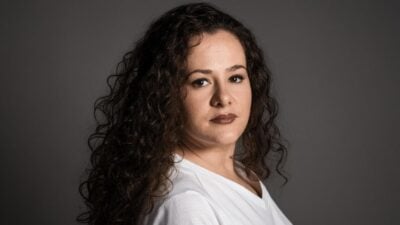
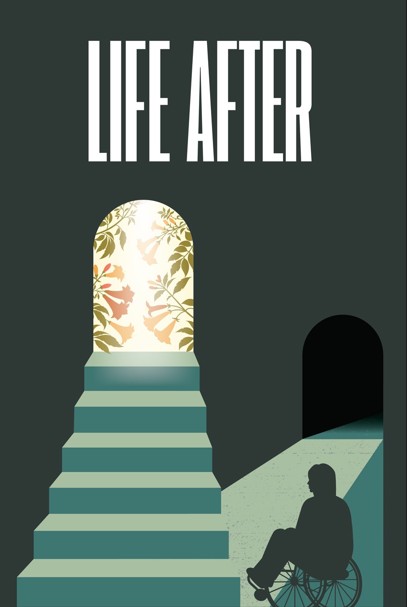
*The ethics of assisted dying may seem straightforward to many progressives who champion bodily autonomy, but producer Colleen Cassingham discovered the issue becomes far more complex when viewed through a disability lens. Working with award-winning disabled filmmaker Reid Davenport on “Life After,” which premiered November 3 on PBS’s “Independent Lens,” Cassingham found her own assumptions challenged in ways she never anticipated.
Davenport, whose previous work “I Didn’t See You There” explored daily ableism in Oakland, California, brings a rare political analysis to disability representation. “Reid Davenport is a disabled filmmaker who makes films about disability through a political lens, which is very rare in the representation of disability,” Cassingham explains. The documentary investigates the 1983 case of Elizabeth Bouvia, a 26-year-old disabled California woman who sought “the right to die,” and traces troubling parallels to contemporary situations where disabled people face premature death.
Confronting Uncomfortable Truths About Choice
Cassingham, a producer at Multitude Films focused on politically committed nonfiction, admits the project fundamentally changed her perspective. “As a progressive person with leftist politics who cares about bodily autonomy, I thought I knew what the issue of assisted dying was all about,” she recalls. What she hadn’t considered was how forces like ableism, racism, and capitalism restrict genuine autonomy, creating conditions where death can appear to be the only available option.
Scroll to continue reading
The documentary examines disturbing cases, including Michael Hickson, who was left to die by a Texas hospital, and Jerika Bolen, a Wisconsin teenager who received community support to end her life. Davenport’s investigation extends to Canada, where medical aid in dying (MAID) regulations have expanded to permit disabled individuals unprecedented access even without terminal diagnoses. There, he meets Michal Kaliszan, a disabled computer programmer who once viewed MAID as his sole alternative to institutional placement.
The Slippery Slope of “Safeguards”
Through extensive research into Canada’s liberal assisted dying legislation—among the most permissive globally—the production team uncovered a critical misconception. While many jurisdictions, including certain U.S. states, limit assisted dying to the terminally ill with six-month prognoses, Cassingham discovered the boundary between disability and terminal illness proves disturbingly fluid. “When people are denied access to health care, disabled people can become terminally ill,” she notes.
The pattern that emerged during production proved equally alarming. “This kind of legislation never gets safer or more narrow or more difficult to access. It only moves in the trend of getting faster, looser, and cheaper,” Cassingham warns. This trajectory raises profound questions about whether society is genuinely expanding choice or simply making death more accessible than the resources needed for disabled people to live and thrive.
Balancing Investigation with Personal Stakes
The film employs a journalistic approach while maintaining a personal dimension, with Davenport appearing on camera as narrator. Cassingham herself appears on screen as part of the filmmaking team. After creating the deeply personal “I Didn’t See You There,” Davenport initially resisted making another intimate film, yet the team recognized audiences needed a connection to the material’s emotional weight.
“Reid doesn’t owe anyone anything about any kind of particular vulnerability on screen or access to his personal life,” Cassingham emphasizes. Instead, Davenport’s on-screen presence illuminates “the very high emotional stakes that disabled people face every day about what it means to know that society devalues your life so much that they would prefer to make death more accessible to you than the means to live and thrive.” The film deliberately avoids exploiting personal vulnerability while grounding viewers in the lived reality of confronting a society that may value your death over your life.
Launching Into a Dangerous Political Moment
The film’s broadcast arrives at a precarious time for disabled communities. “We’ve launched this film this year in the face of really dangerous rhetoric from our political leaders that devalues disabled lives,” Cassingham observes, referencing cuts to Medicaid, SNAP benefits, and other vital supports. The convergence of dehumanizing rhetoric with policy changes that eliminate survival resources while expanding access to assisted dying reveals what she describes as “a total divestment from human flourishing.”
Reframing Disability Itself
The production team collaborated extensively with disabled-led organizations and activists who have long worked on these issues, creating “from the community and for the community as well as for a larger mainstream non disabled audience.” Made possible through ITVS’s Open Call initiative, the documentary seeks to provide different entry points depending on viewers’ familiarity with disability justice frameworks.
Cassingham’s ultimate hope centers on shifting fundamental perceptions. “Disability is a natural part of the human experience, and therefore society should be built to accommodate and support it fully,” she states. Beyond raising awareness, she aims to mobilize support for local and national disability rights organizations working at a moment when their efforts carry unprecedented urgency.
“Life After” exposes how progressive values around bodily autonomy can collide dangerously with societal devaluation of disabled lives, particularly when healthcare systems fail and support structures crumble. The film is now available to stream on the PBS app and PBS YouTube, inviting viewers to grapple with questions about dignity, equity, and what society owes its most vulnerable members.
Visit the “Life After” page on INDEPENDENT LENS to learn more about the film.
Watch our full conversation with Colleen Cassingham via the clip below.
*This interview has been edited for length and clarity.
MORE NEWS ON EURWEB.COM: Chris Hemsworth’s New Documentary Turns a Family Road Trip into a Powerful Exploration of Dementia, Memory, and Connection | EUR Exclusive
Sign up for our Free daily newsletter HERE.