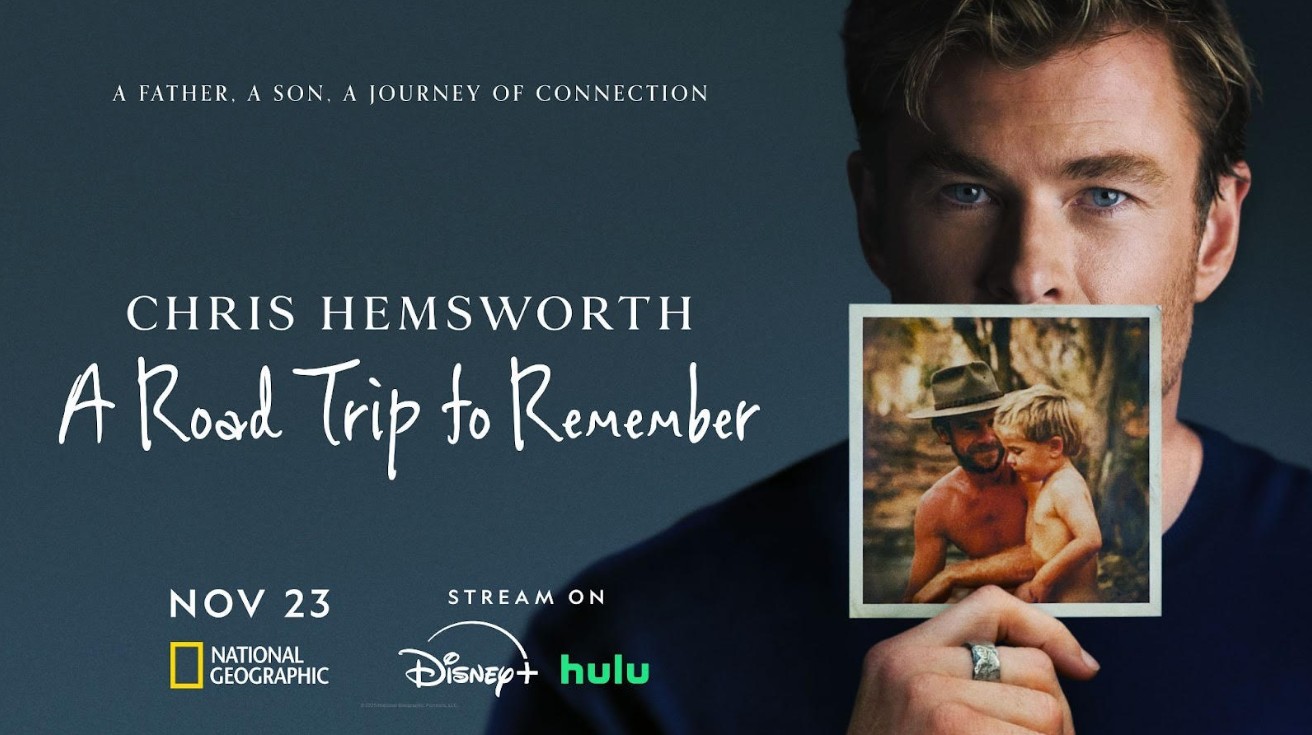
*When Chris Hemsworth decided it was time to help his father, Craig, confront the early stages of Alzheimer’s disease, he turned to both family and science. The result is “Chris Hemsworth: A Road Trip to Remember,” a one-hour documentary premiering Nov. 23 on National Geographic and streaming the next day on Disney+ and Hulu. The special builds on themes first explored in the actor’s “Limitless” series, but this time the journey is far more intimate — a motorcycle ride across Australia meant to spark memories, strengthen their bond, and show how connection can protect the brain.
The project unfolds against a staggering global backdrop: more than 57 million people worldwide currently live with dementia, with 10 million new cases each year. Hemsworth’s film aims to put a human face on those numbers by following a father and son as they revisit the people and landscapes that shaped their lives, from suburban Melbourne to the remote Northern Territories. As they travel through Australia’s dramatic scenery, their shared history becomes a framework for exploring how community, nostalgia, and meaningful relationships influence long-term brain health.
Guiding them throughout the process is Dr. Suraj Samtani, a clinical psychologist and dementia specialist at the University of New South Wales Centre for Healthy Brain Aging. He spent a year working closely with the Hemsworth family and the filmmaking teams at Protozoa, Nutopia, and Wild State to ensure the science behind the story was presented accurately and compassionately.
“This was a really moving experience for me to be invited to be part of such a deeply personal journey for Chris and Craig and talk about dementia,” he said. “It means the world to me to be able to share our research and help our family and help others in the world through this documentary. It’s amazing.”
Scroll to continue reading









Much of the documentary is rooted in Dr. Samtani’s research, including a large global study of more than 40,000 people showing that regular social engagement can cut dementia risk in half. For him, the Hemsworths’ experience offered a powerful way to demonstrate what those findings look like in practice. “Chris and Craig’s story is just like the story of any son and father worried about changes with memory loss and dementia,” he said. “But also, let’s face it, Chris is Thor. He’s an Avenger. The world knows him.”
Dr. Samtani added that Hemsworth’s willingness to be open about his family’s experience lowers stigma and encourages others to have difficult but necessary conversations. One of the central themes of the film is reminiscence therapy — revisiting significant people, places, and objects to stimulate memory and cognition. For Dr. Samtani, the road trip provided a natural backdrop for this kind of work.
“Returning to meaningful places and memories is so effective because it combines the power of reminiscence therapy with the power of social connections,” Samtani explained. Watching Craig reconnect with communities from their past, including the Indigenous community in Bulman, underscored how revisiting old ties can lift mood and renew confidence.
View this post on Instagram
Many of the documentary’s most emotional scenes came from these unplanned moments of recognition. The recreation of the family’s former home — down to teenage Chris’s bedroom posters — stands out to Samtani as a clear demonstration of how familiarity can reawaken dormant memories.
“Every little aspect of that home, down to the posters on Chris’s room as a teenager, we all had goosebumps stepping into that house,” he said. “It was like being back in the 90s again.” Encounters with people Craig once mentored and community figures he hadn’t seen in decades became further examples of how deeply memory is tied to connection.
Some moments even surpassed the specialist’s expectations. “I saw Craig’s cognitive response really exceed my expectation when they were at Bulman because it was like there was nothing affecting him at that point,” he said. The sense of belonging — combined with a structured “life review” approach — allowed Craig to tap into the resilience he built over a lifetime.
Translating these principles into a documentary required a careful balance between emotional storytelling and scientific clarity. “I think with a show like this, it’s really important to strike the balance between providing an evidence base and making it scientific, but also making it entertaining and really personal,” he said. He believes the final product succeeds by pairing the warmth and humor of Chris and Craig’s relationship with accessible explanations of why social ties, memories, and routine interactions matter so much for brain health.
The year-long collaboration also had a personal impact on Samtani. Spending extended time with the family revealed how committed they were to learning how best to support Craig. “Often we see families, you know, not asking the right questions, but you know, their family was really keen to know how can we best support Craig,” Samtani said. Simple guidance — like not correcting someone with dementia, responding with patience, and speaking respectfully — can make a substantial difference.
View this post on Instagram
Ultimately, Samtani hopes viewers walk away with actionable steps. “There are a lot of things that we can do, even if we’re living with dementia,” he said, encouraging mental stimulation, physical activity, and, most importantly, social engagement. “The take-home message I want everyone to remember is that if you’re a person living with dementia or if you’re looking after someone who is, open your heart up to someone that you trust because we know from our research that confiding in someone is one of the best ways of slowing down cognitive decline.”
For Hemsworth, the film was the fulfillment of a long-delayed promise. “My Dad and I had always spoken about taking a trip back to the Northern Territory, where our family had lived years ago, but we had never been able to set aside the time to actually do it,” he said in a statement. “More recently the idea of taking that road trip reemerged with more pressing importance. The result was a more profound, more moving, and more surprising journey than I ever anticipated.”
As the global rate of dementia continues to climb, Samtani believes stories like this can shift how people think about brain health. “I hope this documentary will change things for everyone watching this to know that it’s not just important to stay physically fit, eat well, and do brain training exercises, but it is actually extremely important to stay socially active,” he said. His message is clear: connection is not optional — it’s medicine.
Watch our full conversation with Dr. Suraj Samtani via the clip below.
*This interview has been edited for length and clarity.
MORE NEWS ON EURWEB.COM: Iyanla Vanzant Returns to OWN with New Series Revisiting Powerful Healing Journeys
Sign up for our Free daily newsletter HERE.