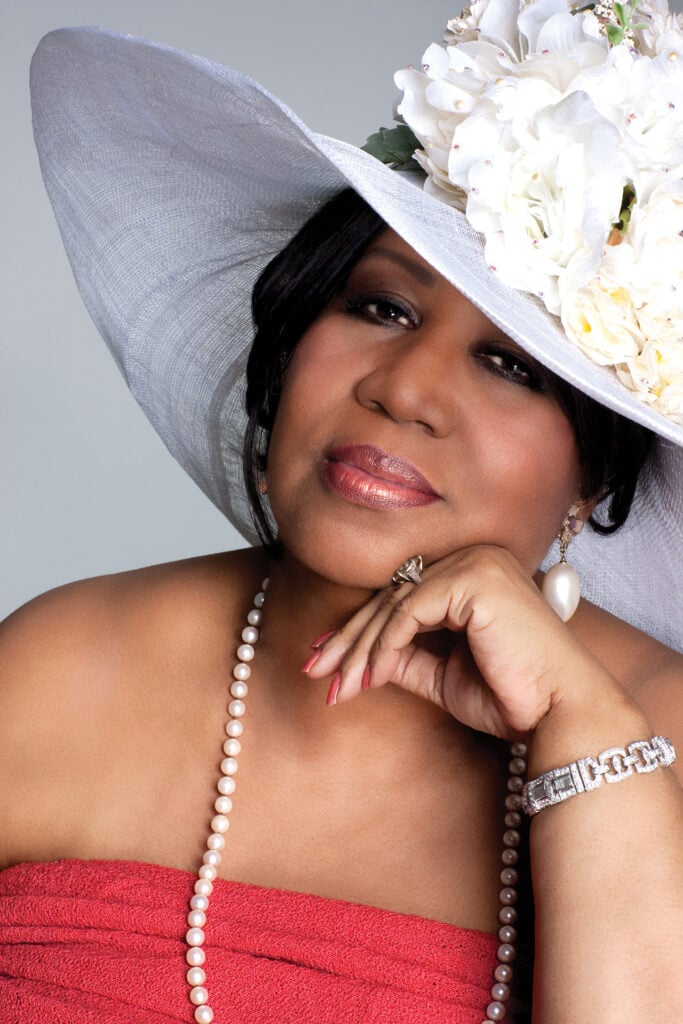
*Aretha Franklin‘s family already fought over which handwritten will should control her estate. A jury settled that question three years ago. Yet eight years after the Queen of Soul’s death, her sons are still battling over what she left behind — including music rights, potentially unreleased recordings, legal fees and hundreds of personal possessions.
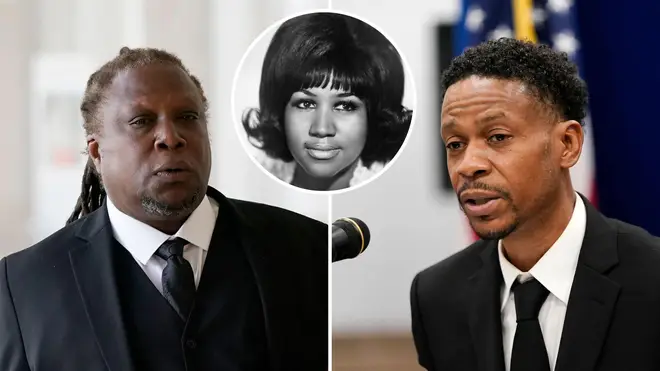
The latest disputes have largely pitted Franklin’s youngest son, Kecalf Franklin Cunningham, against his brother Ted White II, the musician known professionally as Teddy Richards, according to reporting by Complex, citing the Detroit Free Press.
And this isn’t a small stack of paperwork gathering dust at the courthouse. More than 1,400 court filings have accumulated since Franklin died on Aug. 16, 2018.
The Couch-Cushion Will Didn’t End It
EURweb has followed Franklin’s unusual estate saga nearly from the beginning.
In 2019, EURweb reported that three handwritten wills had been discovered inside Franklin’s suburban Detroit home. Two documents dated 2010 were located in a locked cabinet. A newer 2014 document was discovered inside a spiral notebook beneath cushions in her living room.
Scroll to continue reading








That couch-cushion discovery eventually became crucial.
In July 2023, EURweb reported on the jury verdict determining that the 2014 handwritten document represented Franklin’s valid will. Kecalf and Edward Franklin supported that document, while White argued that the 2010 version should control the estate.
Oakland County Probate Judge Jennifer Callaghan subsequently used the 2014 will to divide Franklin’s properties among her sons.
Case closed?
Not even close.
Rare Aretha Recordings Are Still in Limbo
The remaining fight includes copyright interests in songs such as “Think” and “Dr. Feelgood,” arrangements involving eldest brother Clarence and hundreds of Franklin’s belongings reportedly spread across 11 Detroit-area storage units.
White has also objected to security cameras Cunningham allegedly installed at the storage facilities without consulting the other heirs.
But the most intriguing assets may be the ones nobody can stream yet.
Dozens of reel-to-reel tapes and video recordings were reportedly recovered from Franklin’s Bloomfield Hills home. Some audio reels are unlabeled, leaving their contents uncertain. The video archive reportedly includes rehearsal footage from Franklin’s 1998 “VH1 Divas” appearance, a 2003 concert and her 1996 “Christmas at New Bethel” gospel event.
White has argued that the recordings should be moved to a facility better equipped to preserve them.
For fans, that means this probate battle isn’t simply about houses, money or who’s getting what. Pieces of Franklin’s musical history may also be waiting for the family to determine what happens next.
‘Everybody Wanted Something’
Franklin’s longtime attorney David Bennett said the family initially had an opportunity to work through the competing estate documents together.
“We found [the wills], here they are, sit down and come to an agreement as to what they say,” Bennett recalled.
That didn’t happen.
“Everybody wanted something to the exclusion of somebody else,” Bennett said. “Which is the reason there is probate court.”
At least a dozen attorneys reportedly remain involved, with Franklin’s sons represented by personal and music counsel.
The family has found common ground on occasion. The brothers jointly approved free use of Franklin’s 1968 hit “Think” in a 2024 Kamala Harris campaign advertisement. Cunningham and White also both challenged fees submitted by court-appointed executor Andrew Mayoras.
Eight Years and Counting
The continuing disputes aren’t entirely surprising considering how complicated Franklin’s assets were from the start.
Back in 2019, EURweb reported that Cunningham had raised questions about nearly $1 million in uncashed royalty and entertainment-industry checks. Another early dispute involved control and administration of the estate.
What the 2023 verdict accomplished was significant: it determined which of Franklin’s handwritten documents represented her final wishes. What it didn’t do was distribute every remaining asset or settle control of her music, royalties and archives.
Until those issues are resolved, the estate cannot close.
Aretha Franklin spent a lifetime making records. Eight years after her death, her family is still making court records — more than 1,400 of them and counting.
(If You Like/Appreciate This EURweb Story, Please SHARE it!)
MORE NEWS ON EURWEB.COM: Aretha Franklin Recounted Quarrel That Caused Her to Pop Off on Luther Vandross | VIDEO
We Publish Breaking News 24/7. Don’t Miss Out! Sign up for our Free daily newsletter HERE.