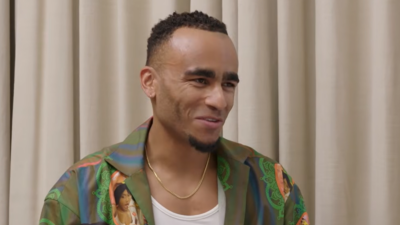
*The proliferation of hate, particularly against people of color is prominent in America. The rise of hate in America is well-documented, and with the popularity of leaders that promote hate and intolerance, hate is at an all high. LA vs. Hate, a Los Angeles County anti-hate program, hosted a press conference, launching United Against Hate Week. However, the resounding note that seemed to be held in the conference was the lack of specific means, a plan to combat hate against the Black community.
The attendees included George Gascón, Los Angeles County District Attorney; Hon. Holly J. Mitchell, Los Angeles County Supervisor, Second District, Robin Toma, Executive Director, LA County Commission on Human Relations, Kevin Kish, Director, CA Civil Rights Department; Capri Maddox, Executive Director of the Civil + Human Rights and Equity (LA Civil Rights); Patrice O’Neill Founder-Co-Director- United Against Hate Week/Not In Our Town; Kiran Bhalla, CA Stop the Hate Network (AAPI Equity Alliance Program Director); Christopher Rivas, Actor and Author and dozens of community-based organizations in the anti-hate networks of LA County.
The vital event, held at Watts Historic Train Station, started with a Native American performance by the Chumash Cultural Committee, who performed three songs of peace, love, and unity.
Robin Toma, the Executive Director, LA County Commission on Human Relations, spoke about that unity, the necessity of unity among the racial identities that comprise LA vs. Hate.
“The unity we have doesn’t come without a price,” said Robin Toma. “There are those that want to divide us, there are those who want to disrespect our unity. But we know that the vast majority of people of this community and this county are against hate.” Toma, who is Asian, mentioned the importance of reporting hate crimes and bias by calling 211 or contacting LA vs. Hate. “We’ve long known that hate is so severely underreported,” he said. “It might be at least double, but maybe 20 – 30 times more hate that is happening that is not reported to the FBI and the Department of Justice.”
Scroll to continue reading




But why? Why is there underreporting? Could LA vs. Hate be only a band-aid, when there are root causes to hate that have been under-addressed? The press conference underlined a huge problem. More resources, particularly in helping address the hate against people of color, specifically African Americans, need to be allocated.
“Anti-Black or African-American” bias “is still the largest bias type represented in all reported hate crimes,” according to a report from the California Department of Justice, out of all bias and hate crimes. Furthermore, “reported hate crime events have increased by 159.9%,” per the same survey. Underreporting of bias and hate crimes is still a major concern, despite the report that “Anti-Black or African American bias events fell from 652 in 2022 to 518 in 2023, a decrease of 20.6%.” However, those numbers can be highly inaccurate. Many incidents in communities are not reported, because complaints from Black populations are often ignored.
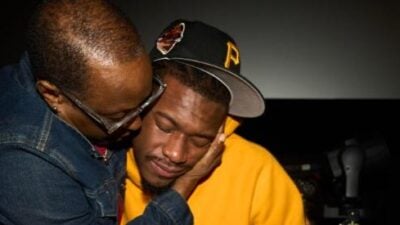
A touching moment during the conference was when Frankie, a queer male, spoke about the trauma he experienced in his community.
“The LA versus Hate Care Coordinators helped me,” said Frankie. “My motto is spread love not hate.”
Yet, surprisingly, at the press conference, there was little mention of any solutions in combating the rise of hate against African- Americans, and there were no Black male speakers who recounted their experiences, their personal experiences about hate. Black people have been complaining about racial incidents, including microaggressions against Black men and women for decades, and, in 2024, those incidents have risen exponentially.
George Gascon, a former commander of the Los Angeles Police Department (LAPD) and District Attorney of Los Angeles County lauded the Watts community for their efforts against hate.
“The Watts community has always stood up against hate,” said George Gascon. “The Watts community was there when we needed to do the right thing.”
Gascon was emphatic about one of the core reasons why hate has increased. “Unfortunately, we’ve had people that have given license to those that want to be public about their hatefulness,” he said.
“It’s beginning to feel like a White supremacist’s ideology that’s trying to take us all out,” said Holly J. Mitchell. “All of us standing together in brotherhood and sisterhood will stop it. What’s important is that we figure out how to show up every day.” Mitchell stressed the importance of education, and educating children “Children aren’t born racist, homophobic, xenophobic- babies aren’t born that way, they are taught, and it is learned behavior. We have to power to end it here and now. That’s what LA vs. Hate is all about.”
“We’re at a time that all of us know is a very difficult time,” said Robin Toma. “We actually moved this celebration ahead, because in years past, we’ve had it in November. But we moved it ahead to September, because we knew already, with this special election year, that there will be a lot of things said that would foment hate, foment division, and foment hostility and scapegoating of others.”
“Hate has no home in Los Angeles,” said Capri Maddox. “The whole of government is coming together to make sure that we stand united against hate. We need the entire community to stand up, and to stand up against hate.” She promoted a resource, The LA For All Campaign | Civil + Human Rights and Equity Department (lacity.gov).“If you come for one of us, you’re coming for all of us, she said.
While LA vs. Hate may be a band-aid to a growing problem, they must also address the underreporting factor and not perpetuate an appearance of bias, having speakers of color who also recount their experiences. African Americans often don’t report racial incidents, partly because many in government have become insensitive to the complaints of Black men and women. While LA vs. Hate may be a band-aid, they still have to do better, and not give the appearance that they, too, are ignoring the concerns of the Black community, especially at press conferences.
United Against Hate Week (UAHW) is a call for local civic action to stop the hate, discrimination, and implicit biases that negatively impact our diverse communities, neighborhoods, and cities. This year, UAHW will take place across the country between September 21 and 27. If you’d like to attend, for more information, visit United Against Hate (unitedagainsthateweek.org).
If you are in the Los Angeles area, and you have been the victim of racial harassment or a hate crime, dial 211.
MORE NEWS ON EURWEB.COM: How California is Pulling Racism and Hate Crimes Out into the Open: Racism and Inequity Declared a Public Health Crisis