Trump orders Christmas Day airstrikes on ISIS in northwest Nigeria
*On Christmas Day (12-25-25), President Donald Trump announced that U.S. forces carried out coordinated airstrikes on ISIS targets in Sokoto State, northwest Nigeria. The military action came after Trump warned of intervention to protect Christians facing extremist violence. The strikes were confirmed by U.S. Africa Command and described by Trump as “numerous perfect strikes.”
Video released by the Department of War showed missiles—likely Tomahawk cruise missiles—launched from U.S. Navy vessels. Nigerian officials said the operation was coordinated and emphasized the focus on terrorist cells, not civilians.
Trump cites Christian persecution as reason for military action
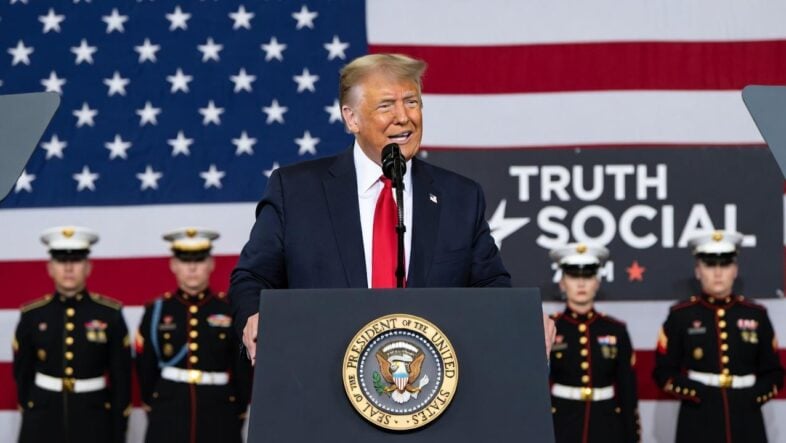
Trump issued a statement on Truth Social saying the airstrikes were a response to ISIS militants “targeting and viciously killing, primarily, innocent Christians.” He warned that if such violence continues, more strikes could follow. Secretary of War Pete Hegseth echoed that message, referencing earlier threats made in late 2025 about action if killings did not stop.
“These animals have been killing Christians in Nigeria for too long. The United States will not stand by while innocents are slaughtered. More action will come if needed,” Trump posted.

Scroll to continue reading









Military confirms ISIS targets hit with no civilian casualties
U.S. Africa Command (AFRICOM) confirmed the airstrikes in a press release, stating the mission was carried out in full coordination with Nigerian authorities. Initial assessments indicated multiple ISIS militants were killed. No civilian deaths have been confirmed so far.
Nigerian officials also issued statements emphasizing the country’s continued partnership with the U.S. on counterterrorism. They highlighted the goal of protecting all citizens, regardless of religion, while rejecting claims of a Christian-only genocide narrative.
Critics question legality of Trump-ordered strikes
Though supporters praised the strikes as a bold defense of persecuted Christians, critics quickly raised concerns about legality. Former Rep. Justin Amash and other legal experts questioned whether Trump had the authority to carry out such attacks without congressional approval.
No official war powers resolution has been passed for operations in Nigeria, and the airstrikes appear to be the first direct combat action by U.S. forces there. The issue is likely to face scrutiny in the weeks ahead.
Airstrikes mark escalation in U.S. military role in West Africa
This operation represents a new chapter in U.S. military engagement in Nigeria. While the two nations have long shared counterterrorism goals, U.S. involvement has typically focused on training, intelligence, and arms sales—not direct combat operations. The Christmas Day strikes shift that approach.
ISIS affiliates like ISWAP (Islamic State West Africa Province) have been responsible for thousands of deaths since 2009. The U.S. has expressed concern over their growing reach in the Sahel and Lake Chad regions, prompting expanded surveillance and now, limited airstrikes.
Historical U.S.–Nigeria military cooperation explained
The U.S. and Nigeria have cooperated on security issues for decades. During the Cold War, the U.S. largely avoided direct involvement, even during Nigeria’s civil war. In the 2000s, partnerships deepened with training initiatives like the Pan-Sahel Strategy and the Trans-Sahara Counterterrorism Partnership.
From 2014 to 2024, U.S. support focused on Boko Haram and ISIS-West Africa through aircraft sales, ISR (intelligence, surveillance, reconnaissance) missions, and tactical training. Until now, the U.S. had avoided direct strikes on Nigerian soil, respecting sovereignty and working behind the scenes through AFRICOM.
Religious framing adds to global political tension
Trump’s language about defending Christians has stirred debate. While supporters frame the strikes as humanitarian, critics say focusing only on Christian victims oversimplifies a complex conflict. Violence in northern Nigeria has affected Muslims, Christians, and others alike.
Nigeria’s government has previously pushed back against claims of a Christian genocide, insisting that Islamist extremists target all communities. Human rights groups warn that religious framing may increase sectarian divides and complicate future peace efforts.
What’s next for U.S. involvement in Nigeria?
With these airstrikes, the U.S. has taken a more direct role in Nigerian security operations. AFRICOM insists the mission was targeted, legal, and cooperative. But questions remain about whether more strikes will follow—and what authorization will govern future actions.
Trump hinted at continued pressure, while military leaders stress strategic restraint. The world will be watching closely as Nigeria and the U.S. navigate this new phase of military cooperation amid rising regional instability.
(If You Like/Appreciate This EURweb Story, Please SHARE it!)
MORE NEWS ON EURWEB.COM: A Christmas Inspiration Message from the EURweb Family
Sign up for our Free daily newsletter HERE.