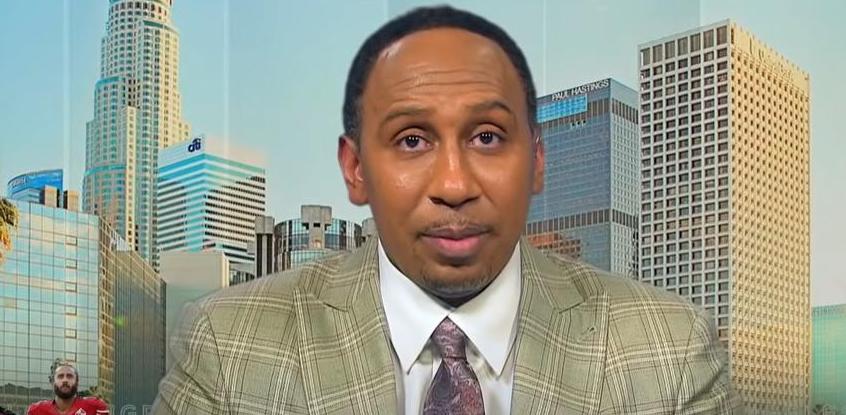
*For a fleeting moment, the idea of a Stephen A. Smith presidency felt like the ultimate crossover episode: the bombastic, opinionated voice of ESPN’s “First Take trading the debate desk for the debate stage. But today (03-09-26), the speculation was put to rest with the kind of blunt, declarative statement Smith is famous for.
In the debut episode of Fox News Media’s new podcast, “Hang Out with Sean Hannity,” Smith officially ended any talk of a 2028 White House bid, citing a reason that is both brutally honest and, for many, refreshingly relatable: money.
“Let me put the presidential aspirations to bed,” Smith told Hannity when pressed on the rumors. “If I have to give up my money, it’s not happening. I ain’t giving up my money, Sean.”
The Cost of Admission
Smith, who commands a reported $10–$15 million annual salary from ESPN for his work on First Take, podcasts, and various other projects, framed the decision as a simple financial equation. When Hannity directly challenged him— “2028’s coming pretty quick… I think it’s all bulls–t. I don’t think you’re running, am I right?”—Smith didn’t hesitate.
“I don’t think I’m running either, because I got to give up my money,” he reiterated.
Scroll to continue reading


The comment highlights a rarely discussed but very real barrier to entry for high-earning private citizens considering public office. A presidential campaign would likely require Smith to either divest from certain assets or severely limit his income-generating activities to avoid conflicts of interest and the appearance of impropriety. For a man who has built a media empire on his hot takes and tireless work ethic, stepping away from the bag is a non-starter.
This declaration comes just one month after Smith teased the possibility on “CBS Sunday Morning.” In February, he stated he had “no desire” to be a politician but refused to rule out a run, positioning himself as a “fiscal conservative, social liberal” who felt compelled to challenge candidates he deemed “better suited” to run the country. He even noted that his pastor had told him, “You don’t know what God has planned,” fueling the speculation further.
The Trump Factor: A Ponder on Wealth and Power
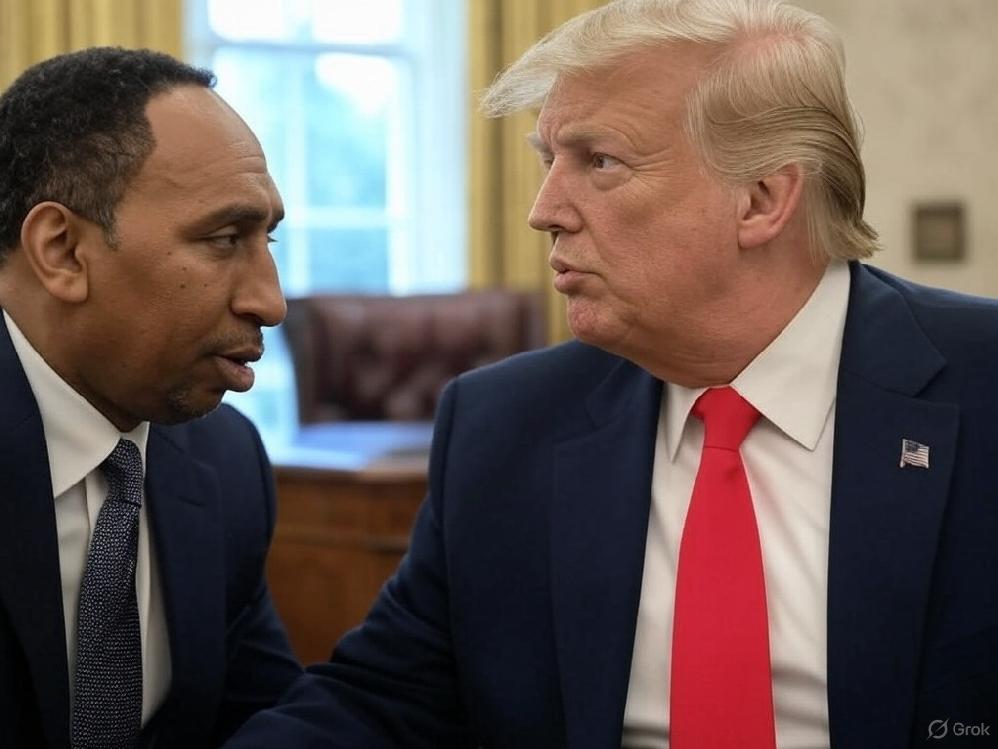
Smith’s refusal to sacrifice his wealth raises an interesting point of comparison, particularly with the man he might have sought to replace. Donald Trump famously bucked tradition by refusing to divest from his business empire upon taking office in 2017, instead handing control to his sons while retaining ownership.
This contrast forces a question: Is Smith’s stance a principled stand, a practical decision, or a missed opportunity?
On one hand, Smith’s position is one of transparency. He is essentially admitting that the financial sacrifice required by the highest office in the land is too great a price to pay. It’s an honest acknowledgment that for many, politics is a pay cut. “I love my career and my wealth too much to give it up,” he has said in the past, echoing the sentiment that the juice isn’t worth the squeeze.
On the other hand, Trump’s example proves that the rules are not always rigid. He demonstrated that a candidate could, in fact, keep their financial interests close while occupying the Oval Office, setting a modern precedent that blurred the lines between public service and personal wealth. Viewed through that lens, Smith—a master of branding and negotiation—might have been uniquely positioned to navigate those same gray areas.
Was he unwilling to take the risk, or was he simply uninterested in playing a game where the rules apply differently to the ultra-wealthy?
A Smart Move or a Missed Opportunity?
For now, the speculation is dead. Smith will remain firmly planted in the Bristol, Connecticut, ecosystem (and his various other media ventures), continuing to cash massive checks and opine on the performances of LeBron James and Patrick Mahomes rather than the policies of Congress.
For @eurweb readers, the reaction is likely mixed. Some will see it as a smart move—a man knowing his lane and choosing guaranteed generational wealth and influence over the unpredictable, often thankless world of politics. Why trade the green room for the swamp if you have to go broke doing it?
Others may view it as a missed opportunity. In an era craving authentic, unscripted voices, Smith’s ability to command a room and speak his mind (to the tune of millions of viewers) might have translated into a formidable political force. His platform as a “social liberal” who understands fiscal responsibility could have appealed to the moderate, disillusioned voter.
Ultimately, Stephen A. Smith has made his choice: the bag over the ballot box. Whether that’s the mark of a savvy businessman or a sign of how unappealing political sacrifice has become is a debate he’d probably love to have on air—for a handsome fee, of course.
What do you think? Was Stephen A. right to prioritize his wealth, or could he have made a difference in 2028? Scroll down to drop your thoughts in the comments below. Stay tuned for more media and politics crossovers. ✊??
? Sean Hannity presses Stephen A. Smith about a possible 2028 presidential run. Smith responds bluntly:
“If I have to give up my money, it’s not happening.”pic.twitter.com/pj6ZgGI12C
— Derrick Evans (@DerrickEvans4WV) March 9, 2026
(If You Like/Appreciate This EURweb Story, Please SHARE it!)
MORE NEWS ON EURWEB.COM: Rev. Jesse Jackson Funeral and Memorial Services: A Final Tribute to a Giant | WATCH
We Publish Breaking News 24/7. Don’t Miss Out! Sign up for our Free daily newsletter HERE.