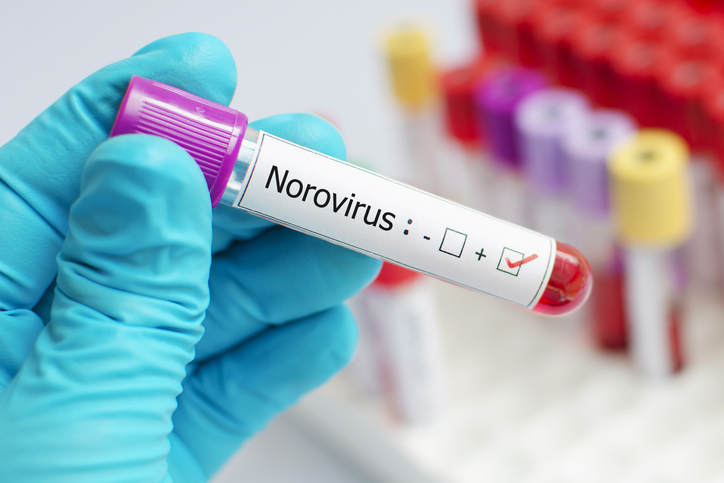
*Norovirus, often called the “winter vomiting disease,” is spreading across the U.S., raising concerns as the holiday season approaches.
According to NBC Washington, Wastewater data from Stanford University’s WastewaterSCAN program, in collaboration with Emory University, shows a 69% nationwide increase in norovirus concentrations since October, with the highest rates in the Northeast and Midwest.
“Right now, we’re in the high category for norovirus at the national level,” said Amanda Bidwell, scientific program manager for WastewaterSCAN. She noted that while outbreaks this year are lower than last year’s peak, driven largely by the GII.17 variant, cases are still expected to rise. “We have three years of data to kind of show that we have this strong seasonal pattern,” she added.
Norovirus spreads easily through contact with vomit or feces, contaminated food, water, or surfaces, making it highly infectious. Symptoms include vomiting, diarrhea, stomach pain, fever, and body aches, typically appearing 12 to 48 hours after exposure and lasting several days. Vulnerable groups such as young children, older adults, and people with weakened immune systems may require medical attention.
Experts attribute the recent rise in cases to the GII.17 variant, which became dominant last year. Dr. Robert Atmar of Baylor College of Medicine explained, “The two possibilities is that something in the virus changed to make it more transmissible, or there were changes in the population that a larger proportion were susceptible. And probably it’s a combination of both.”
Scroll to continue reading









Dr. Craig Wilen of Yale University added, “Probably the GII.17 last year was so effective at infecting so many people because we had significantly less immunity to that virus, since it was different enough from viruses that we’ve previously been infected with.”
Norovirus is highly resilient, able to survive temperatures up to 145°F, and traditional ethanol-based hand sanitizers are less effective against it. The CDC recommends washing hands with soap, cleaning contaminated areas with diluted bleach, cooking shellfish thoroughly, and properly washing fruits and vegetables.
While there is no specific treatment or vaccine for norovirus yet, rehydration is critical to replace lost fluids. Moderna is currently conducting a Phase 3 trial for a potential vaccine to combat the disease.
TEXT
MORE NEWS ON EURWEB.COM: Health Experts Warn of Early H3N2 Flu Surge as Season Begins
Sign up for our Free daily newsletter HERE.