
*Evening, winter, 1999. In Westwood, a tony enclave in West Los Angeles, I slid into the Living Room bar at the W Hotel, one of my favorite spots back then, just after 9 PM. My aim was to arrive before the line of Beautiful People snaked down the hotel’s front stairs and before bouncers in black with earpieces began playing God at the door.
Still, the joint was already jumpin.’ All the seats at the massive black marble bar that stretched the length of the room were taken, save one–next to the very last one at the bar’s end, where a conservative-looking, middle-aged ringer for Clint Eastwood, wearing a tweed sport jacket and glasses, sat.
I settled into the seat between him and another stranger to my right and offered a Hiya doin’ that was met with a disinterested grunt. He kept his gaze straight ahead.
“Guess where I’m going?” my favorite bartender asked, setting my usual glass of Guinness before me. “Aerosmith! My boyfriend surprised me with tickets, and I’m stoked!” We chatted about the band for a bit before she went to help the other two bartenders serve customers.
There was at least a minute of silence. Then the stranger spoke: “Are you familiar with a song called “Love TKO”?” he asked, almost begrudgingly, still not looking my way.
Scroll to continue reading









“Oh, yeah,” I said. “Teddy Pendergrass. Love that song.”
He turned to look at me. “I think it’s one of the greatest songs ever written,” he said in a quiet voice.
Quite the proclamation. Not to mention, in a million years I never would have imagined hearing the name Teddy Pendergrass at this end of the bar tonight. If I had, I’d have expected a more mainstream Pendergrass tune, such as “Close The Door,” “Turn Off The Lights,” or the hit Teddy recorded with Harold Melvin and the Bluenotes, “If You Don’t Know Me By Now.” “Love TKO” seemed like a stretch for a cat like this, but what did I know?
“The music fits the words,” he said, lifting a half-full tumbler of brown liquor to his lips. “It’s about a guy who always ends up losing in relationships.” The man’s mood had softened. “He gets another TKO—in boxing, that means technical knockout; you know, not out cold, but an obvious loss.”
I found it amusing that he’d explain a song to me about a subject I’ve lived through at different times in my life.
Because of the man’s affinity for the song, I didn’t bother to tell him that Pendergrass’ heartbreak masterpiece—written by Cecil Womack (a brother of Bobby) and Gip Noble, Jr., and produced by Philadelphia International Records stalwarts Dexter Wansel and Cynthia Biggs, along with Womack—wasn’t unique. It was released in 1980, the same year as David Oliver’s version on his album Here’s to You.
Since those two versions, artists as diverse as Deborah “Blondie” Harry, Bette Midler, Hall & Oates, Seal, Lambchop, Michael McDonald, and Fourplay have recorded the song. The songwriter, Cecil Womack, and his wife, Linda, as Womack & Womack, released their version, titled “TKO,” in 1983.
However, Pendergrass’s arguably superior version has served as the blueprint for most of the others. Driven by a commanding, insistent bassline, the ballad’s production, despite being accentuated by string and horn arrangements, feels sparse; nothing gets in the way of its loneliness.
Teddy’s usually authoritative voice is more brooding, more spoken-word narration than melodious, as he ruminates on a history of failed love affairs. He’s done with relationships. “Tired of gettin’ beat up by love,” he declares.
“Love TKO” reminds me of Bobby Caldwell’s “What You Won’t Do for Love.” Two soul classics that weigh love at opposite, desperate ends of the spectrum: Caldwell’s song is about refusing to give up on love, while Pendergrass throws in the towel.
Given his allegiance to “Love TKO,” I had to ask the man: did the song reflect any personal experiences? He caught our bartender’s attention. The bartender had moved to the middle of the bar. “I’ll have another,” he said. “And give him whatever he is drinking.”
Answering my question, the man began by saying he’s never had a problem attracting the ladies. In his teens and into college, his “okay looks,” height, and an upper-middle-class upbringing in the upmarket suburb of a middle-American city, shaped by a stay-at-home mom and a dad who was a successful businessman, made him attractive to cheerleaders, majorettes, and assorted hotties.
“The popular ones always let me down, or I let them down,” he said, taking another sip of his drink. “I could get ‘em, just couldn’t keep ‘em. They’d cheat on me, or I’d find out they were all about material things.”
In his thirties, things turned around. “My sister talked me into therapy. What I learned was that I didn’t love myself. My choices, especially with women, were self-sabotaging.”
The counseling helped him make better decisions. He met someone. The thirty-something health care professional was unlike the others. Attractive but not flashy, she was sensible and compassionate. “She allowed me to love her, and for once in my life, I let someone love me.”
A year later, they married. Their first child was a girl. Later, a boy. Life was good. His commercial real estate business thrived. The only wrinkle was the seizures his wife experienced, the result of a fall in the shower in her teens. They’d subsided in adulthood but re-emerged after their second child, occurring “two or three times a year” and occasionally leaving her unconscious.
When his morning business flight was abruptly canceled, he called home from the airport to let his wife know. There was no answer. Once home, he found signs of a morning interrupted: the vacuum cleaner left in the middle of the living room floor; a half-eaten breakfast on the dining room table; Sinatra’s “That’s Life” blaring from the stereo. A light was on in the guest bathroom. She hated it when lights were left on when they weren’t needed. His curiosity gave way to fear.

He found her lying on the bed in their bedroom. The man’s father lay beside her. Both were naked. No one spoke. Words wouldn’t come. None were needed.
Dazed, he said he simply turned, walked away, retrieved his suitcase from the living room, and left for a hotel. He spent the day ignoring repeated calls from his wife and father. The next day, the three of them met at the house.
There was shouting. Tears. Explanations that couldn’t hold air, let alone water. Threats of violence. Amid it all, another heartbreaking revelation: He and his wife’s second child, their son, was fathered by the man’s father.
As the man spoke, I remember thinking this wasn’t the story of a Love Technical Knockout. It was a damn soul murder.
“We divorced, obviously,” he said solemnly, answering before I could ask. “Look, my son is my son, regardless. My father and I haven’t spoken in years.”
My goodness. Seldom am I at a loss for words. I didn’t understand how this guy was still walking around, or, honestly, why he wasn’t in prison for meting out some form of justice. There was so much more I wanted to know: What is his relationship with his ex? Does his son know that his grandfather is also his father? How does this man feel about women today? About himself?
The thought of asking these questions made me feel like a vampire, so I didn’t. After some awkward small talk on my end to lighten the mood, the man paid his bill, we shook hands, and he left.
“Y’all looked intense,” said the bartender, coming down to my end of the bar. “I heard a little. All that about a frickin’ song?”
“No,” I said, taking a gulp of my Guinness. “That was a testimony to pain.”
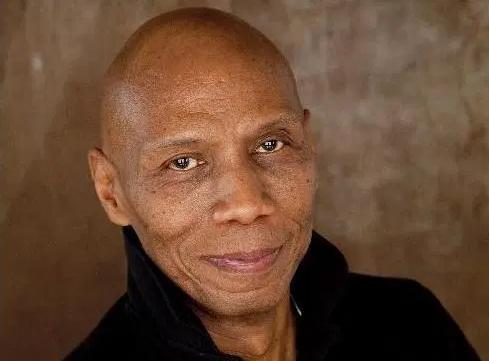
Steven Ivory, veteran journalist, essayist, and author, writes and discusses popular culture across platforms, including the Internet, TV, radio, documentaries, magazines, and newspapers. The Last Man on AOL is at [email protected].
(If You Like/Appreciate This EURweb Story, Please SHARE it!)
MORE NEWS ON EURWEB.COM: The Day Teddy Pendergrass Asked His Wife to Kill Him
We Publish Breaking News 24/7. Don’t Miss Out! Sign up for our Free daily newsletter HERE.