*Yes, the Northern Lights—or Aurora Borealis—were reportedly visible in the Ozarks a couple of nights ago due to a rare G4 geomagnetic storm. This celestial rarity may illuminate the skies over Missouri and the northern Ozarks between 10 p.m. and 2 a.m. But what’s truly pressing is whether this otherworldly light might also shine down and expose the whereabouts of a very real darkness among us: Grant Hardin, the convicted rapist and murderer—once a police chief—who recently escaped from prison.
Was Hardin’s psychological accomplice to his escape the rhetoric of Trump? After all, Donald Trump pardoned violent convicted felons, promoted sexual assault in his own public remarks, and relieved law enforcement of meaningful accountability. While many gaze at the aurora in awe, others are forced to look over their shoulders.
A Culture of Pardons: When Power Excuses the Worst
Just days before Hardin’s escape from Arkansas’ North Central Unit on May 25, 2025, Donald J. Trump—himself now a convicted felon—was back in the news for redefining “law and order.” During his presidency, Trump granted clemency to over 1,500 people, including war criminals, corrupt officials, political allies, and violent offenders. Some were rewarded not because they deserved it, but because they were useful to his narrative or loyal to his cause.
Let’s not forget Trump’s 2017 directive to police: “Please don’t be too nice.” He also reversed restrictions on military-grade equipment for local police and discouraged federal scrutiny of abusive departments by scaling back consent decree enforcement. Under his influence, police misconduct became easier to conceal and harder to challenge.
This cultural shift created a dangerous climate—one that said if you’re in uniform, wear a tie, or hold political clout, your crimes may be forgiven. So, we must ask: Had Hardin stayed hidden just a little longer, would someone in power have moved to pardon him too? Would the devil in the Ozarks have gotten his “pass,” like so many others?
Scroll to continue reading








The Escape of Grant Hardin: A National Concern
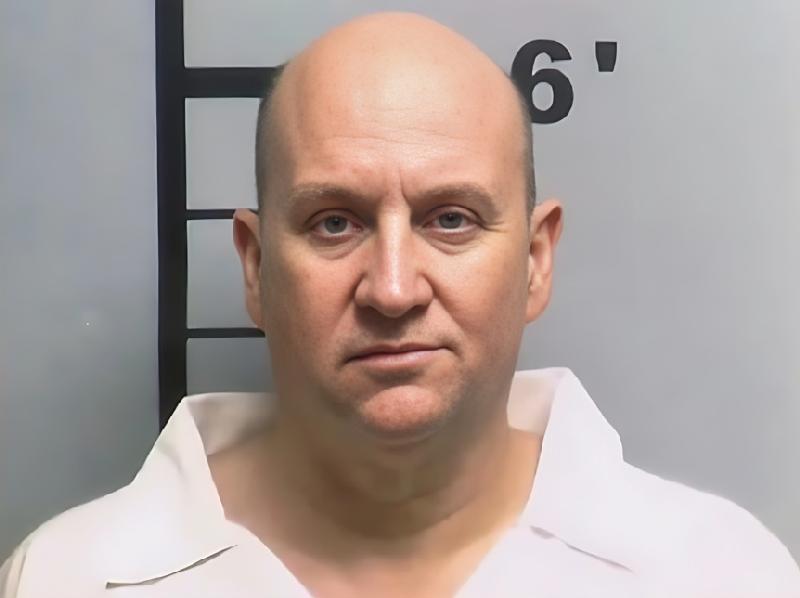
On that May morning, Hardin—a former chief of police from Gravette, Arkansas, convicted in 2017 for the murder of James Appleton and later for sexual assault—walked out of prison wearing a makeshift law enforcement uniform. He evaded security using insider knowledge. Soon, helicopters, drones, dogs, and tactical teams swept the rugged terrain of the Ozarks. But the public had to wonder—why wasn’t this level of urgency applied before he killed? Or raped? Or ever wore a badge?
A Widow Speaks: “He Should Have Never Worn a Badge”
Theresa Appleton, widow of the murdered James Appleton, told local news outlets:
“I wake up every day and still hear the gunshot in my head. My husband was a good man—kind, funny, loyal. Grant Hardin took him away and then got to wear a badge while we buried James. Now he’s out there again? Free? It’s like the system keeps choosing him over us.”
Her heartbreak isn’t just about personal loss—it’s a condemnation of systemic failure.
How Did This Happen?
Becoming a police officer in the U.S. requires less training than becoming a barber, teacher, or even a nail technician. In Arkansas, there’s no publicly accessible registry of certified officers. The Arkansas Commission on Law Enforcement Standards and Training often denies record requests, citing the protection of undercover officers. Yet states like Texas and Missouri manage transparency without compromising safety.
A Veteran Lawman’s Take
Retired Arkansas State Trooper Calvin Merriweather put it bluntly:
“We spent years warning about gaps in the system. Too many small-town departments didn’t vet their people. They just filled seats. Hardin is what happens when you ignore red flags and reward silence. Now the public pays for it. Again.”
The Culture of Control
A woman whose rape complaint led to Hardin’s conviction confided to her attorney:
“His escape feels like he’s still in control. I testified against him to keep others safe. Now I don’t sleep at night. The same system that let him be a cop is the one that couldn’t keep him locked up.”
This isn’t just an escape story—it’s a continuation of abuse by a system that failed its most vulnerable.
Is Grant Hardin Being Treated Like a “Black-on-Black” Homicide Suspect?
Consider this: over 60% of unsolved homicide victims in the U.S. are Black males, though Black men make up only about 6% of the population. In these cases, suspects—often also Black—are rarely caught, and public outcry is minimal. Now, think about Grant Hardin: a white ex-cop with a violent history. His escape should’ve triggered national outrage. Instead, it feels eerily quiet—like the systemic shrugs we see when Black men kill Black men. Quiet investigations. No media frenzy. Few updates. This is what some call a role reversal in justice. Hardin is being treated like a Black suspect in a poor community—under-prioritized, under-pursued, and ultimately, under-reported.
Would Grant Hardin Have Worn a Badge if He Weren’t White?
Let’s be brutally honest:
- If Hardin were Black, Latino, Indigenous, or Asian, would he have ever been hired as a police chief?
- Would his misconduct have been ignored?
- Would his rape victim’s warning have been dismissed?
- Would he have been able to fake his way out of a maximum-security facility?
No. The very system that enabled his career and covered his crimes is one designed to protect men like him. Meanwhile, Black and Brown people are targeted, tracked, and tried often before they even do anything wrong.
A Broken Compass of Urgency and Accountability
This isn’t just a prison security lapse. It’s a systemic misfire of epic proportions. The energy and outrage we often see when Black suspects are involved is missing here. Instead, we get confusion, silence, and sluggish effort. Had Hardin been a Black man who killed a white police chief, would the national response be this calm? Would the bounty still be just $25,000? We’re not chasing justice—we’re managing appearances.
Would Trump Have Pardoned Hardin?
That’s not a rhetorical question. Trump has already pardoned people like Joe Arpaio, Eddie Gallagher, and Roger Stone—men accused or convicted of serious crimes. Trump’s been accused of sexual assault, found guilty of business fraud, and is now a 34 time convicted felon himself.
Hardin escaped mere days after Trump’s convictions. In a political climate where being a felon is not only normalized but sometimes valorized, it’s a valid question: Would Trump have pardoned Hardin if it secured a few votes in rural Arkansas?
Public Trust Is on Life Support
The current bounty of $25,000 doesn’t scream urgency—it whispers neglect to the Ozarks, to Arkansans, and to safety in America. It signals that even after rape, murder, and escape, the system still doesn’t value the lives shattered by Hardin. So we ask: How serious are our state and federal authorities? How loud must we scream before we are heard?
A National Law Enforcement Misconduct Database—Now
The National Law Enforcement Accountability Database (NLEAD) is currently limited to internal federal use. That’s unacceptable. We need a mandatory, public, and cross-jurisdictional database that includes:
- Officers fired, suspended, or forced to resign
- Convictions or investigations for assault, rape, or misconduct
- Patterns of abuse or unethical behavior
No badge should be a shield for predators. No uniform should be sanctuary for rapists or murderers.
Honor the Badge by Cleaning It Up
We must uplift officers like Little Rock Police Department (LRPD) Sgt. John Merritt, a member of Groove Phi Groove Social Fellowship, Inc. and Trooper Merriweather—men who live the values their badges claim. But we must also reject the culture that lets abusers like Hardin blend in. If we don’t act now, there will be more Devils in the Ozarks, in Arkansas, and in America. Because this system isn’t broken—it was built this way. And the next escape? We might not even get a warning. Many prayers to the families and communities devastated by Hardin, and even more prayers to the police departments in the American law enforcement ecosystem that are willing to be held accountable for who they hire, and promote.

Sources:
- Department of Justice reports on police misconduct and consent decrees, 2017–2023
- ProPublica, “Trump’s Pardons: Who Benefited and Why”
- Arkansas Times, “Hardin Escapes Calico Rock Prison,” May 2025
- FBI Homicide Clearance Reports, 2019–2023
- Pew Research Center, “Public Trust in Government and Law Enforcement,” 2024
- Interview with Dr. Melinda R. Scott, Professor of African American Studies
- Interview excerpts from Theresa Appleton and victims’ attorneys
- Merriweather, C. (Ret. ASP), Personal commentary on law enforcement culture
Note: If you see Grant Hardin, do not approach. Contact federal and local law enforcement, immediately.
Public safety comes first. But remember, if justice has loopholes this wide, no one is truly safe—not even under the glow of the northern lights.
About the Author:

Edmond W. Davis is a native of Philadelphia, PA. He is an award-winning (ret.) college & university assistant professor of history, #1 New Release author, international speaker & journalist. He founded the National HBCU Black Wall Street Career Fest and advocates for socioemotional intelligence. Contact him via EdmondWDavis.com.
MORE NEWS ON EURWEB.COM: 50 Cent Planning to Blow Up Diddy’s Pardon Chances with Trump
We Publish Breaking News 24/7. Don’t Miss Out! Sign up for our Free daily newsletter HERE.