1. One Death, Two Standards
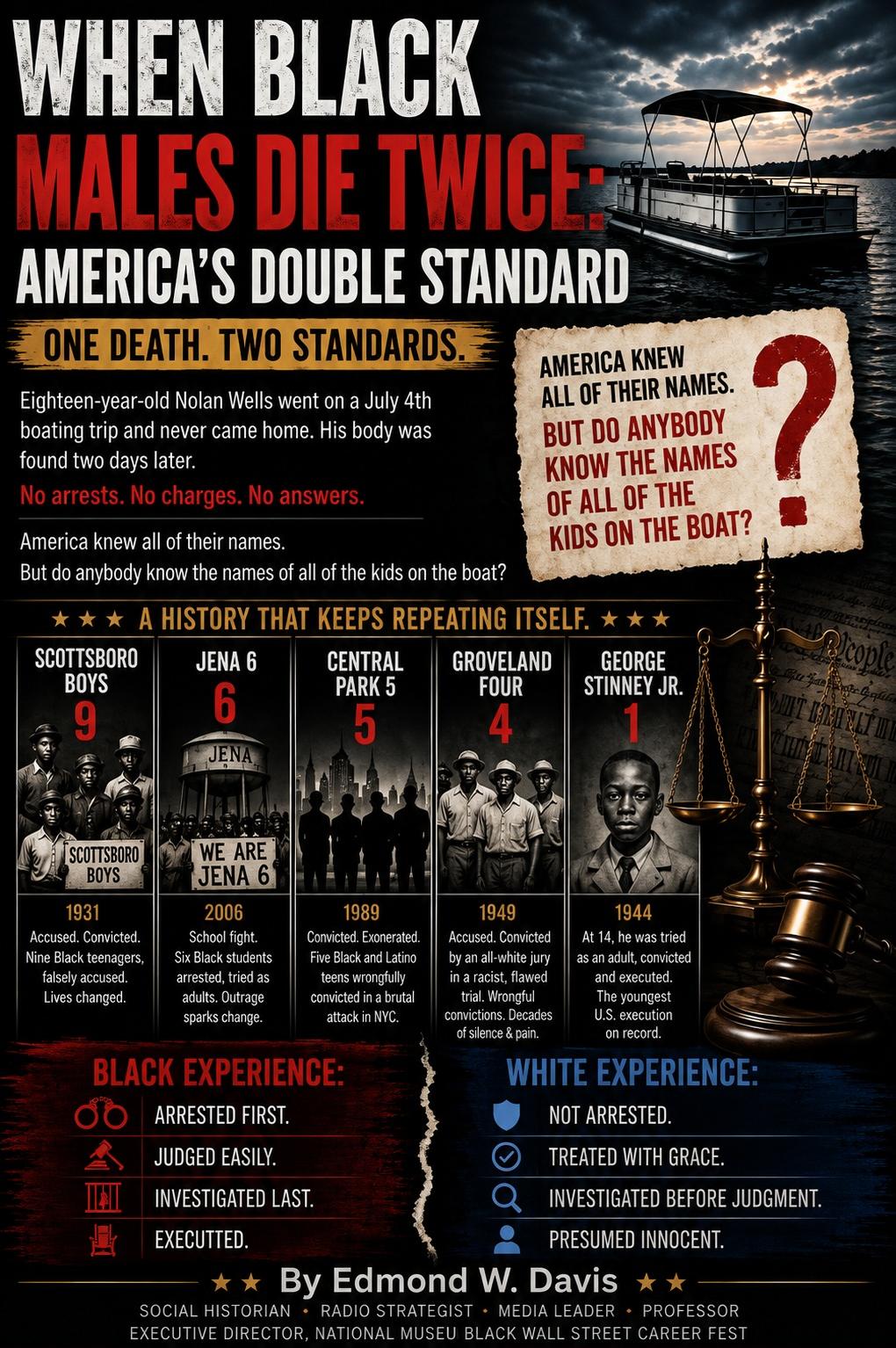
*Eighteen-year-old Nolan Wells left for a Fourth of July boating trip to Mississippi’s Horn Island and never returned home alive. His body was discovered two days later. His parents have since demanded a complete investigation into what happened during his final hours.
The state autopsy has reportedly been completed, but its findings have not been released publicly. An independent autopsy commissioned by the family listed the cause and manner of death as undetermined, and investigators are expected to present their findings to a grand jury. As of this writing, no one who accompanied Wells on the trip has been arrested or criminally charged in connection with his death.
The major point is not that the white individuals who were with Nolan should be declared guilty. Guilt must be determined by evidence and due process.
The point is that there has been no arrest.
That distinction matters because American history contains numerous examples of Black males being arrested first, publicly condemned second, and a few being executed and properly investigated last. Black boys and men have repeatedly been taken into custody with remarkable speed—sometimes on little more than an accusation—only for courts, DNA evidence, or later investigations to expose grave injustices.
Scroll to continue reading




Today, Nolan’s parents are not asking for a predetermined verdict. They are asking whether the death of their Black son is receiving the same urgency that the American justice system has historically demonstrated when Black males were accused.
2. A Pattern Across American History
These cases differ in their facts and legal outcomes, but together they reveal a recurring pattern of premature judgment, racialized prosecution, coerced confessions, official misconduct, and unequal treatment.
The number beside each case represents the number of defendants:
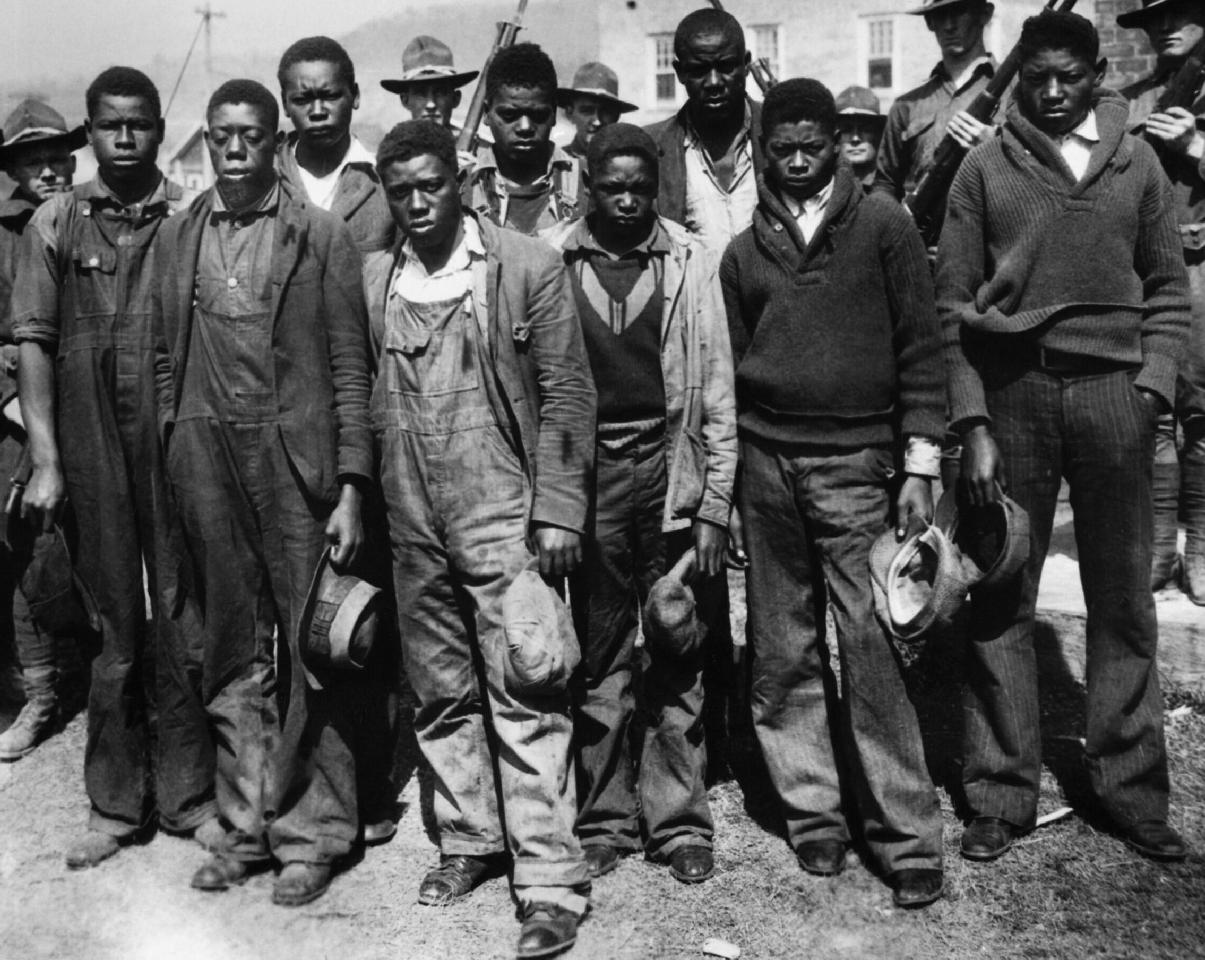
Nine Black teenagers were accused of raping two white women in Alabama in 1931. They were rapidly prosecuted, and several received death sentences despite weak and contradictory evidence. Their cases became defining examples of racial injustice and helped establish constitutional protections concerning effective counsel and discriminatory jury selection.
Seven Black men were convicted of raping a white woman in Virginia and executed in 1951. Their trials and death sentences were later condemned as racially unequal. Virginia granted the men posthumous pardons in 2021.
6 — The Harlem Six
Six Black and Puerto Rican teenagers were prosecuted for murder in New York. Their convictions relied heavily on disputed confessions and questionable investigative practices. Most of the convictions were eventually overturned.
6 — The Jena Six
20 years ago, six Black students in Louisiana faced severe criminal charges after a school fight in 2006. This was not an exoneration case like several others listed here, but it became a national symbol of racial disparities in charging, punishment, and prosecutorial discretion.
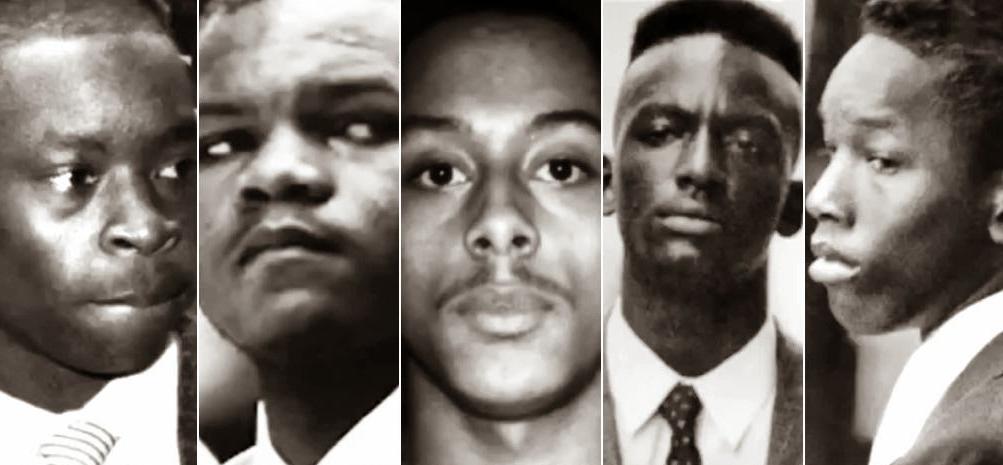
Five Black and Latino teenagers were arrested, interrogated, and publicly vilified following the 1989 assault of a white woman in Central Park. Donald Trump purchased full-page newspaper advertisements calling for New York to reinstate the death penalty amid the public fury surrounding the case. Their convictions were vacated in 2002 after the actual perpetrator confessed and DNA evidence corroborated his account.
They survived incarceration, but their names and childhoods had already been destroyed in the public imagination. Even after exoneration, they continued to confront suggestions that they were somehow responsible.
4 — The Grove Four
Four Black men were accused of raping a white woman in Florida in 1949. One was killed by a posse, two were shot by a sheriff and the surviving defendants endured wrongful convictions. Florida later granted pardons, and a judge formally cleared the men in 2021.
Four Black men from Illinois were wrongfully convicted in connection with rape and murder. DNA evidence and later investigation established their innocence after they had lost years of freedom.
1 — George Stinney Jr.
George Stinney Jr. was only 14 when South Carolina prosecuted him for the deaths of two white girls in 1944. His capital trial lasted approximately one day, an all-white jury deliberated briefly and he was executed less than three months after his arrest.
In 2014, a judge vacated his conviction after determining that he had been denied due process and a fair trial. The ruling arrived 70 years after the state had already taken his life.
3. The Difference Is Not Guilt—It Is Urgency
None of these historical cases proves that a crime occurred on Horn Island. Nor does the absence of an arrest establish corruption, favoritism or innocence. An arrest requires probable cause, and every person involved is entitled to the presumption of innocence.
But that is precisely where the comparison becomes unavoidable.
Where was that patience when nine Black teenagers were rushed toward death sentences in Alabama? Where was that caution when a 14-year-old Black child was sent to the electric chair? Where was that restraint when five teenagers were interrogated, publicly demonized and imprisoned for a crime they did not commit?
In Nolan Wells’ case, white individuals who were present during the trip have remained free while authorities continue investigating. That may ultimately prove legally appropriate. But Black Americans are justified in asking why restraint, patience and the presumption of innocence have so often appeared more available to white people than to Black males.
This is not an argument for arresting innocent white people. It is an argument against arresting Black people prematurely—and against treating the unexplained deaths of Black males with less urgency than accusations made against them.
4. What the Evidence Shows
The historical pattern is not merely emotional or anecdotal.
The National Registry of Exonerations reported that innocent Black Americans are approximately seven times more likely than innocent white Americans to be falsely convicted of serious crimes. Its research also found that Black people are about 7.5 times more likely than white people to be wrongfully convicted of murder.
The Innocence Project reports that racial disparities can persist even after conviction: wrongfully convicted Black people spend an average of approximately three years longer waiting for exoneration in murder cases than wrongfully convicted white people.
These findings expose an entrenched pattern. Black males are more readily associated with criminality, more vulnerable to official misconduct and often forced to spend longer proving innocence that should have been presumed from the beginning.
That is not simply white rage expressed through physical violence. It is also white privilege operating through institutional protection: the privilege of being carefully investigated instead of immediately criminalized, the privilege of being presumed complicated rather than dangerous, and the privilege of having one’s humanity remain intact while facts are gathered.
5. Demonized Even in Death
Black males can be victimized twice.
The first death is physical.
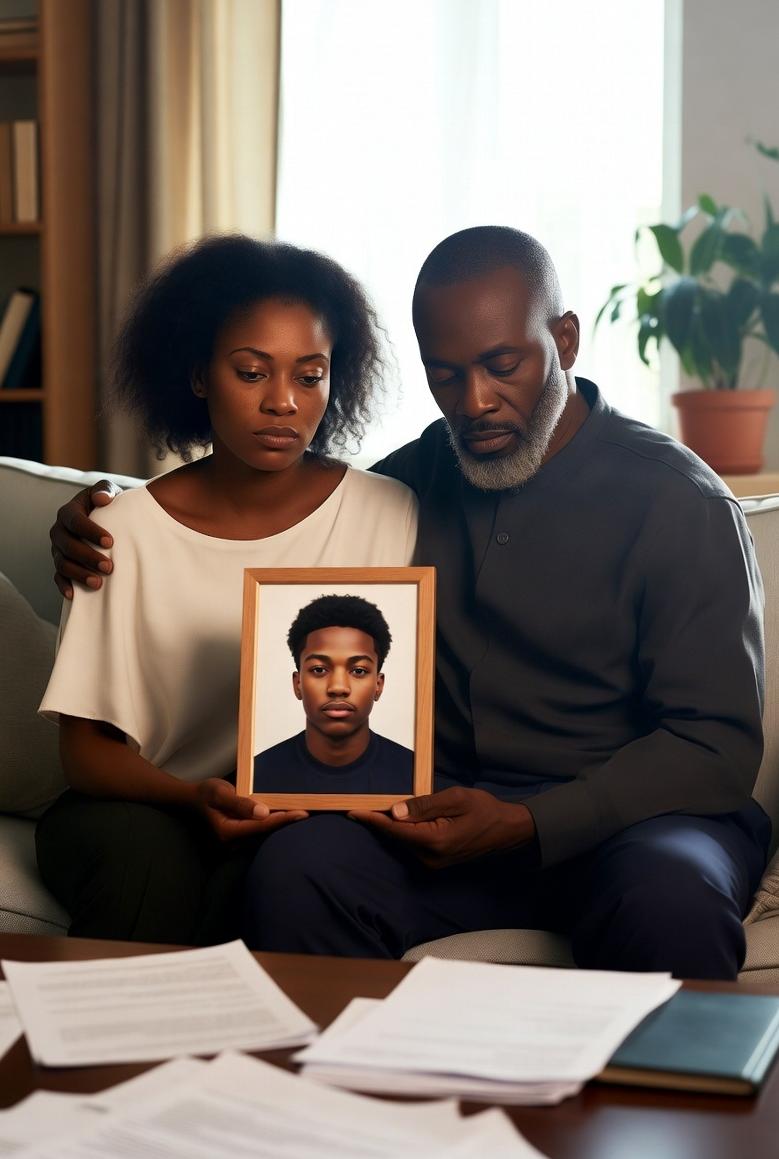
The second occurs when their character is placed on trial after they can no longer defend themselves. Their behavior, friendships, clothing, mental health, social-media history and personal choices are dissected to determine whether they somehow contributed to their own deaths.
Their parents must grieve while simultaneously protecting their sons’ names.
Nolan’s family has questioned the accounts surrounding his final hours and retained legal counsel to pursue answers. His relatives and others connected to the case have also faced intense online harassment and threats. The existence of threats against people on multiple sides demonstrates why facts—not rumor, retaliation or social-media prosecution—must guide the investigation.
Yet Nolan’s parents should not have to become investigators, media strategists and public-relations defenders merely to keep their son’s death from fading from national attention.
Black parents have historically carried two fears: that their sons will be presumed guilty when accused and that they will be presumed disposable when victimized.
That is how Black males die twice—once in body and again through indifference, suspicion or the denial of equal urgency.
6. Justice Must Have One Standard
Scripture rejects selective justice.
Leviticus 19:15 commands: “Do not pervert justice; do not show partiality to the poor or favoritism to the great, but judge your neighbor fairly.”
Proverbs 31:8–9 instructs us to “Speak up for those who cannot speak for themselves” and to defend the rights of those in need.
The standard cannot be rapid arrest when a Black male is accused but prolonged hesitation when a Black male is dead. Nor should public pressure replace probable cause in either direction.
Justice requires a thorough investigation, preserved evidence, transparent communication and accountability wherever the facts lead. It requires the same seriousness whether the deceased is Black or white and whether those last seen with him are Black or white.
America cannot undo the execution of George Stinney Jr. It cannot restore the years taken from the Central Park Five, the Scottsboro Boys or the Norfolk Four. But it can refuse to repeat the deeper pattern that made those injustices possible.
Nolan Wells’ family deserves the truth—not a conclusion shaped by race, public pressure or institutional convenience, but a complete accounting supported by evidence.
Black parents should not have to wonder whether their sons will be arrested too quickly when accused and investigated too slowly when killed.
Until every family receives equal urgency, equal transparency and equal protection, the words “Equal Justice Under Law” will remain more aspiration than reality.
And Black males will continue to die twice.

Edmond W. Davis is a social historian, media strategist, professor, and documentary host. Davis is the founder of the National HBCU Black Wall Street Career Fest. This native of Philadelphia, PA, his wife, and his son currently live in the Little Rock, Arkansas, area. Davis is committed to cultural empowerment and educational equity through storytelling and civic engagement. In 2026, Davis was a grand marshal at the 38th Annual African American History Month Celebration Parade, the largest in the U.S. during Black History Month.
(If You Like/Appreciate This EURweb Story, Please SHARE it!)
MORE NEWS ON EURWEB.COM: Nolan Wells’ Independent Autopsy Leaves Cause of Death Undetermined, Raises New Questions
We Publish Breaking News 24/7. Don’t Miss Out! Sign up for our Free daily newsletter HERE.