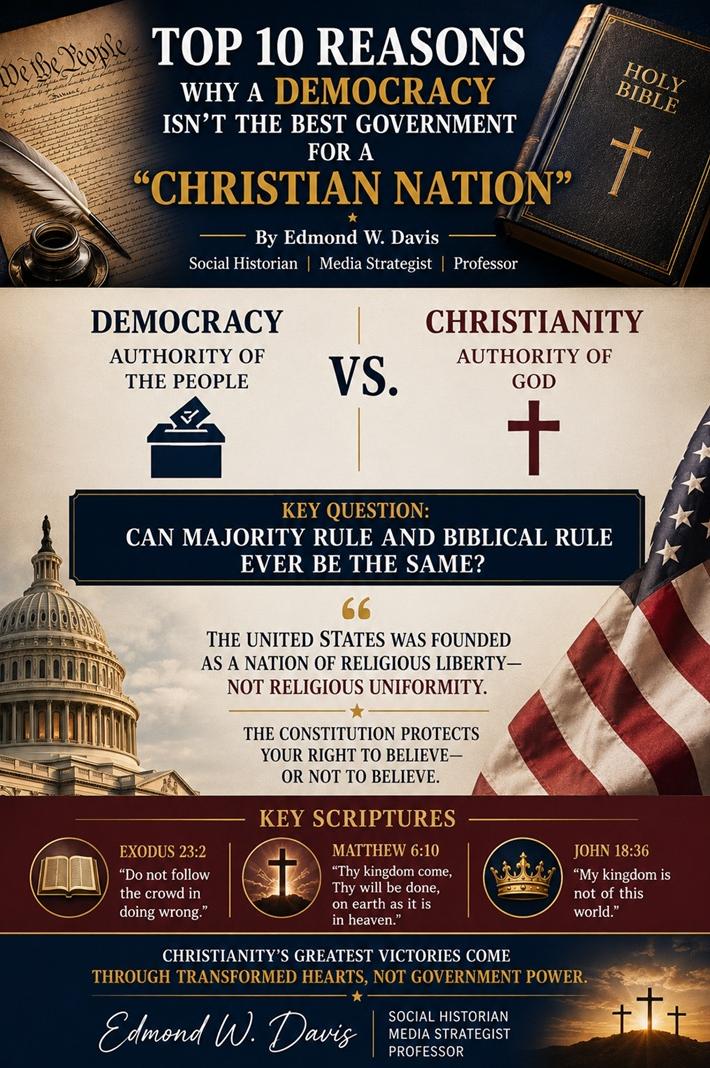
*For generations, many Americans have described the United States as a “Christian nation.” The phrase appears in political speeches, church sermons, social media debates, and campaign rhetoric. Yet history and Scripture raise an important question: If a nation truly sought to govern according to biblical principles, would democracy actually be the preferred system of government?
This question is not an attack on democracy. Democracy has provided Americans with freedoms, protections, and opportunities that billions around the world still seek. However, democracy and Christianity are not the same thing. One is a political system built upon the will of the people; the other is a faith centered upon the will of God.
In fact, a close examination of both Scripture and American history reveals several reasons why democracy may not be the ideal governmental structure for what many imagine to be a truly Christian nation.
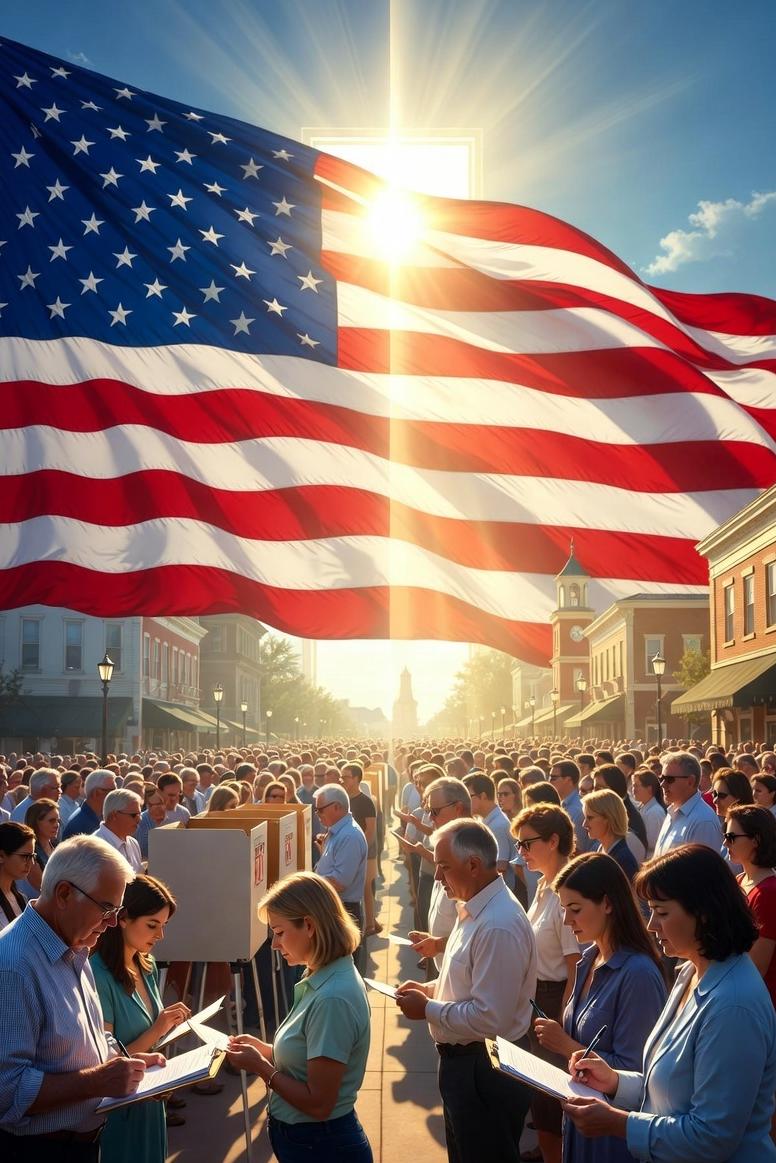
1. Democracy Places Ultimate Authority in People
The foundational principle of democracy is that political power comes from the consent of the governed.
Christianity teaches something different.
Scroll to continue reading









Psalm 24:1 declares, “The earth is the Lord’s, and the fullness thereof.” Biblical governance begins with God’s authority, not public opinion. In a democracy, majorities decide what is right. In Christianity, God determines what is right regardless of majority opinion.
2. Majorities Can Be Morally Wrong
One of history’s greatest lessons is that large numbers of people can support immoral practices.
In colonial America and the early United States, millions accepted slavery. Laws reflected public opinion rather than biblical justice. If democracy automatically produced righteousness, slavery would never have become embedded in American life.
The Civil War cost roughly 620,000 to 750,000 lives because Americans could not agree on whether human beings could be owned as property.
The majority is not always moral.
3. The Bible Warns Against Following the Crowd
Exodus 23:2 states:
“You shall not follow the crowd in doing wrong.”
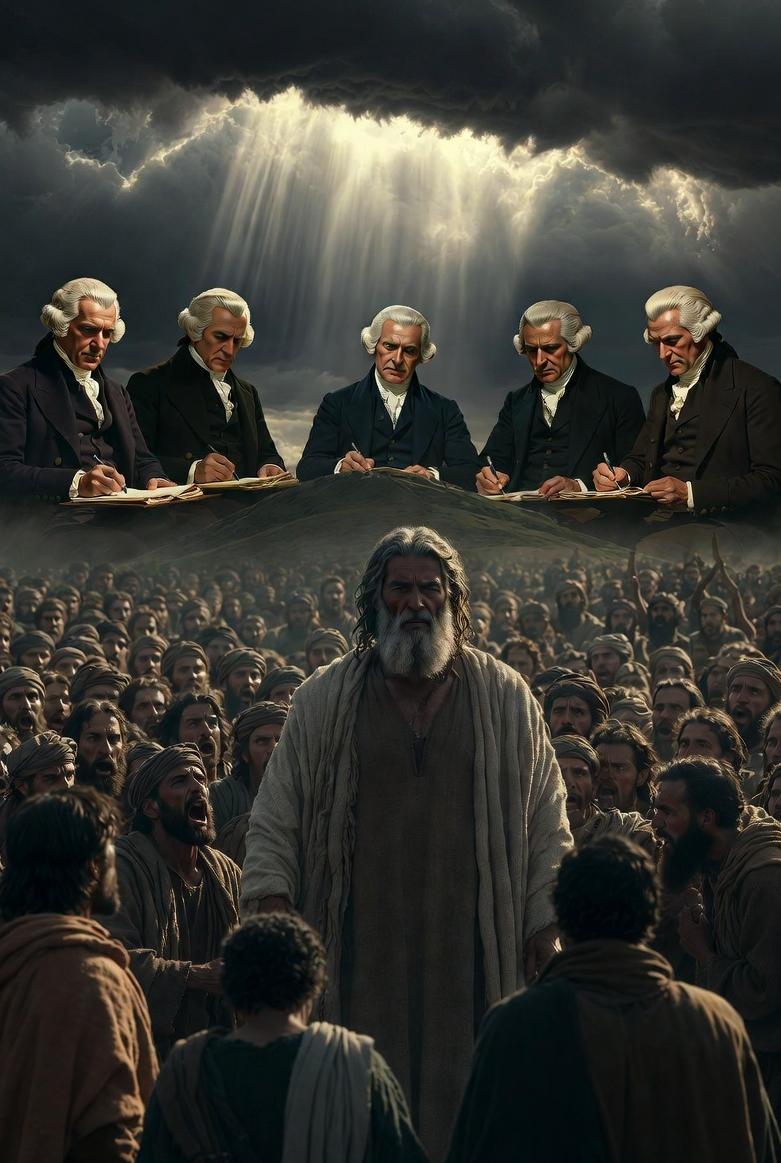
Democracy depends upon following the crowd’s decisions. Scripture repeatedly warns believers that truth is not determined by popularity.
Throughout the Bible, prophets often stood against the majority rather than with it.
4. America Was Founded on Religious Freedom, Not Christian Uniformity
Many settlers came seeking religious liberty, but they did not all agree on theology.
Puritans, Anglicans, Quakers, Catholics, Presbyterians, Baptists, Lutherans, and others often disagreed sharply.
The Constitution never established a national church.
Instead, the founders created a nation where people could worship—or not worship—according to conscience.
The United States was designed to protect Christianity, not enforce Christianity.
5. Christians Cannot Even Agree on Christianity
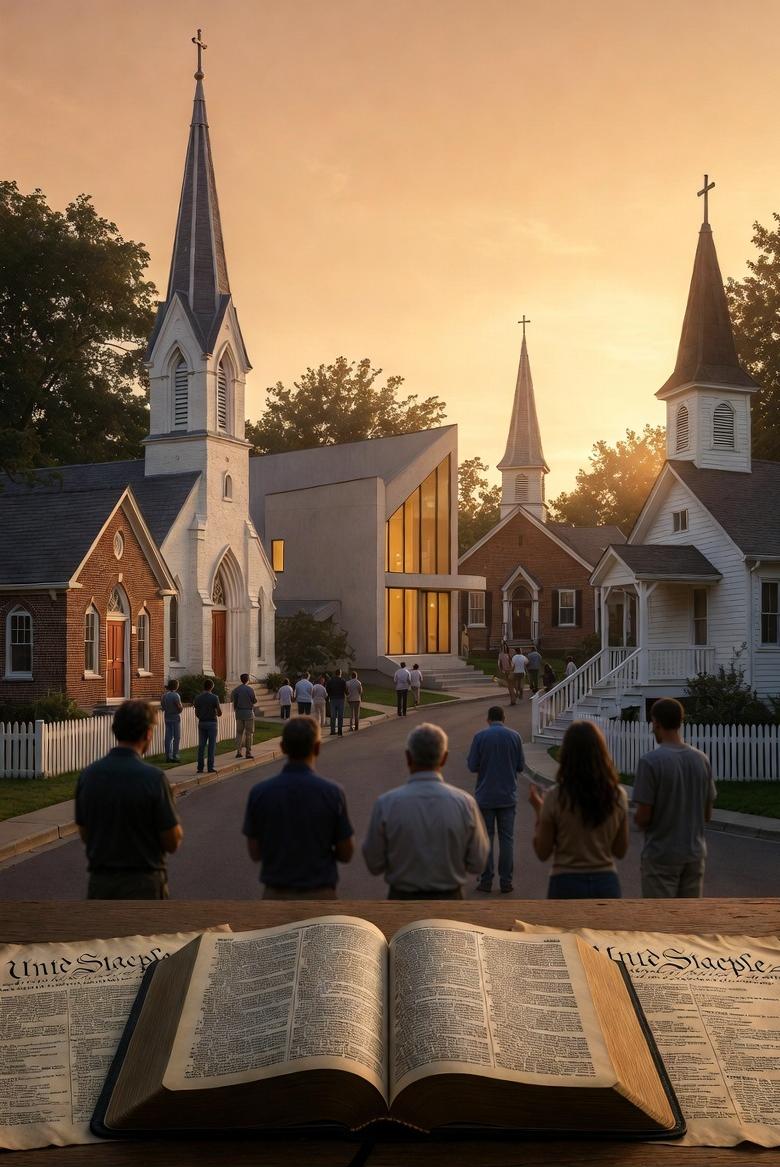
Drive through almost any Southern town and one may pass Baptist, Methodist, Presbyterian, Pentecostal, Lutheran, Catholic, Episcopal, Non-Denominational, Orthodox, and other churches within a few miles.
If government were tasked with enforcing “Christian values,” whose interpretation would prevail?
The founders understood this challenge. They recognized that government should not become the referee of theological disputes.
6. Democracy Protects Non-Christians
A genuinely Christian government might seek to prioritize Christian doctrine.
Yet America’s system intentionally protects Muslims, Jews, Hindus, Buddhists, Sikhs, atheists, agnostics, and others.
This reflects the First Amendment’s commitment to religious liberty.
Ironically, democracy’s greatest strength may be that it prevents one religious group from legally dominating another.
7. The Kingdom of God Is Not a Democracy
Jesus never described Heaven as a democracy.
God is sovereign.
Christ is King.
Biblical imagery consistently portrays divine rule as a kingdom, not a republic.
Jesus taught believers to pray:
“Thy kingdom come, Thy will be done.” (Matthew 6:10)
Notice the focus is God’s will—not the will of voters.
8. Democracy Often Reflects Cultural Trends Rather Than Eternal Truth
Public opinion changes constantly.
Views on morality, family, economics, war, and justice evolve from generation to generation.
Biblical truth, by contrast, is presented as eternal and unchanging.
A government rooted in popular opinion will inevitably shift with culture, while Christianity claims allegiance to principles that transcend culture.
9. America’s History Contradicts the “Christian Nation” Narrative
A truly Christian nation would be difficult to reconcile with several realities of American history.
The displacement of Native Americans.
The institution of slavery.
Jim Crow segregation.
Religious discrimination.
The denial of rights to various groups throughout different periods.
This does not mean America is uniquely evil. It means America, like every nation in history, has often fallen short of biblical ideals.
The existence of many Christians within a nation does not automatically make that nation Christian.
10. Christianity Transforms Hearts, Not Governments
Jesus spent remarkably little time discussing political systems.
Instead, He focused on repentance, faith, love, forgiveness, humility, and personal transformation.
The New Testament’s strategy for changing society was not capturing government power.
It was changing people.
Christianity’s greatest victories historically have come through transformed hearts rather than imposed laws.
Conclusion
The United States has been profoundly influenced by Christianity. Its churches, ministers, missionaries, charitable organizations, and believers have shaped education, civil rights, healthcare, philanthropy, and public morality.
Yet influence is not the same as ownership.
America has never been exclusively Christian, nor was it designed to be.
The founders created a constitutional republic with democratic features that allowed citizens to choose their faith freely. That freedom remains one of America’s greatest strengths.
Perhaps the better question is not whether America is a Christian nation, but whether Christians are faithfully living out their beliefs within a free nation.
Because history suggests that no government system—not monarchy, democracy, republic, or empire—can create the Kingdom of God on earth.
Only transformed people can reflect the character of Christ.
Biblically Sound References
- Exodus 23:2 — “You shall not follow the crowd in doing wrong.”
Demonstrates that moral truth is not determined by majority opinion. - Matthew 6:10 — “Thy kingdom come, Thy will be done, on earth as it is in heaven.”
Emphasizes God’s sovereignty above human political preferences. - John 18:36 — Jesus said, “My kingdom is not of this world.”
Establishes that Christ’s kingdom transcends earthly political systems.
Historical References
- The U.S. Constitution contains no declaration that America is a Christian nation.
- The phrase “In God We Trust” first appeared on some coins during the Civil War era and became the official national motto in 1956; it began appearing broadly on paper currency beginning in 1957.
- The First Amendment prohibits Congress from establishing a national religion while protecting the free exercise of religion for all Americans.
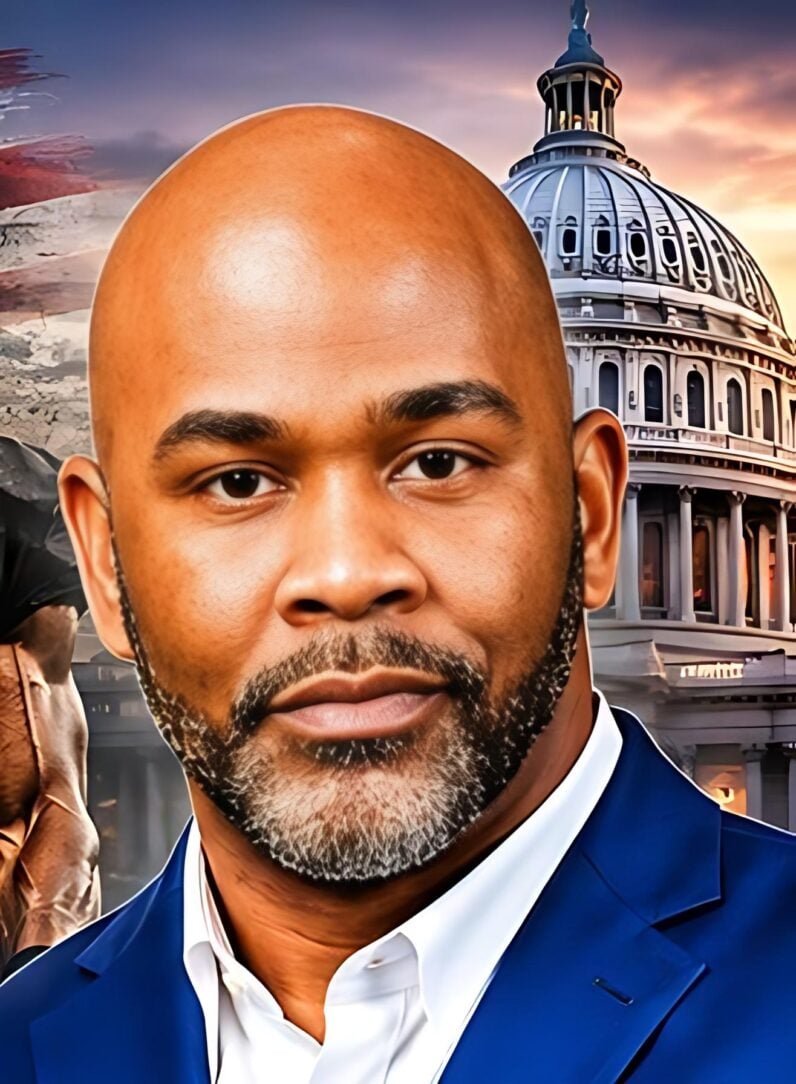
Edmond W. Davis is a Social Historian, Speaker, Collegiate Professor, International Journalist, and former Director of the Derek Olivier Research Institute. He is an expert on various historical and emotional intelligence topics. He’s globally known for his work as a researcher regarding the history of the Tuskegee Airmen and Airwomen. He’s the Founder and Executive Director of America’s first & only National HBCU Black Wall Street Career Fest. @edmondwdavis
(If You Like/Appreciate This EURweb Story, Please SHARE it!)
MORE NEWS ON EURWEB.COM: Soaring Murders on L.A.’s Skid Row a New Threat to Blacks
We Publish Breaking News 24/7. Don’t Miss Out! Sign up for our Free daily newsletter HERE.