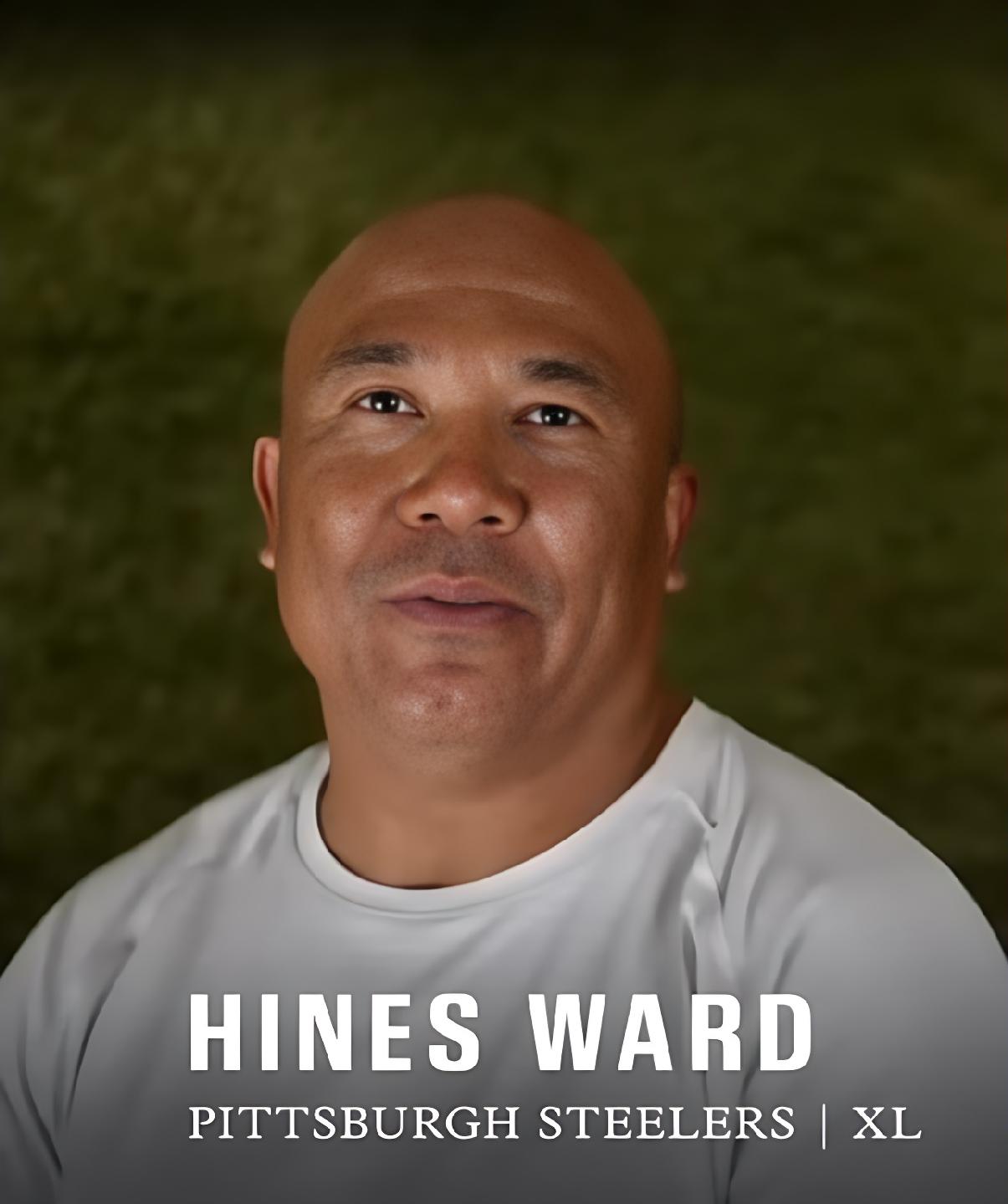
*Hines Ward still remembers the moment he tried to disappear. It lasted only a few seconds, but it has stayed with him for decades.
As his Korean mother pulled up outside his Atlanta middle school, Ward shrank into the passenger seat, embarrassed that classmates might see him with the woman who had sacrificed everything to give him a better life. She noticed immediately, and what followed became one of the most painful—and transformative—moments of his childhood.
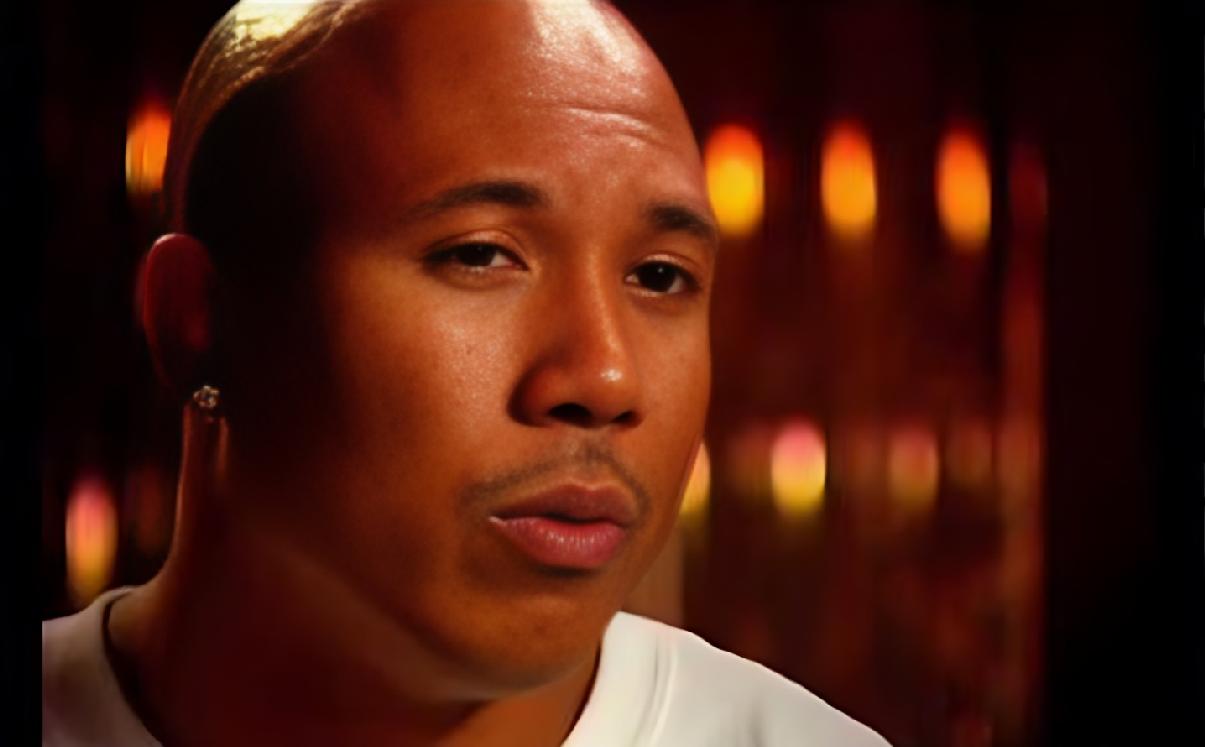
“I looked back, and my mom was, like, full-blown crying,” Ward recalls in ESPN’s “SEC Storied” documentary “Becoming Hines Ward.”
She confronted him through tears.
“If you’re ashamed of me, then go back and live with your dad. I worked my ass off…”
Scroll to continue reading





Her words stayed with him.
“From that day on,” Ward says, “I vowed that I was never gonna be ashamed of my mom ever again.”
The deeply personal story is one of the emotional centerpieces of “Becoming Hines Ward,” which explores the football legend’s journey through race, identity, family and the extraordinary sacrifices his mother made to give him opportunities she never had.
Hines Ward talks about the struggles growing up as a biracial child in Atlanta, and how he vowed to never be ashamed of his mom again.
— 30 for 30 (@30for30) July 21, 2026
SEC Storied: Becoming Hines Ward premieres Tuesday at 7 ET on SEC Network 🍿 pic.twitter.com/uTh5df1Fok
A Mother Who Gave Up Everything
Ward was born in Seoul, South Korea, to a Korean mother, Kim Young-hee, and an African American father who was serving in the U.S. military.
“My mom was a little older. My father was younger,” Ward says. “The two ended up meeting each other, got married, had me.”
His mother recalls that discovering she was pregnant filled her with mixed emotions.
“Feeling happy and worry.”
At the time, Korean women who married Black American servicemen or gave birth to mixed-race children often faced harsh discrimination and social isolation. Ward says many were stereotyped and ostracized because of their relationships.
His mother experienced that rejection firsthand.
According to Ward, much of her family turned their backs on her after she married outside her race. When his father returned to the United States after completing his military service, she faced an impossible decision.
Rather than stay behind, she chose to follow with her young son despite not speaking English and having no family waiting for her in America.
“I love my son,” she remembers thinking before making the journey.
Her marriage ended only about a month after arriving in Georgia, leaving her to raise Ward alone in a country where she barely knew the language.
“I really cry, you know. I worry, scared. I cannot speak English,” she says. “I just gonna make the money, money, money, take care of him.”
She worked wherever she could, cleaning hotel rooms and washing dishes for Eastern Airlines while trying to build a life for her son.
“I don’t want people look at him down because he Black, he no have a daddy, he got a Asian mama,” she says. “That’s I no want no people look down.”
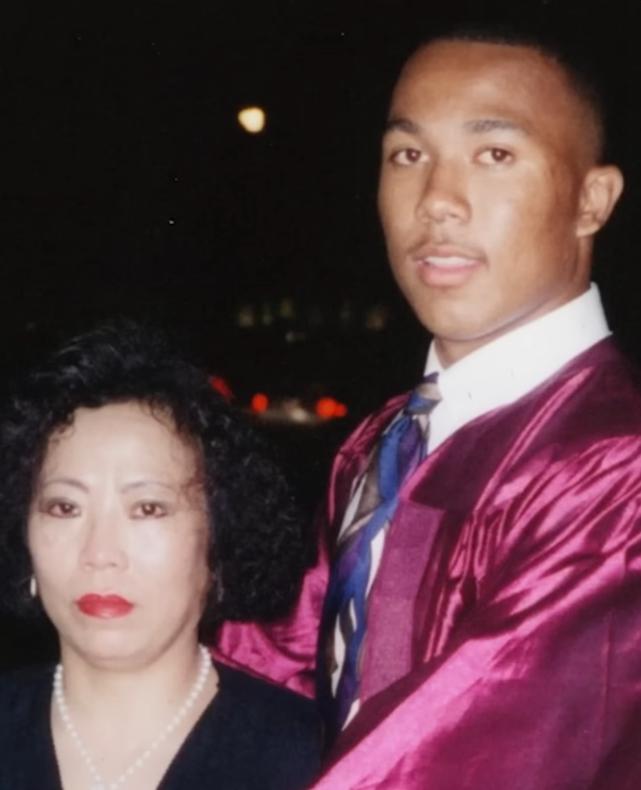
Growing Up Between Two Worlds
Despite the family’s financial struggles, Ward says his mother made sure he never looked like he was struggling.
“I had all the top clothes. I had the Jordans. I had the Coca-Cola shirt back when. I had the Swatch,” he recalls.
But new clothes couldn’t protect him from relentless bullying over his race and heritage.
Ward says he was teased almost every day for being biracial, adding that some of the harshest insults came from other Black children.
“They teased me the worst,” he says, recalling classmates insulting his mother and calling him “Bruce Leroy.”
Eventually, the ridicule began affecting how he saw himself.
Embarrassed that his mother looked different from the parents of his classmates, Ward admits he started distancing himself from her in public.
The middle school incident became a painful wake-up call.
Watching his mother cry after seeing him hide from her forced him to confront the hurt he had caused the person who had sacrificed everything for him.
That single moment reshaped their relationship forever.
Finding Strength in His Story
Ward went on to become one of the greatest players in Pittsburgh Steelers history, winning two Super Bowls, earning Super Bowl XL MVP honors and building a reputation as one of the NFL’s toughest and most complete wide receivers.
But “Becoming Hines Ward” argues that the foundation of his success was built long before he ever stepped onto a football field.
The documentary traces Ward’s journey back to South Korea, where he confronts painful memories while embracing a heritage he once struggled to accept. It also explores how he became an advocate for mixed-race children who have experienced many of the same challenges his family endured.
Director Jeremy Williams has described the project as a story about far more than football, focusing instead on identity, belonging and the enduring bond between a mother and her son.
For Ward, revisiting those memories isn’t about reopening old wounds.
It’s about honoring the woman who refused to give up on him—even during the one moment he nearly gave up on her.
Today, the memory that once filled him with shame has become one of the most powerful reminders of his mother’s resilience, unconditional love and unwavering determination. It’s a story that extends well beyond sports, offering a deeply human portrait of sacrifice, forgiveness and the promise Ward made as a young boy—a promise he says he has kept ever since.
“SEC Storied” documentary “Becoming Hines Ward” is airing now on ESPN
(If You Like/Appreciate This EURweb Story, Please SHARE it!)
MORE NEWS ON EURWEB.COM: NFL Vet Hines Ward Joins CNN, HLN as Sports Contributor
We Publish Breaking News 24/7. Don’t Miss Out! Sign up for our Free daily newsletter HERE.