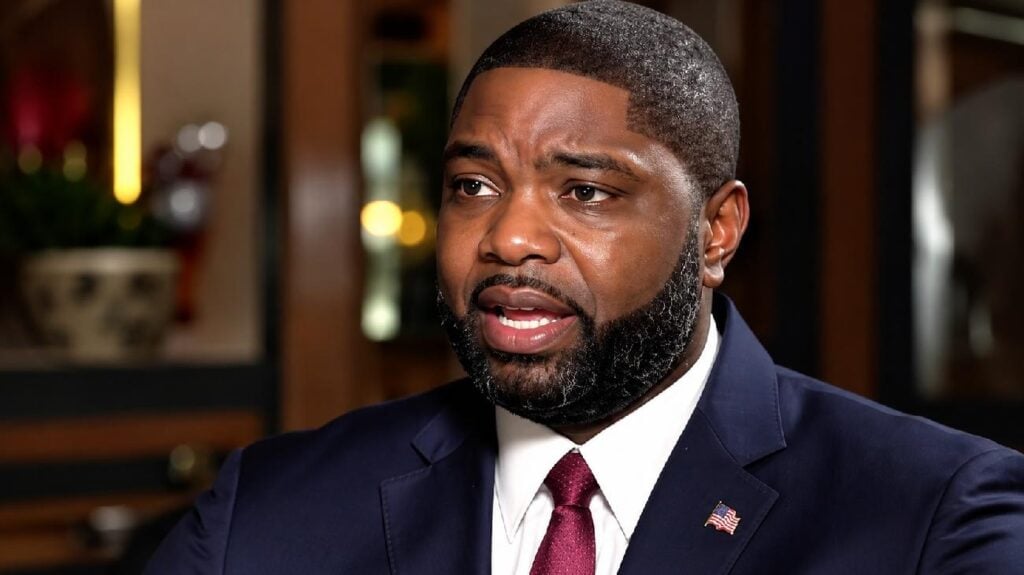
*Byron Donalds made history by winning Florida’s governor’s race. But apparently, his victory also came with an unexpected bonus: an argument over whether Republicans deserve a racial clean bill of health.
The controversy erupted on Lipstick Alley, where one commenter suggested that Florida voters choosing a Black Republican over a white Democrat should teach Black Americans a lesson.
The argument? If Republicans are so racist, why would they elect a Black man?
Not everyone was buying it.
And the pushback was anything but polite.
Scroll to continue reading


Did Florida Republicans Just Prove Their Critics Wrong?
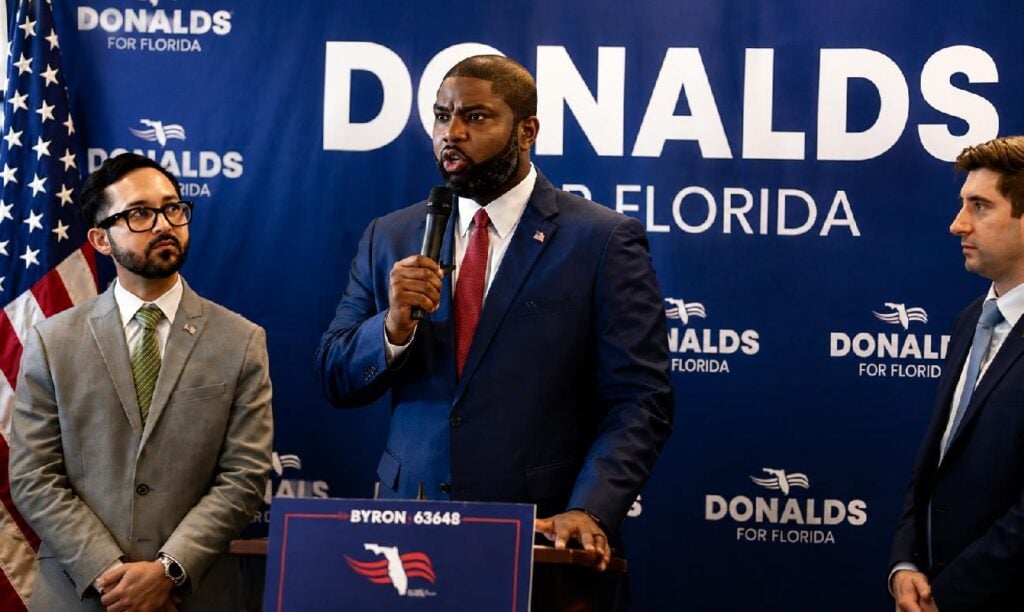
Donalds defeated Democrat David Jolly on November 3, becoming Florida’s first Black governor-elect and the nation’s first elected Black Republican governor. According to Florida’s unofficial election returns, Donalds received 50.01% of the vote to Jolly’s 48.72%.
On Lipstick Alley, user fiddlestix argued that the result demonstrated Republican voters’ willingness to prioritize policy over race.
“There are levels to racism,” the poster wrote, insisting that critics had exaggerated Florida Republicans’ racial prejudice.
The commenter also accused Black Americans of voting against their interests by supporting Democrats.
That last argument didn’t go over particularly well.
You talking about the MAGA guy that said he doesn’t believe in reparations for descendants of slaves because he doesn’t qualify? This guy? https://t.co/wIiMWWjGnO
— Rilla🇺🇸 (@Finalbossjimmy) November 6, 2026
‘Not a Racial Exoneration Certificate’
User StormiLove challenged the notion that electing a Black Republican automatically absolves the party of racism.
“A Black man winning office is a political achievement,” StormiLove wrote. “It is not a racial exoneration certificate for an entire political party.”
The commenter argued that Donalds’ victory was being used less to celebrate Black representation than to congratulate white Republicans while questioning Black voters’ political judgment.
In other words, the issue wasn’t Donalds winning. It was what some people wanted his victory to prove.
“You can celebrate the candidate without turning his victory into an audition for white approval,” StormiLove added.
But here’s the distinction the argument overlooks: An election measures which candidates receive votes, not the racial attitudes of everyone casting them. Floridians could support Donalds because of his policies, party affiliation, leadership preferences or any combination of factors. His victory establishes that voters elected a Black Republican. It cannot, by itself, establish whether racial prejudice exists among those voters—or how widespread it might be.
Donalds Himself Challenged Black Party Loyalty
Interestingly, Donalds addressed Black political allegiance before the election.
The divide illustrates a larger tension in Black politics: whether representation alone constitutes progress or whether the policies behind that representation ultimately matter more.
In an October interview with CBS News, he described outreach efforts aimed at Black voters and suggested their longstanding attachment to the Democratic Party was weakening.
Donalds also emphasized that voters should judge candidates on their ability to govern rather than race.
But the CBS report documented skepticism among Black political organizers, including criticism of his positions on voting rights.
That reporting underscores why the Lipstick Alley disagreement extends beyond the governor-elect’s racial identity.
@ByronDonalds is not a Black American, he’s not a Freedman Descendant, he’s a Panamanian-Jamaican immigrant.
— Tameshia (@MeshiaG1) November 8, 2026
Black History, Voting Rights and Political Loyalty
Another commenter, Miza, brought Republican policies into the argument.
“Voting for people who said black history shouldn’t be taught in public schools,” Miza wrote, criticizing Republican positions on Black history education, voting rights and affirmative action.
The discussion also veered into Donalds’ Caribbean family background, with some participants questioning how ancestry should factor into descriptions of Black American representation.
But neither ancestry nor a single election result can settle the larger political disagreements.
One Victory, Two Very Different Interpretations
For fiddlestix, Donalds’ victory challenged assumptions about Republican racism and Black political loyalty.
For StormiLove and Miza, it raised another question: Can voters celebrate a historic Black political achievement without treating it as proof that broader concerns about discrimination are unfounded?
Donalds won the election. That much is settled.
Whether his victory should change the conversation about race and Republicans?
Judging by this exchange, that argument is just getting started.
(If You Like This EURweb Story, Please SHARE it!)
MORE NEWS ON EURWEB.COM: Black Republican Byron Donalds Reacts to Outrage Over His Jim Crow Comments | Video
We Publish Breaking News 24/7. Don’t Miss Out! Sign up for our Free daily newsletter HERE.