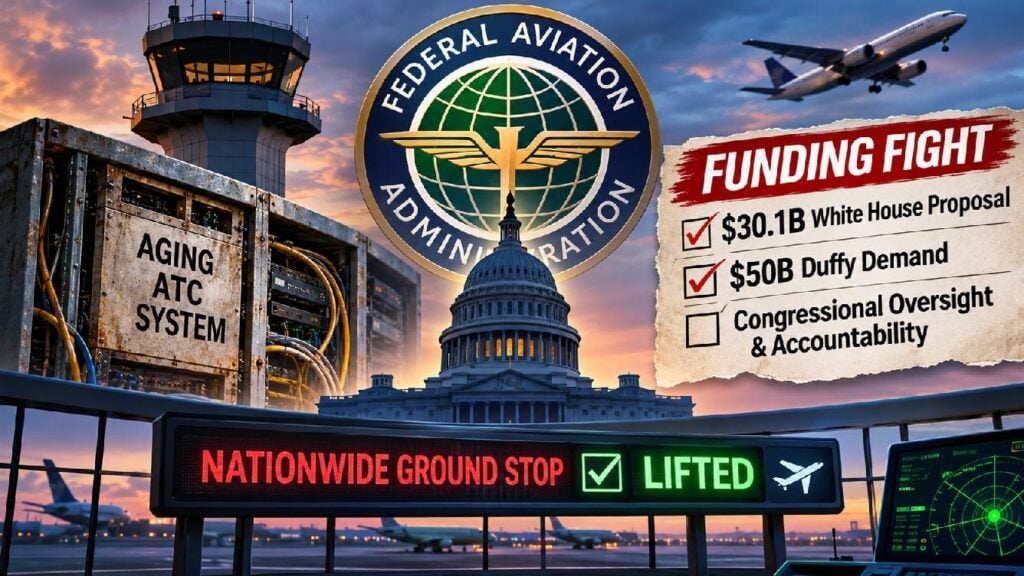
*America’s skies are open again, but the political battle over who should pay to fix the nation’s aging air traffic control system is just getting started.
Following Friday’s (November 13) nationwide flight shutdown, the Trump administration is pressing Congress for billions in additional aviation funding while Democratic lawmakers demand answers about how a telecommunications failure could bring departures across the country to a standstill for more than four hours.
Transportation Secretary Sean Duffy has blamed aging technology and overloaded routers, arguing that decades of inadequate modernization have left the Federal Aviation Administration (FAA) vulnerable to major disruptions.
But Congress already approved $12.5 billion for air traffic control improvements in 2025, raising a question taxpayers and airline passengers have every reason to ask: Where is that money going, and what safeguards are being put in place?
The answers could shape a major Washington spending debate as lawmakers consider additional investments in America’s aviation infrastructure.
Scroll to continue reading








White House Seeks Another $30.1 Billion
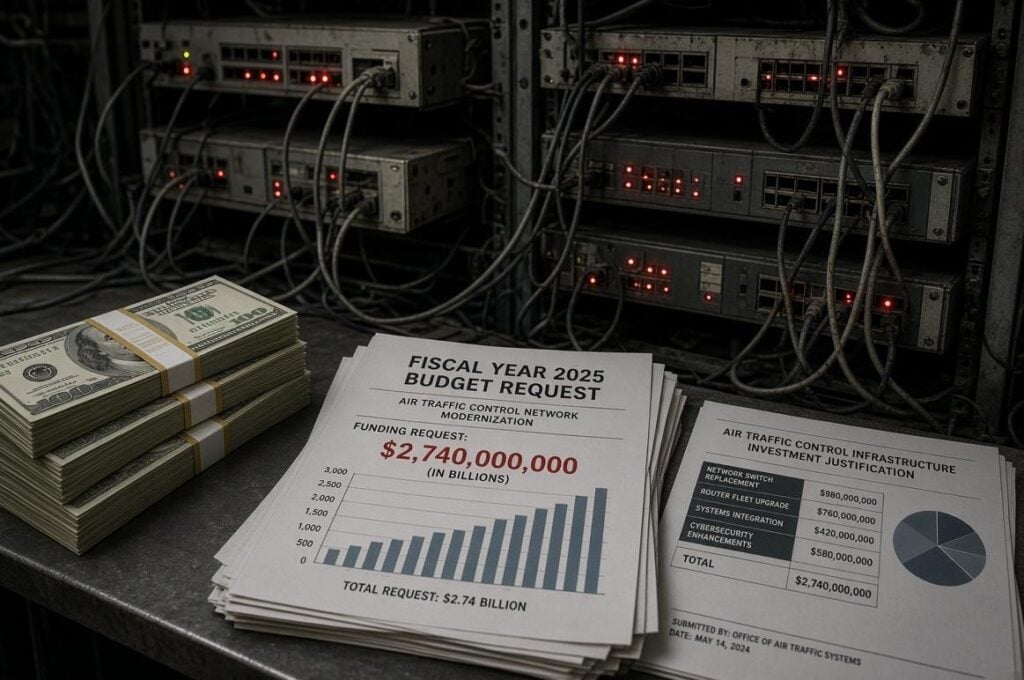
On Friday, the White House and Department of Transportation urged Congress to approve an additional $30.1 billion to modernize airports and air traffic control systems.
According to Reuters, the proposal includes $10.1 billion for air traffic control modernization, $2 billion for control tower improvements and $18 billion for airport projects.
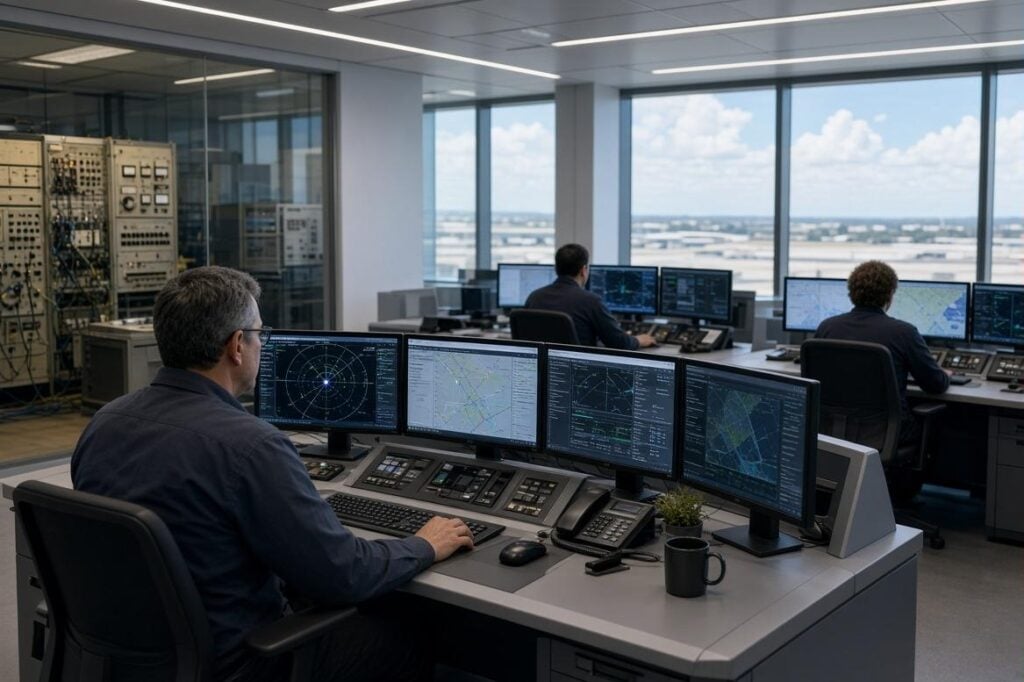
The air traffic control portion includes investments in controller workstations, automation and cloud computing.
Duffy and White House budget director Russell Vought described the previously approved $12.5 billion as a down payment toward a much larger modernization effort.
Separately, Duffy publicly called for $50 billion to replace aging air traffic control technology, arguing that patching together outdated systems is no longer sufficient.
The distinction matters: The administration’s formal $30.1 billion proposal covers both air traffic control and airport improvements, while Duffy’s larger demand reflects his broader push for replacing aging technology.
Democrats Demand Accountability
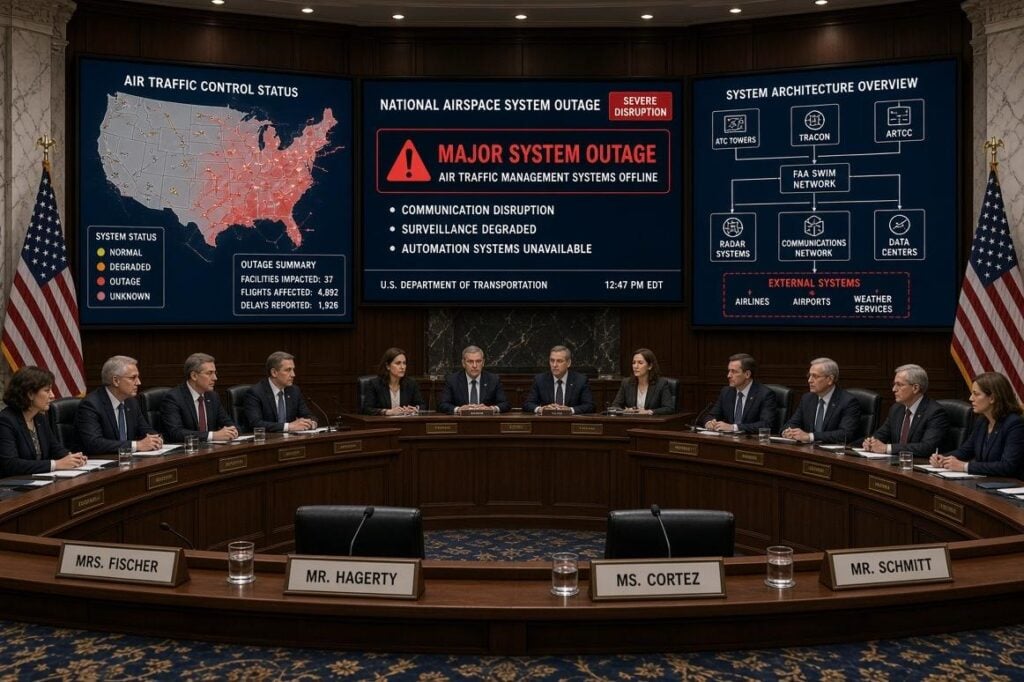
Sen. Tammy Duckworth of Illinois, the ranking Democrat on the Senate Aviation, Space and Innovation Subcommittee, called for a thorough investigation into Friday’s shutdown.
“The safety of our skies is built on redundancies,” Duckworth said, emphasizing the importance of backup systems designed to prevent widespread failures.
Sen. Maria Cantwell of Washington, the ranking Democrat on the Senate Commerce Committee, said lawmakers would examine communications technology, including primary and backup frequencies.
California Rep. Ted Lieu also called for congressional hearings.
According to the Los Angeles Times, Lieu described the outage as unacceptable and argued that the FAA needs systems capable of avoiding a single point of failure.
The dispute isn’t necessarily about whether modernization is needed. Both parties have acknowledged problems with aging aviation infrastructure.
The larger questions involve oversight, spending priorities and whether additional funding will deliver measurable improvements.
Where Does FAA Funding Come From?
Much of the FAA’s regular funding comes from the Airport and Airway Trust Fund, which collects taxes associated with commercial aviation.
Passengers contribute through a 7.5% federal tax on domestic airline tickets, passenger segment fees and international travel taxes. Aviation fuel and cargo taxes also support the fund.
Congress supplements those revenues with general federal funding and special appropriations for major infrastructure projects.
The FAA uses its budget to operate air traffic control facilities, employ controllers, maintain equipment, oversee aviation safety and support airport improvements.
However, aviation tax revenue doesn’t automatically become available for every proposed upgrade. Congress controls much of the spending through the appropriations process.
That makes congressional oversight especially important when billions more are requested.
What Failed During Friday’s Shutdown?
The nationwide ground stop followed a telecommunications outage affecting the FAA’s 22 regional Air Route Traffic Control Centers, which coordinate aircraft traveling between airports.
Duffy pointed to aging switches and routers that could no longer reliably handle the volume of information passing through the system.
Homeland Security Secretary Markwayne Mullin said investigators had found no evidence of a cyberattack or other deliberate threat.
Although domestic departures resumed Friday evening, airlines faced widespread disruptions as aircraft and crews were left out of position.
The incident was the first nationwide ground stop since January 2023, when a malfunction in the FAA’s pilot notification system disrupted thousands of flights.
The precise technical cause of Friday’s failure remained under investigation, making a complete accounting of the outage and its backup systems essential.
The Bigger Question: Who Is Accountable?
Modernizing America’s air traffic control system is a legitimate national priority. But spending more money and spending money effectively are not necessarily the same thing.
The Trump administration wants Congress to accelerate investment in technology officials say should have been replaced years ago. Democratic lawmakers want to know what failed, why safeguards were insufficient and how future disruptions can be prevented.
Those priorities need not be mutually exclusive.
For the millions of Americans who depend on commercial aviation, Friday’s shutdown demonstrated that failures in critical infrastructure have consequences far beyond Washington.
The real test will be whether Congress and the administration can deliver a safer, more reliable aviation system—and demonstrate that the billions committed to fixing it are producing results.
(If You Like This EURweb Story, Please SHARE it!)
MORE NEWS ON EURWEB.COM: FAA Lifts Nationwide Ground Stop After Flight Chaos | WATCH
We Publish Breaking News 24/7. Don’t Miss Out! Sign up for our Free daily newsletter HERE.