*In this opinion editorial, I introduce a new historical concept into the American educational vocabulary: the BBPWI, or Black-Built Predominantly White Institution.
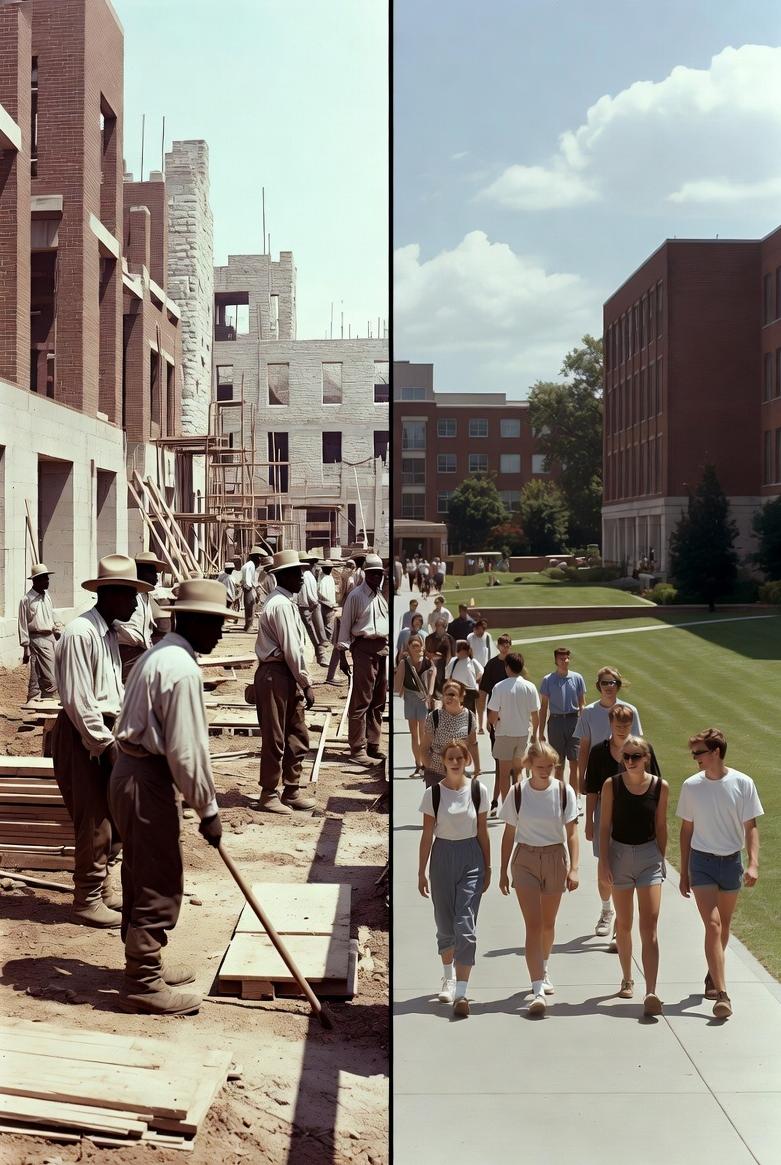
The BBPWI is not an official classification. It is a historical framework designed to recognize a neglected reality of American higher education: that countless African Americans helped physically build, maintain, cultivate, expand, and sustain colleges and universities that primarily served white students during the decades following emancipation.
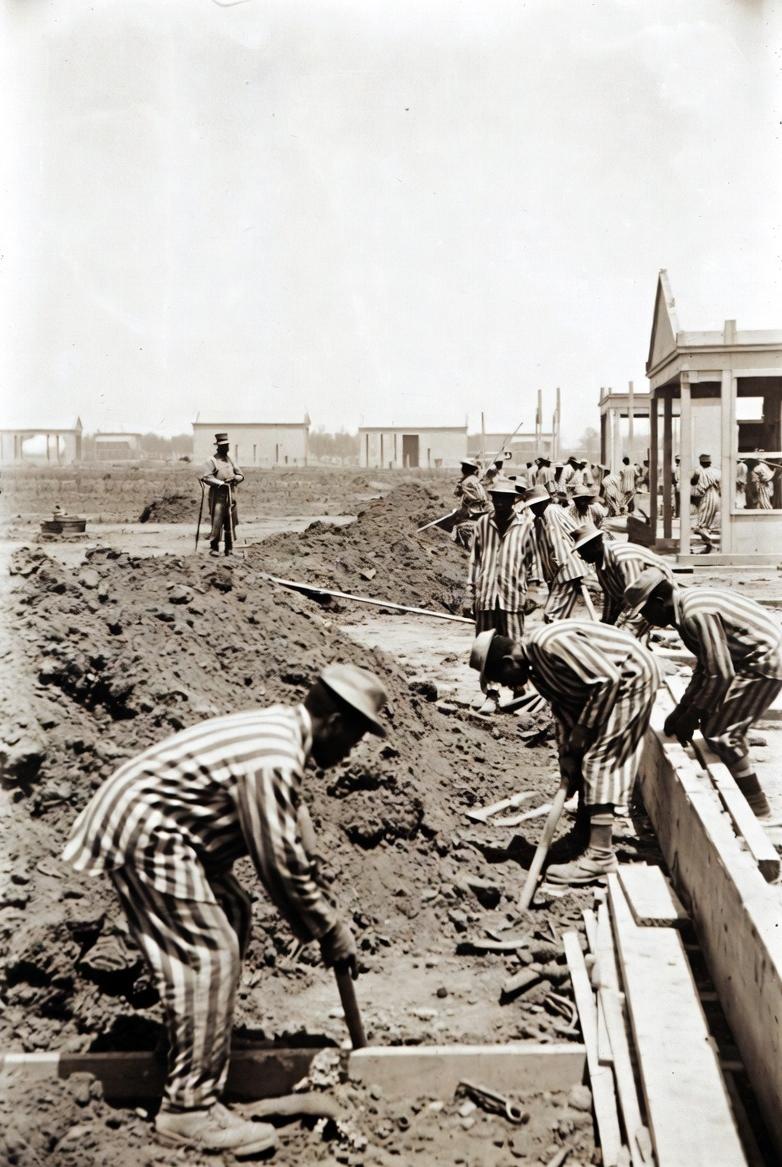
These workers were not merely laborers. They were builders. They were craftsmen. They were agriculturalists. They were engineers, brickmakers, carpenters, stonemasons, blacksmiths, groundskeepers, cooks, custodians, botanists, farm workers, ditch diggers, and, in some documented cases, convict laborers forced into service through post-Civil War labor systems.
Their labor helped create the campus. Their names rarely entered the history books.
After 1865, slavery did not simply disappear from American life. It changed form. The plantation often became the prison farm. The auction block became the convict lease. The overseer became the guard. The chain gang became the workforce. Across much of the South, Black labor remained indispensable to the construction of roads, railways, farms, industries, public works, and educational institutions that symbolized America’s progress during Reconstruction and the Jim Crow era.
Scroll to continue reading


Yet while universities proudly celebrate founders, presidents, trustees, architects, governors, and benefactors, far less attention has been paid to the workers whose hands transformed forests, fields, former plantations, and rural landscapes into college campuses.
This omission is not merely an educational oversight. It is a historical blind spot. Perhaps no institution illustrates this reality more clearly than Clemson University, according to the Glimpse, research, and creative discovery. Founded in 1889, Clemson relied extensively upon leased convict labor during its formative years. Historical records document that many of these workers were African American men and boys, some barely teenagers. They cleared land, built roads, dug drainage systems, erected agricultural facilities, and helped construct some of Clemson’s earliest campus buildings, including Tillman Hall, Hardin Hall, Sikes Hall, and the Trustee House.
Many of these workers would never have been permitted to enjoy the educational opportunities their labor helped create. That is not merely Clemson’s story. It is part of the American story. Yet Clemson should not stand alone in this national conversation. Several post-Reconstruction institutions deserve deeper scholarly investigation. See the institutions’ list provided at the end of this article.
The University of Florida, which traces its origins to the Florida Agricultural College in 1884, emerged in a state whose economy relied heavily on Black agricultural and prison labor. Mississippi State University, founded in 1878 as Mississippi A&M, grew within a postwar agricultural economy sustained largely by Black labor. Texas A&M University, established in 1876, became a cornerstone of agricultural education while existing alongside Prairie View A&M, founded to educate African Americans excluded from many educational opportunities. Virginia Tech, founded in 1872, and Auburn University’s Reconstruction-era transformation into Alabama’s land-grant institution similarly invite further examination into the labor systems that supported their physical growth.
The point is not that every institution shares Clemson’s documented history. The point is that many institutions have never fully investigated their own. Silence is not evidence of innocence. Sometimes silence simply means the archives remain unopened. The Bible speaks directly to questions of labor and justice.
Jeremiah 22:13 declares:
“Woe unto him that buildeth his house by unrighteousness, and his chambers by wrong.”
Likewise, James 5:4 reminds us:
“Behold, the wages of the laborers who have reaped down your fields, which is of you kept back by fraud, crieth.”
Whether one approaches this issue through faith, history, economics, sociology, or public policy, the principle remains the same:
Labor matters.
Workers matter.
Truth matters.
America’s colleges and universities should therefore broaden the conversation beyond monuments, plaques, and diversity initiatives. We should ask difficult questions.
Who cleared the land? Who laid the bricks? Who dug the foundations? Who harvested the crops that sustained agricultural colleges? Who maintained the grounds? Who repaired the buildings? Who cooked the meals? Who built the roads? Who died unnamed? And perhaps most importantly:
Who benefits from the legacy while remaining disconnected from the labor that helped create it?
This conversation also intersects with one of the most important questions in American democracy: representation.
Many BBPWIs exist within Southern states where Black labor contributed enormously to economic development, educational expansion, and public infrastructure. Yet debates surrounding voting rights, representation, district boundaries, and political participation continue across many of those same regions. Just think about it: the state of Florida was built on the labor of Black bodies after institutionalized slavery! For more information on the emancipation of Florida’s enslaved population, view the website that discusses ‘slavery in Florida after statehood’ at Florida Emancipation May 20 dot com
Universities often remain publicly cautious regarding such matters. As state institutions, many avoid direct involvement in political disputes. Yet the descendants of the workers who helped build these campuses still live within communities shaped by those debates. That reality deserves reflection.
The relationship between Black labor and Black representation remains one of the most important unfinished conversations in modern America. A national reckoning would seek not condemnation, but recognition. It would identify known and unknown Black builders, engineers, agriculturalists, botanists, craftsmen, laborers, sharecroppers, domestic workers, and prisoners whose contributions helped create America’s institutions of higher learning. It would digitize labor records. It would preserve oral histories. It would expand historical research. It would create scholarships and memorials. Most importantly, it would tell the truth because the American university was not built solely by presidents and professors.
It was also built by labor, and much of that labor was performed by Black people. Some workers were free. Some were underpaid. Some were exploited. Some were imprisoned. Some were forgotten. But they were there. Their fingerprints remain in the bricks. Their sweat remains in the soil. Their labor remains in the foundations.
If America is honest, its names belong not merely in footnotes but on the front doors of history.
The story of the BBPWI is not simply a story about race. It is a story about memory. It is a labor story. It is a story about recognition. It is a story about justice. And it is a story America can no longer afford to ignore. We hope that these institutions can recognize on paper and acknowledge any of these builders. Reach out to their families to say thank you or to give a scholarship in the name of their contributions to BBPWIs.
If your goal is to identify Southern Predominantly White Institutions (PWIs) that either excluded Black students entirely or maintained de facto white-only admissions until the Civil Rights era, the following list is a strong starting point. Most of these institutions were founded before or shortly after 1865 and did not admit Black undergraduate students until the early to mid-1960s.
Alabama
- University of Alabama (first Black students admitted in 1963)
- Auburn University (desegregated in 1964)
- Samford University (first Black student admitted in 1967)
Mississippi
- University of Mississippi (James Meredith, 1962)
- Mississippi State University (first Black student admitted in 1965)
- University of Southern Mississippi (first Black students admitted in 1965)
South Carolina
- Clemson University (Harvey Gantt, 1963)
- University of South Carolina (re-integrated in 1963 after Jim Crow exclusion)
- The Citadel
Georgia
- University of Georgia (Charlayne Hunter and Hamilton Holmes, 1961)
- Georgia Institute of Technology
- Mercer University
Louisiana
- Louisiana State University
- Tulane University
Arkansas
- University of Arkansas
- Arkansas State University
- Hendrix College
Tennessee
- University of Tennessee
- Vanderbilt University
- University of Memphis
North Carolina
- University of North Carolina at Chapel Hill
- Duke University
- Wake Forest University
Virginia
- University of Virginia
- Virginia Tech
- Washington and Lee University
Texas
- University of Texas at Austin
- Texas A&M University
- Baylor University
- Southern Methodist University
Florida
- University of Florida
- Florida State University
- University of Miami
For Your BBPWI Research
For a project on “Black-Built Predominantly White Institutions (BBPWIs),” the institutions most often discussed by historians because they remained segregated until the 1960s, while relying heavily on Black labor, are:
- University of Alabama
- University of Mississippi
- Clemson University
- University of Georgia
- University of South Carolina
- Auburn University
- Mississippi State University
- University of Southern Mississippi
These were among the last Southern flagship universities to admit Black students and are frequently cited in civil-rights and higher-education desegregation histories.
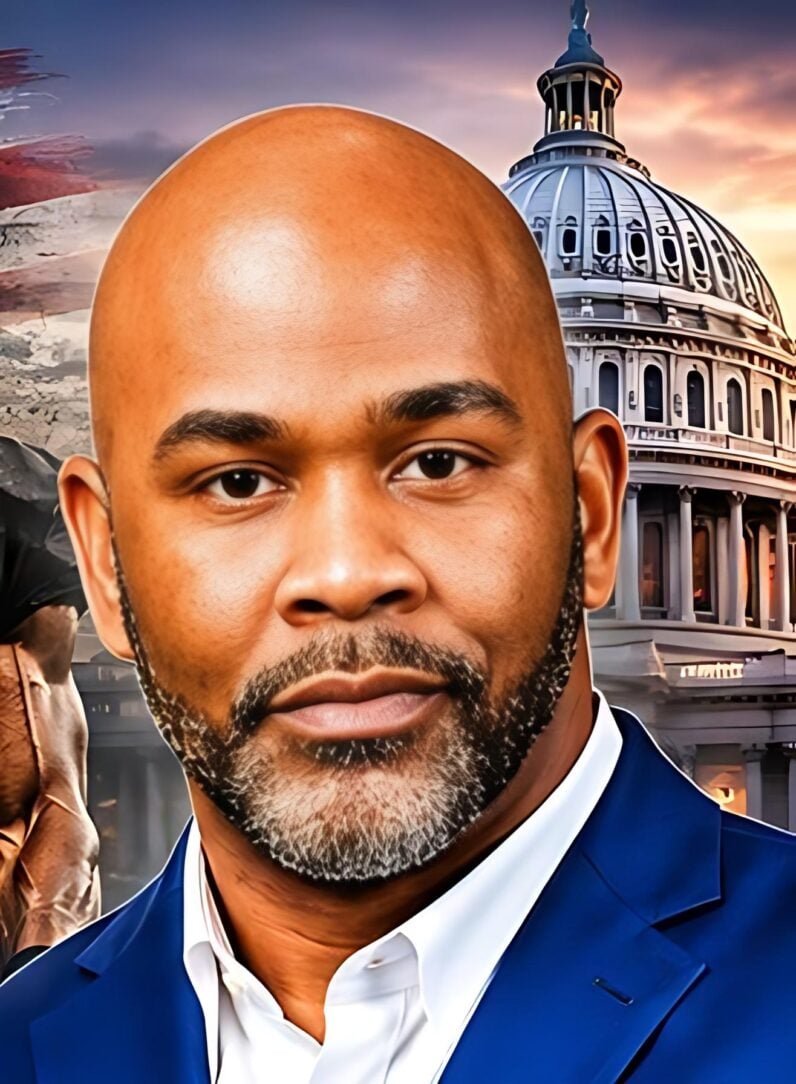
ABOUT THE AUTHOR:
Edmond W. Davis is an American social historian, international speaker, and Amazon #1 bestselling author. He is a global authority on the Tuskegee Airmen and serves as the founder and executive director of the National HBCU Black Wall Street Career Fest. A native of Philadelphia, PA, and current resident of Little Rock, AR, Davis is committed to cultural empowerment and educational equity through storytelling and civic engagement. Davis is a grand marshal at the 38th Annual African American History Month Celebration Parade.
(If You Like/Appreciate This EURweb Story, Please SHARE it!)
MORE NEWS ON EURWEB.COM: Experts Debate New Orleans Future Amid Sea-Level Rise Warning
We Publish Breaking News 24/7. Don’t Miss Out! Sign up for our Free daily newsletter HERE.